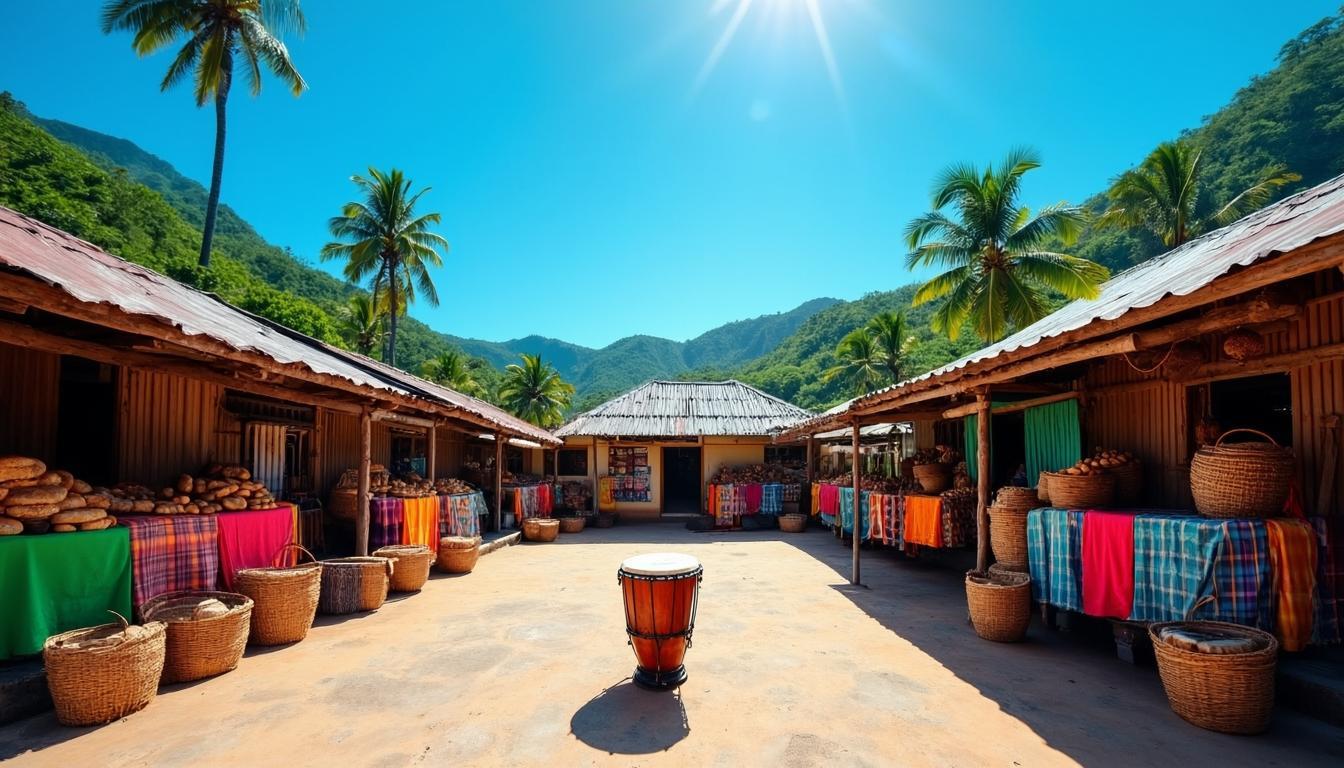
Every last Sunday in October, Saint Lucia throws open its villages for Jounen Kwéyòl, the national Creole Day of drums, madras dress, storytelling and cassava roasted into farine. The story of how the celebration began has been retold by the Saint Lucia Tourism Authority, tracing it back more than four decades to a radio broadcast and one east coast community that set the pattern for everything that followed.
As reported by Saint Lucia Tourism Authority, the roots of the festival lie in the island's relationship with its own tongue. English is Saint Lucia's official language, but Kwéyòl, a French-based Creole, is the language of songs, proverbs and daily conversation, and for many years it was looked down upon. In the early 1980s a cultural movement set out to restore it to the centre of the culture and traditions of Saint Lucia.
The first milestone came on October 28, 1983, when International Creole Day was marked around the world. Saint Lucia responded on the airwaves, filling close to fifteen hours of national radio with programming in Kwéyòl, news bulletins included, a striking statement for a language that had long been pushed to the margins.
A year later, on Sunday, October 28, 1984, the celebration stepped out of the studio and into the streets of Mon Repos on the island's east coast. The day began with a Catholic mass celebrated in Kwéyòl by Father Patrick Anthony, who had founded the Folk Research Centre, the body that would go on to champion the festival for decades.
The village then paid tribute to one of its own daughters, the folk singer Sesenne Descartes, who would later be honoured with the title Dame Sesenne, Queen of Folk. She greeted the gathering with a song. The rest of the day was given over to Creole cooking, folk bands and walaba, Saint Lucia's home-grown take on cricket, as visitors arrived from every district of the island to take part.
The following year, 1985, the festivities moved to Fond Assau, and the Folk Research Centre took charge of organising them, a role it still holds today. Since then the celebration has travelled to a different host community each October, so that every village gets its turn to put its music, crafts and oral traditions on show. In the early years the rules were strict: anyone overheard speaking English at a host community risked a small fine.
A single day soon proved too little. The celebration was extended into Creole Heritage Month, a whole October of pageants, games and community gatherings, with the flagship Jounen Kwéyòl closing the month on its final Sunday.
For visitors, October has become one of the most rewarding moments in the calendar of St Lucia festivals, and many would argue it is the best time to visit St Lucia to see the island's heritage at its most alive. Host communities fill with the smell of green fig and saltfish, the national dish, alongside breadfruit, fried plantain, roast pork, bouyon and drinks made from lime and guava, a rich introduction to the food and rum in St Lucia for anyone flying in for the month.
The island is straightforward to reach from Britain, with British Airways flying direct from London, so booking flights to St Lucia for late October is a realistic plan for anyone wanting to hear Kwéyòl spoken in the streets and try a few words themselves, from Bonjou to Mèsi. Visitors who greet people in Creole are warmly received, according to our guide.
Those coming for the festival will find plenty of things to do in St Lucia around the celebrations, from the markets of Castries to the trails and viewpoints of the interior, where hiking in St Lucia offers a different perspective on the island's history. Where visitors stay depends on taste, from large all-inclusive resorts in St Lucia to small boutique hotels in St Lucia and private villas in St Lucia scattered along the coasts.
The traditions born at Mon Repos in 1984 still shape every gathering: worship in Kwéyòl, honours for the people who keep old skills alive, demonstrations of farine making and other rural crafts, and Woulélaba, which has grown into a national competition in its own right. Of all the events the island stages, this is the one carried above all by its communities rather than by promoters or stages.
This year's host venues and the full Creole Heritage Month events calendar are published by the tourism authority, which encourages visitors to join in wearing madras. Come for the drums at dawn, the authority suggests, and let the island do the rest.
Plan your St Lucia holiday
- Hotels in St Lucia: resorts, villas and boutique stays compared.
- Things to do in St Lucia: from the Pitons to the sulphur springs.
- Best time to visit St Lucia: weather, seasons and prices by month.
- Flights to St Lucia: routes from the UK and what to expect.
- Plan your St Lucia holiday: ask us anything, or send an enquiry.