Plan your trip
Money, Cards and Tipping in Saint Lucia
Paying for things here is simple once you know three facts: the currency, when cash helps and how service charges work.
The currency
Saint Lucia uses the Eastern Caribbean dollar, written EC$ or XCD. It is shared by several island nations and territories and has been fixed against the United States dollar for decades at EC$2.70 to US$1, so the sum is easy: EC$27 is about US$10, and EC$135 is about US$50. Notes come in denominations of 5, 10, 20, 50 and 100, and the coins are used for small change.
Because the rate is fixed, you will not get a better deal by waiting for the exchange rate to move, and you can work out prices quickly in your head. If you are used to pounds, check the pound to dollar rate on the day you travel, and convert from US dollars.

Can you pay in US dollars?
Yes. Hotels, restaurants, tour operators and taxis widely accept US dollars, and many tourist services quote their prices in them. Change is often given in Eastern Caribbean dollars, so confirm which currency a price is in before you agree to it, and carry a few small US notes if you plan to pay for taxis or tips in cash.
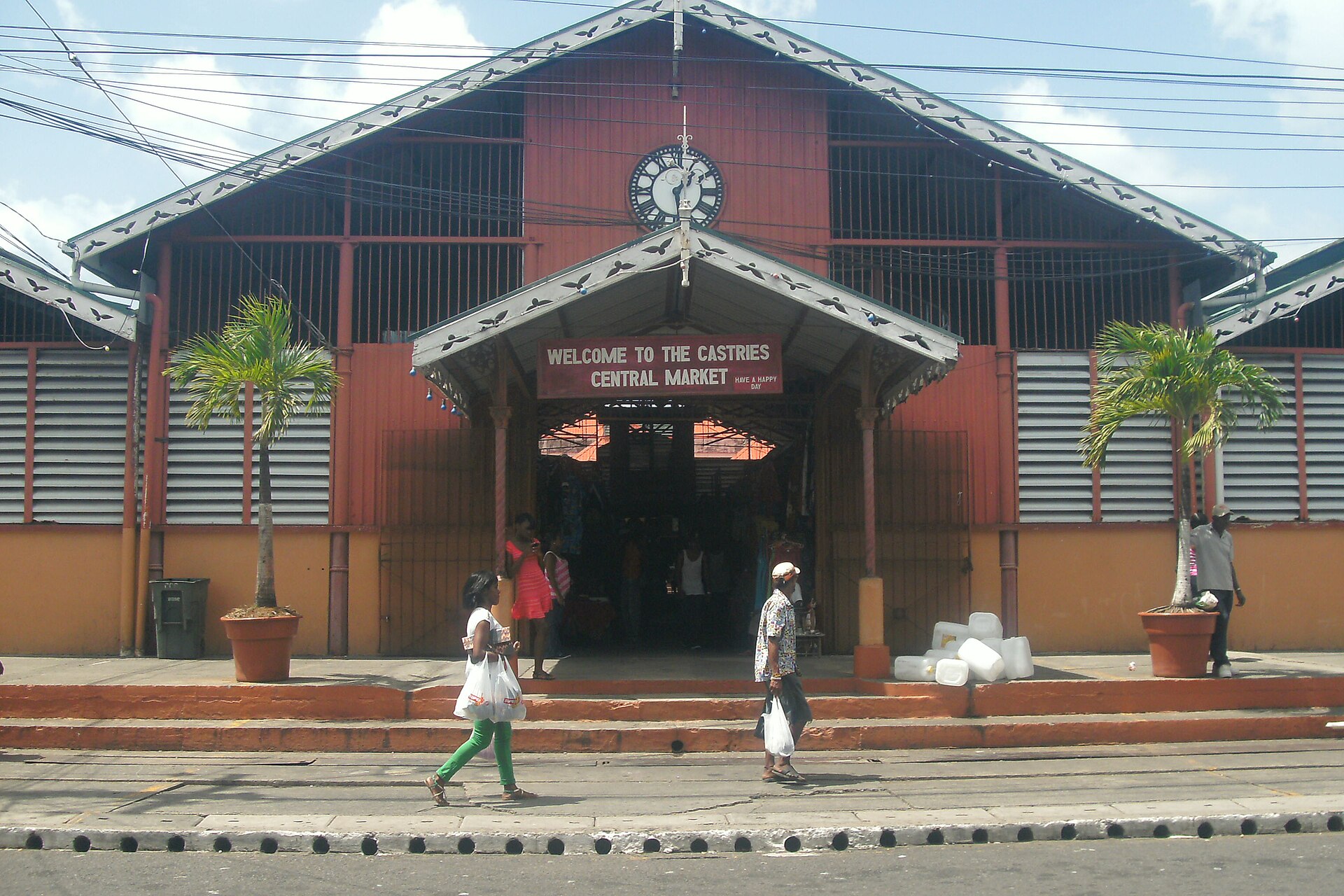
Outside the resort areas, local currency is more convenient. Market stalls, small restaurants, minibuses and village bars prefer Eastern Caribbean notes, and having them makes every purchase smoother, as you will find at Castries Market or the Friday fish fry at Anse La Raye.
- Ask which currency a price is quoted in.
- Carry small notes of EC dollars for markets and buses.
- Keep a few US dollars for tips and taxis.
Cards, cash machines and exchange
Visa and Mastercard are accepted at most hotels, restaurants, larger shops and established tour operators. Cash machines at bank branches and shopping centres across the island dispense Eastern Caribbean dollars, and they are easiest to find in Castries, Rodney Bay and the larger towns. Tell your bank you are travelling so your card is not blocked, and check what it charges for overseas withdrawals and card payments.
There are currency exchange booths at the airport, and many hotels will change money at the front desk. Banks open on weekdays, with shorter hours early in the week and longer hours on Fridays. You do not usually need to exchange money before you travel, because dollars and cards cover most spending and cash machines supply local currency on arrival. A small amount of local cash for the first day is a convenience, not a necessity.
Service charges and taxes
Many hotel and restaurant bills add a service charge, commonly ten per cent, and government taxes may also be added. When you book or order, ask whether the price you have been quoted includes both, because the difference can be considerable on a longer stay. Resorts that advertise inclusive rates generally state what is covered and what is not, so read the small print on drinks, activities and spa treatments.
Our where to stay guide and the individual resort pages explain what each property offers, and our where to eat guide covers service charges in restaurants.
How much to tip
Where a service charge appears on the bill, no more is required, although a little extra for exceptional service is always welcome. Where there is no service charge, a tip of around ten to twelve per cent is customary in restaurants. Taxi drivers, guides, spa therapists, boat crews and hotel staff all appreciate a tip for good service, and cash in a small note is the most direct way to give it.
At a resort, a tip for the person who looks after you every day goes further than a large sum left at the end, and you can give it at any point in your stay. If you are on an all-inclusive package, ask the resort what its policy is, because some prefer guests not to tip staff directly.
Planning your spending
Saint Lucia can be done at several price levels. Resorts near the Pitons and on the north coast sit at the luxury end, while guesthouses, small hotels and villas offer lower prices, and eating at market stalls and fish fries keeps daily costs down. Costs for tours, car hire and boat trips vary with the season, and the quietest months offer the best deals, as set out in our best time to visit guide. If you are weighing value against price, our is Saint Lucia worth it guide sets out what to expect.
How should I pay for things on holiday in Saint Lucia?
On holiday in Saint Lucia, use a card at hotels, larger restaurants and organised tours, and carry a modest amount of cash in small notes for taxis, markets, snacks and tips, because small vendors and rum shops often prefer cash. The island uses the East Caribbean dollar, though many visitor prices are quoted in US dollars, so always check which currency a price is in. A sensible habit is to ask, before you buy, whether the price is in EC or US dollars. Peak weeks carry the highest prices, so our best time to visit page may help you decide when to budget most generously, and when a quieter month will stretch your money further without sacrificing the weather you want.
Keep your cash split between pockets and your hotel safe, and never carry more than you need for the day. Cash machines are found in the main towns and at some resorts, but they are less common in villages and on the southern coast, so withdraw before a long drive. When a card is used, you may be asked whether you want to pay in local or home currency, and it is usually better to choose the local one and let your bank convert the amount. Tell your bank you are travelling to avoid a blocked card on the first day, and keep its helpline number saved on your phone in case you need to call from abroad.
In markets and at roadside stalls, small notes and coins make life easier, and vendors will appreciate exact change. Our guides to artisan markets and crafts and street food describe places where cash is useful. If you are visiting from a cruise ship, a few small notes in US dollars are widely understood, but expect to receive change in local currency. With a little care you will avoid confusion at the till, and the rest is a question of enjoying what you buy, whether that is a woven basket, a bag of cocoa or a plate of grilled fish eaten at a plastic table beside the sea.
What extra costs should I budget for on a Saint Lucia holiday?
Beyond flights and your room, budget for airport transfers, excursions, meals outside your hotel, service charges and taxes, and any spa or dive extras, because these often make up a large share of the real cost of holidays in Saint Lucia. Many hotels add a service charge and government taxes to the rate, so check whether the price you see includes them. Our worth it guide explains how costs compare, and it helps to read it alongside your quotes so that you are comparing like with like rather than headline rates that leave out the extras, which can make a cheaper looking room turn out to be the dearer choice.
Transfers and tours are the other big items. The roads are winding, so a transfer between the airport and a resort can be a significant expense, particularly if you are staying in a different part of the island from where you land. Excursions such as boat trips, guided hikes and diving vary in cost, and group sizes affect the price. Ask what is included, such as lunch, drinks, equipment and hotel pick-up, so that you can compare like with like. Our getting around guide explains how transport is arranged and why a driver often proves better value than a hire car for a family or a group of friends.
Keep a small reserve for the things you cannot predict: a spontaneous dinner, a souvenir you fall for, a tip for someone who went out of their way. Many travellers find that the cost of food is the most variable item, since a roadside lunch is far cheaper than a resort dinner. If you are celebrating, budget for the occasion separately so that it is not squeezed by everything else. Our where to eat guide shows the range of options, from simple to special, so you can mix a few memorable meals with plenty of relaxed, inexpensive ones and still feel that you have eaten well all week.
How do I avoid confusion over prices and tips in Saint Lucia?
To avoid confusion over prices and tips in Saint Lucia, confirm the currency before you pay, agree taxi fares before you set off, check whether a service charge is already on the bill and tip for good service in cash where you can. Most misunderstandings come from assumptions rather than bad faith. A quick question at the start of any transaction prevents awkwardness at the end. If the bill includes a service charge, you do not need to add another large tip, though a small extra for outstanding service is always appreciated by the people who looked after you and who often depend on tips to supplement their wages, especially in the quieter months of the year.
Tipping is a personal matter, but the principle is simple: reward people who make your day better. Guides, drivers, boat crew, housekeeping and restaurant staff all rely on tips to supplement their income, and cash handed over with a smile goes a long way. Carry small notes so that you can tip promptly. Our responsible travel guide explains why spending locally has a lasting effect, and many visitors find that tipping well is the easiest way to say thank you for an experience that stayed with them long after the holiday ended and the suitcase was unpacked.
Keep your receipts, check your card statements after you return, and report any discrepancies promptly. If you feel you have been overcharged, raise it politely and calmly with the manager, since most establishments want to put things right. For big purchases, such as a painting or a piece of jewellery, ask about shipping and customs, and get everything in writing. Read the visa and entry guide for what you can bring home. A little care with money means that the rest of the holiday can be entirely about enjoyment, with no nagging doubt about what you paid, why you paid it or whether the exchange rate was fair.
The economy behind everyday spending
Prices and payment habits reflect the way the island earns its living. The economy of Saint Lucia gives the wider context, and government and politics explains who sets the rules around it.
For the international side, law and foreign relations is a helpful reference, and who lives on the island shows how many families depend on visitor spending. Confirm current rates and rules before you travel.
From planning to booking
Most visitors fit this into St Lucia holidays, so choose your base first. Compare hotels in St Lucia by area and style, and read our guides to luxury hotels in St Lucia and all inclusive resorts in St Lucia if you are choosing between a boutique stay and an all in package.
Then set your dates with the best time to visit St Lucia, book flights to St Lucia and pick days out from our St Lucia itineraries. Couples can also read about a honeymoon in St Lucia or weddings in St Lucia.
Questions travellers ask
What currency does Saint Lucia use?
The Eastern Caribbean dollar, written EC$ or XCD. It is fixed at EC$2.70 to one US dollar, so EC$27 is about US$10.
Can I pay with US dollars?
Yes. Hotels, restaurants, tour operators and taxis widely accept US dollars. Change is often given in Eastern Caribbean dollars, so confirm the currency of a price.
Are credit cards widely accepted?
Visa and Mastercard are accepted at most hotels, restaurants, larger shops and established tour operators. Smaller family-run businesses may prefer cash.
Do I need to change money before I travel?
Not usually. Dollars and cards cover most spending, and cash machines dispense local currency. A little local cash is handy for markets and food stalls.
How much should I tip?
Where a service charge is added, no more is needed. Otherwise tip about ten to twelve per cent in restaurants, and give a little to taxi drivers, guides and hotel staff.
Do bills include a service charge?
Many hotel and restaurant bills add a service charge, often ten per cent, and taxes may be added too. Ask whether the quoted price includes them.
Where can I get cash?
Cash machines at bank branches and shopping centres across the island dispense Eastern Caribbean dollars. There are also exchange booths at the airport.
Will my bank block my card?
It might. Tell your bank you are travelling and check the fees it charges for overseas payments and withdrawals.
Should I take pounds, dollars or euros to Saint Lucia?
Take a card for most spending and a modest amount of US dollars or local currency for small purchases. Pounds and euros are rarely useful on the ground, and exchanging them costs more than withdrawing local currency.
Can I use contactless payments in Saint Lucia?
Often yes at hotels and larger shops, but not everywhere, and chip and PIN or a signature may be needed. Carry some cash for small vendors and as a backup if a terminal is down.
Is it rude not to tip in Saint Lucia?
It is not rude if a service charge is already included, but a small extra for good service is appreciated. Where no service charge is added, tipping a sensible amount in cash is customary.
Saint Lucia on the map
Saint Lucia lies in the Windward Islands of the eastern Caribbean, around 13.8830 degrees north, 60.9670 degrees west. Map data from OpenStreetMap contributors.
Ask Lucy about Money and tipping
Ask about places to stay, things to do, the weather or getting here.
Keep exploring Saint Lucia
Looking for the industry view? Visit St Lucia on VisitTravelGroup.com covers the destination for travellers and the tourism trade.
More from the Visit Travel Group network: VisitTravelGroup.com, Benidorm.co.uk, Anguilla.co.uk, TheRedSea.co.uk.