Things to do
The Pitons: Saint Lucia's Twin Peaks
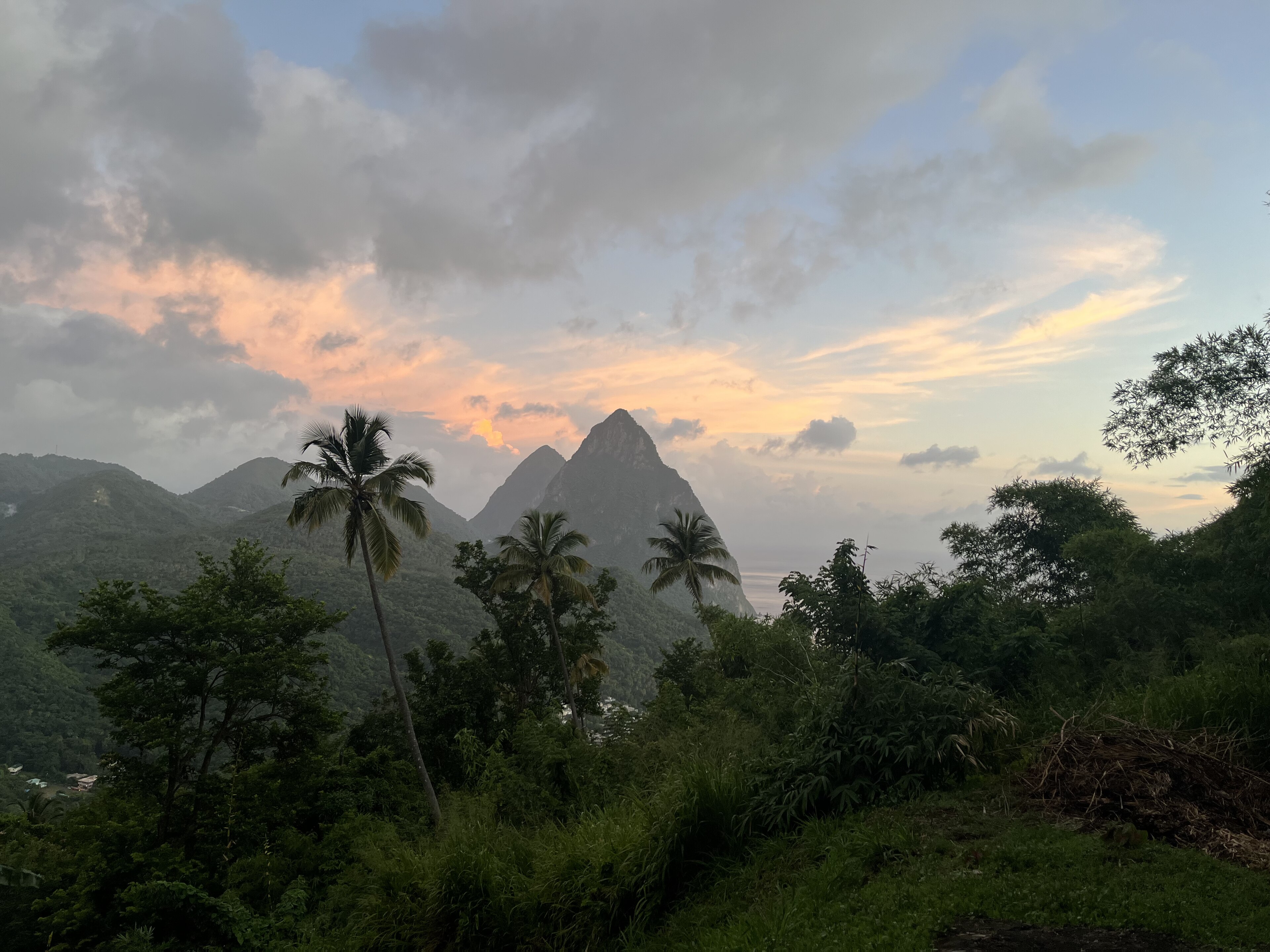
Two volcanic spires rising from the sea on the southwest coast. They are the image of Saint Lucia and the reason many people come.
What the Pitons are
Gros Piton and Petit Piton are volcanic plugs that rise steeply from the Caribbean on the southwest coast, close to the town of Soufrière. Gros Piton is the taller and broader of the two, at roughly 800 metres, and Petit Piton is the slimmer and a little lower. Between them runs the Val des Pitons, the valley that holds several of the island's best-known resorts.
The area is recognised as a UNESCO World Heritage Site for its landscape and its marine and forest environments. It is the most photographed place in Saint Lucia and appears on the national flag as a pair of triangles.
Seeing the Pitons
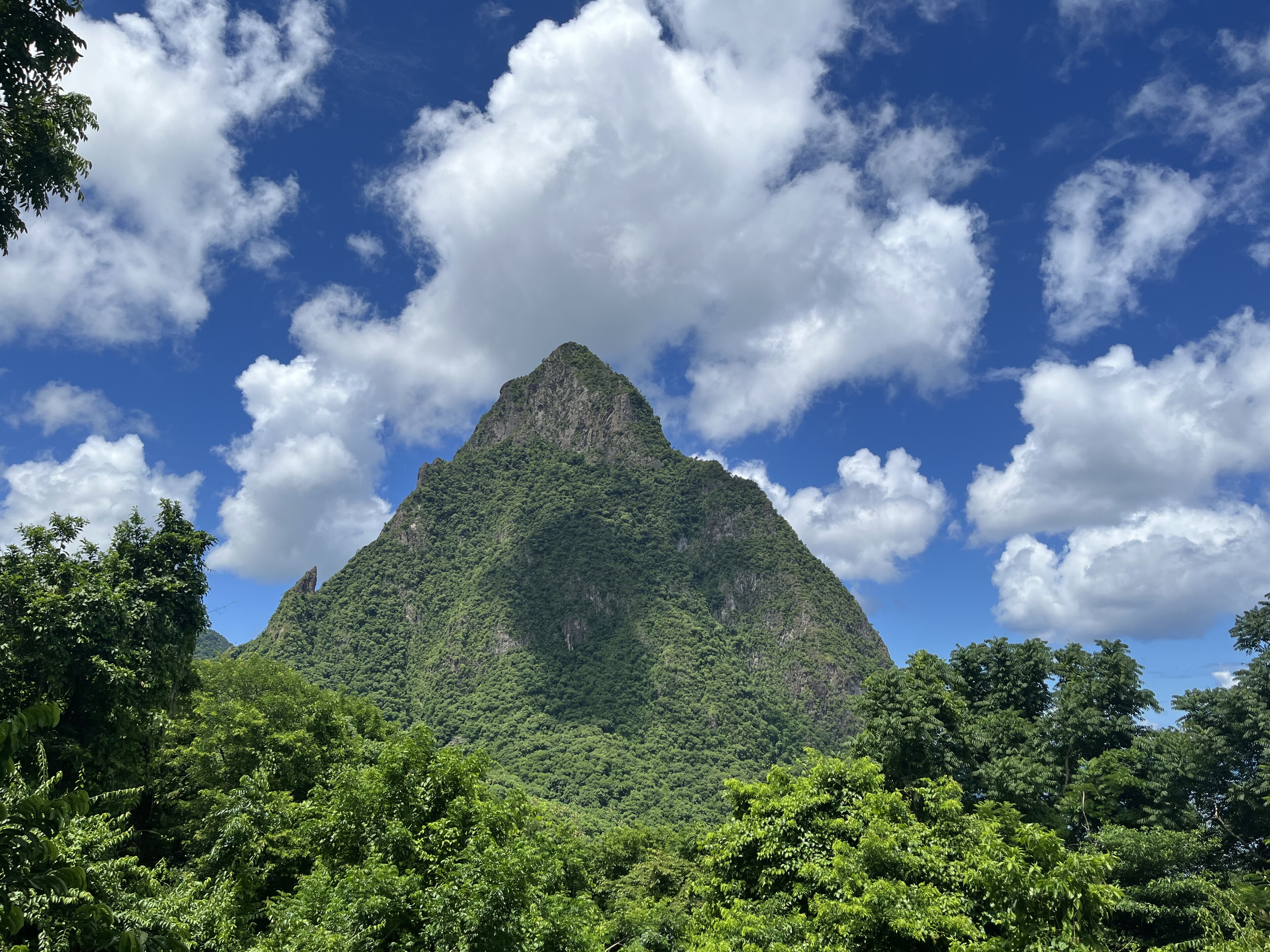
You do not have to climb to enjoy them. The views from the coast road, from a boat in the bay and from the hotels along the ridge are spectacular. A boat trip along the coast is one of the best ways to see both peaks together, and our sailing and boat trips guide explains the options.
Several resorts look directly at the peaks. Ladera sits on a ridge between them, Sugar Beach is in the valley below, and Jade Mountain faces them from across the bay.
Hiking Gros Piton
Gros Piton can be climbed on a guided trail, and the hike is a highlight for active visitors. It is steep and humid, the path is uneven, and you should set aside several hours. Guides are required and are arranged through the local site office, which also helps keep the trail in good condition and supports local people. Go early to avoid the heat, wear proper footwear and carry water.
Petit Piton is far steeper and is generally regarded as a serious climb. Take local advice on current conditions before attempting either peak. Our hiking and rainforest guide covers gentler options.
- Allow most of a morning for Gros Piton and book a guide.
- Combine the day with the Sulphur Springs and the waterfalls nearby.
- Check the best time to visit if you want drier trails.
Under the water
The Pitons continue below the surface, and the marine area at their base is rich in reef life. Divers and snorkellers can explore it from the coast, as set out in our diving and snorkelling guide.
A morning on Gros Piton: what to expect
The trail begins at a visitor centre where you register and meet your guide. The first stretch climbs through farmland and then enters forest, where the path becomes steeper and rougher, with roots and rock steps to negotiate. Guides set a steady pace and stop for rests, and they point out birds, plants and the places where the view opens out.
The final section is the hardest, with steep scrambling in places, and the summit rewards you with a wide view of the coast, the sea and Petit Piton. The descent is demanding on the knees. Most people find the whole hike takes several hours, so start early and carry more water than you think you need.
- Wear shoes with a good grip and quick-drying clothes.
- Bring a light waterproof, sun protection and snacks.
- Tell your hotel which hike you are doing and when you expect to be back.
Photographing and visiting the Pitons
The best photographs are often taken from a distance. Morning light is clearest in the drier months, and the ridge viewpoints above Soufrière give a view over the bay with both peaks in frame. From the sea, a boat trip lets you see how the two spires relate to each other, and sunset cruises catch them in warm light.
Whatever you do, treat the area with care. It is a protected landscape and a working environment for local people, so stay on marked paths, take your litter home and respect the guides and landowners. If you want to stay close, Ladera and Sugar Beach both put you right beneath them.
Why are the Pitons a UNESCO World Heritage Site?
The Pitons Management Area in Saint Lucia was inscribed as a UNESCO World Heritage Site in 2004 for its striking landscape and geology, protecting the two volcanic spires, the surrounding forest and the marine environment at their base. The listing recognises both the natural beauty of the peaks and their scientific value, because the area preserves evidence of a collapsed stratovolcano, with craters, lava deposits and the continuing geothermal activity seen at the Sulphur Springs. The protection extends to the reefs offshore as well as the forest on the slopes.
Gros Piton is the taller and broader of the two peaks at 798 metres, while Petit Piton is lower at 743 metres but considerably steeper. Standing apart from the mountain ridges behind them, they look from a distance like two giant teeth, and they have become the island's emblem, appearing on the national flag as two triangles. The dense forest on their flanks shelters rare plants and birds, and the waters at their base are home to coral and fish, so the protected area covers land and sea together as one landscape.
Protection brings responsibilities. Access to the peaks is controlled, climbs require guides, and fees help to maintain trails and support local communities. As a visitor you can help by keeping to marked paths, taking rubbish with you and respecting the landowners and guides who work in the area. For a deeper understanding, read our background articles on geology and volcanoes and conservation and protected areas, which explain how the island's special places are looked after and why they matter.
Where is the best place to see the Pitons in Saint Lucia?
The best places to see the Pitons are the viewing platform on the Tet Paul Nature Trail, a boat in Soufrière Bay, the terraces of resorts such as Ladera and Sugar Beach, and the coast road near Soufrière. Tet Paul is a short guided walk that climbs to a platform with both peaks laid out in front of you and Sugar Beach far below, and it is an easy way to enjoy the view without climbing the mountain. Early morning is cooler and often clearer, and late afternoon gives softer light from the west-coast viewpoints and from the sea.
From the water, the peaks look different again. A catamaran or sunset cruise lets you see the two spires rising straight from the sea and shows how they relate to each other, and the lowering sun turns them deep blue and then nearly black. Our guide to catamaran and sunset cruises explains how trips work. If you want to see them from the terrace of your room, Ladera sits on a ridge between the peaks, and Jade Mountain faces them across the bay through the open side of each sanctuary.
Photographers should be patient. Cloud often clings to the summits in the morning and can clear suddenly, and the colour of the sea and the hillside changes with the light. Try several places and times, and take a long lens if you have one. Do not rely on a single sunset, because weather varies, and give yourself at least two evenings. It is also worth looking at the peaks without a camera for a while, because they have a way of making even the busiest visitor stop and stare.
Which is the better climb, Gros Piton or Petit Piton?
Gros Piton is the better climb for most visitors, a guided moderate to challenging walk of about four kilometres there and back, while Petit Piton is shorter but much steeper, with rope-assisted, exposed sections for experienced climbers only. Gros Piton has the more established visitor route, a certified local guide is required, and most people take four to six hours at a steady pace. The ground is steep and often wet, and the humidity adds to the effort, but the summit reward of a view over the coast, the sea and Petit Piton is worth it.
Petit Piton involves near-vertical scrambling using fixed ropes, and it demands a head for heights, good fitness and a professional guide. It is not suitable for beginners, and conditions can change quickly. For many visitors the sensible choice is to climb Gros Piton and admire Petit Piton from the sea, a viewpoint or a terrace. Our detailed guide to climbing Gros Piton describes the route, and the Three Peaks Challenge suits those who want to climb both and the island's highest summit.
Whichever you choose, start early, carry plenty of water, wear shoes with strong grip and tell your hotel where you are going. Plan a gentle day afterwards, and consider a soak at the springs or a swim to ease tired legs. Staying close to the peaks, at Sugar Beach or elsewhere in the Soufrière area, means you can wake with the view and begin the hike without a long drive. And if climbing is not for you, remember that the Pitons are one of those rare places that are impressive from every angle.
The Pitons in their full setting
The Pitons are the island's best-known landmark. The geology and volcanoes guide explains their origin, and conservation and protected areas describes the protection they receive.
The forest and reef around them are covered by rainforest and plant life and marine life and coral reefs, while national symbols and holidays shows their place in national identity.
Where to stay and how to plan
Most visitors fit this into St Lucia holidays, so choose your base first. Compare hotels in St Lucia by area and style, and read our guides to luxury hotels in St Lucia and all inclusive resorts in St Lucia if you are choosing between a boutique stay and an all in package.
Then set your dates with the best time to visit St Lucia, book flights to St Lucia and pick days out from our St Lucia itineraries. Couples can also read about a honeymoon in St Lucia or weddings in St Lucia.
Questions travellers ask
Can you climb the Pitons?
Gros Piton can be climbed on a guided trail and takes several hours. Petit Piton is much steeper and is a serious climb. Take local advice on conditions.
Where can you see the Pitons from?
From the coast road near Soufrière, from boats in the bay, and from resorts such as Ladera, Sugar Beach and Jade Mountain.
Are the Pitons a World Heritage Site?
Yes. The Pitons Management Area is recognised by UNESCO as a World Heritage Site.
How long does Gros Piton take?
Several hours for the round trip, depending on fitness and conditions. Start early to avoid the heat.
What is the best view of the Pitons?
From a boat in the bay, from the hills above Soufrière, and from the ridge-top resorts.
How tall are the Pitons in Saint Lucia?
Gros Piton is 798 metres and Petit Piton is 743 metres, though Petit Piton is considerably steeper. Both rise directly from the sea near Soufrière and are the island's best-known landmarks.
Do you need a guide to climb the Pitons?
Yes, a certified local guide is required on Gros Piton, and Petit Piton also needs a professional guide. Guides improve safety, read the weather and explain the forest.
What is the best time of day to see the Pitons?
Early morning gives cooler air and often clearer views, while late afternoon offers softer light from the west coast and from the sea. Cloud can hide the summits at any time.
How hard is it to climb Gros Piton?
Gros Piton is steep and demanding, with uneven steps and humid heat, so reasonable fitness is needed. Go early with a guide and carry plenty of water. See the Gros Piton hike for full detail.
Can you climb Petit Piton?
Petit Piton is a far harder scramble than Gros Piton and is not suitable for casual hikers. Most visitors enjoy it from below or from the sea. See sailing and boat trips for views from the water.
The Pitons on the map
The Pitons is at 13.8220 degrees north, 61.0650 degrees west. Map data from OpenStreetMap contributors.
Ask Lucy about The Pitons
Ask about places to stay, things to do, the weather or getting here.
Keep exploring Saint Lucia
Looking for the industry view? Visit St Lucia on VisitTravelGroup.com covers the destination for travellers and the tourism trade.
More from the Visit Travel Group network: VisitTravelGroup.com, Benidorm.co.uk, Anguilla.co.uk, TheRedSea.co.uk.