Experiences
Saint Lucian Street Food: What to Eat and Where
Some of the best meals in Saint Lucia cost very little and come from a market stall, a roadside grill or a village street party.
Why street food matters here
Street food in Saint Lucia is Creole cooking at its most direct. African, French, British and Caribbean influences meet in simple, well-seasoned dishes that locals eat every day, from breakfast to the small hours. It is food made for sharing, and the best of it is found where people naturally gather: morning markets, roadside grills, fishing villages and community events.
If you want the full story behind these dishes, start with our food and rum guide. If you would rather learn to cook them yourself, a Creole cooking class is the next step.

The dishes to look for
Bakes come first. They are rounds of fried dough, not baked at all, known elsewhere in the Caribbean as Johnny cakes or floats. Light and slightly crisp outside, they are eaten warm with saltfish, cheese, jam or smoked herring, and they are one of the most popular grab-and-go breakfasts on the island.
Saltfish accra are deep-fried fritters flavoured with herbs, peppers and spices, crisp outside and soft within. You will find them at markets, from roadside vendors and at community events. Then there is green fig and saltfish, the national dish, which often appears at stalls and gatherings as well as on restaurant tables.
- Bakes with saltfish, cheese or jam for breakfast.
- Saltfish accra as a snack at any time of day.
- Green fig and saltfish, the national dish.
- Roasted corn, grilled fish and barbecue in the evening.
Mornings at Castries Market
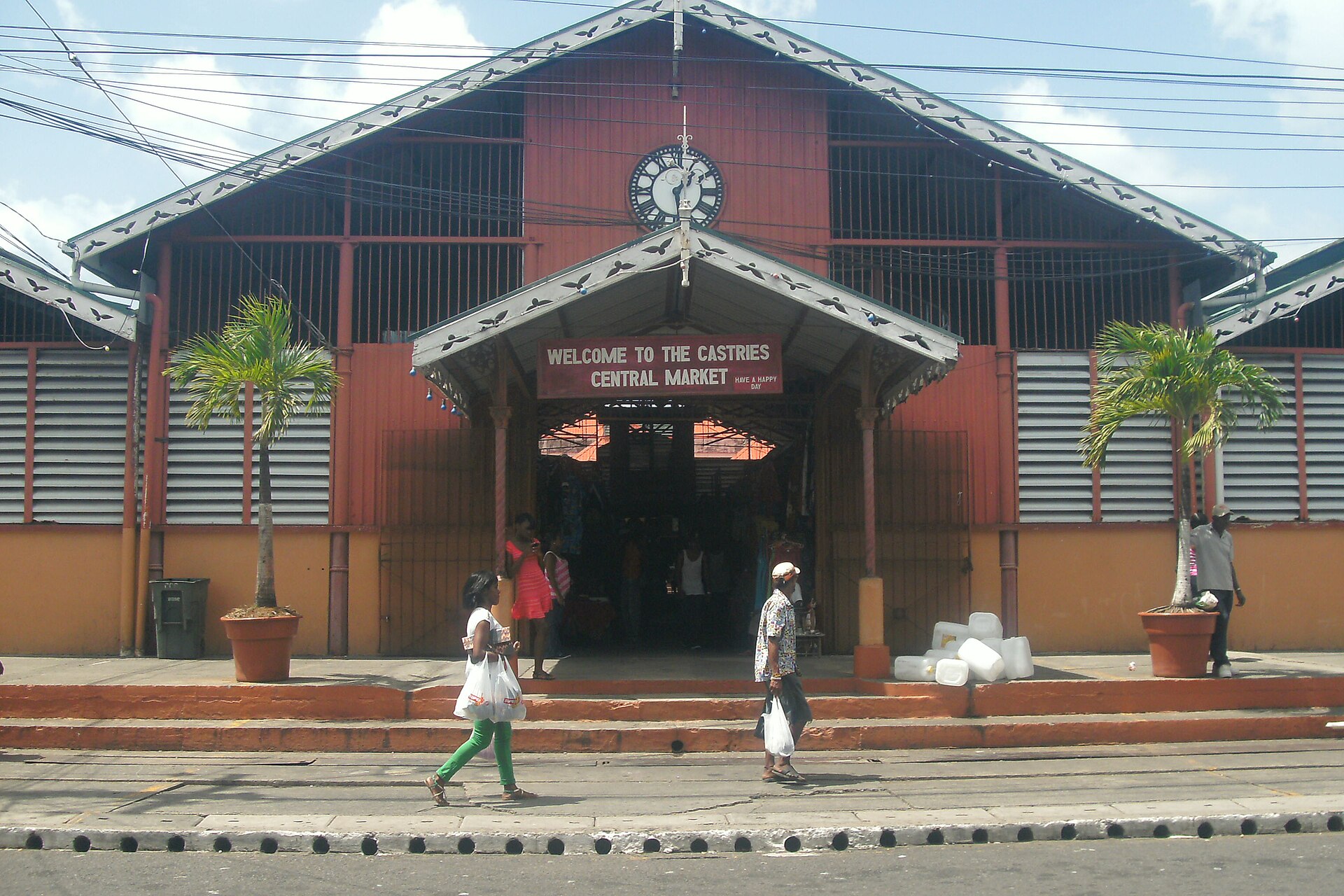
The best place to begin is Castries. Breakfast stalls at the central market open early, and the morning is when local shoppers are out and the cooks are busiest. Saturday is especially lively. Eat something warm, wander the produce, spices and cocoa sticks, and keep an eye out for hot sauces and preserves you can take home.
The market also suits people who like to shop for crafts. Our artisan markets and crafts guide explains what to look for once you have eaten.
After dark: Friday night street parties
As the sun sets, charcoal grills come out across the island and the smell of roasting corn, barbecued meat and grilled seafood fills the air. The best known gathering is the Friday night street party in Gros Islet, where vendors serve local favourites late into the evening and music carries on long after the food has gone.
Anse La Raye holds a Friday fish fry beside its fishing beach, and the east coast village of Dennery has a lively seafood evening on Saturdays. For the full evening picture, including bars and live music, see our bars and nightlife guide, and read about the villages themselves in the Gros Islet and Anse La Raye pages.
Tips for first-time visitors
Street food is easy to enjoy if you arrive curious, patient and with time to linger. Go where there is a queue of locals, ask what is freshest, and do not be afraid to ask what is in a dish. Carry small amounts of cash and check the money and tipping guide for what to expect.
If you have a sensitive stomach, choose food cooked hot in front of you and drink bottled water. If you have allergies, ask before you order, as fish, nuts and shellfish are common. The health and safety guide has more general advice, and you should dress casually and bring insect repellent for evening events.
Fitting it into your trip
A street food day works well as a cultural day: market breakfast in Castries, lunch in a fishing village, then the party in Gros Islet if it is a Friday. Our culture and local experiences itinerary builds that into a plan, and the where to eat guide lists sit-down options for the other meals.
How do you choose good street food in Saint Lucia?
Choose busy stalls in Saint Lucia where locals queue, food is cooked fresh and served hot, ask what is best that day, carry small cash, and start with a small amount of pepper sauce. The best street food is rarely signposted, so it helps to learn what to look for. A short queue of regulars at lunchtime is the most reliable sign, and the smell of fresh frying or charcoal is the second. Watch how the cook works: food that is made to order, served hot and wrapped quickly is usually food that sells fast and never sits. Many vendors have a single speciality they have perfected over years, and it pays to ask what is best today instead of pointing at everything. A friendly greeting in Kwéyòl or plain English before you order goes a long way, and most vendors are happy to explain what is in each item.
Eating the local way is relaxed and informal. Food often arrives in paper or foil, you stand at the side of the road or find a wall to sit on, and napkins are a luxury worth keeping in your bag. Pepper sauce is usually offered on the side, and it is wise to start with a small dab, because the local heat can surprise visitors who think they know chilli. If you are unsure, ask whether the sauce is mild or fierce before it goes on. Cold drinks are close at hand, and a bottle of water is a sensible companion on a hot day when you plan to graze for several hours.
Timing matters as much as place. Breakfast stalls are at their best early, when the dough is fresh, and lunch is when fish and provisions are served hot from the pot. Evening vendors set up as the light fades and often run until the crowd thins. Treat the day as a series of small stops rather than one big meal, and you will taste far more. If you want to understand the dishes before you hunt for them, our food and rum guide gives the background, and the money and tipping guide explains how to handle small payments with ease.
What sweet snacks and drinks can you try from Saint Lucian street vendors?
Street vendors in Saint Lucia sell fresh coconut water, seasonal fruit, cocoa tea, cocoa sticks, home-made preserves, sea moss gels and hot sauces, so a day of grazing includes sweet and cooling treats as well as savoury food. Street food is not only savoury. Fresh coconut water drunk straight from the nut is one of the great small pleasures of a hot afternoon, and roadside sellers will open one for you with a few swift strokes of a machete. Fruit is everywhere, from sliced pineapple and mango in season to bananas that taste unlike anything in a British supermarket. Ask what is ripe at the moment, since the best fruit changes with the weeks. Eating it outdoors, with juice running down your wrist, is half the fun, and it makes a cheap and cheerful snack between the heavier dishes of the day.
Cocoa runs through the island's sweet side. Cocoa tea, a hot drink made from locally produced cocoa and spices, is a traditional comfort at breakfast, and stalls in the market sell cocoa sticks you can take home to make your own. Home-made preserves, sauces and sea moss gels turn up at market tables too, usually made by the person selling them. These small jars make better souvenirs than most things on a shelf, and they carry the taste of the island into a British kitchen. Our cocoa and chocolate guide explains where the beans come from and how to see the process for yourself.
Drinks sit naturally alongside the food. Cold local beer is a fixture at evening gatherings, and rum is never far away, served neat, with ice or as a punch. Soft drinks and juices are easy to find for children and non-drinkers, so a street evening works for the whole family. Pace yourself, drink water between rounds and arrange your journey home before the music starts. If you want to know more about the spirit itself, our rum and local distilleries guide covers the history and the bottles to look for, and it makes a good companion to a night spent eating outdoors.
Where is the best street food in Saint Lucia by area?
The widest choice of street food in Saint Lucia is in the north around Rodney Bay and Gros Islet, while the west coast fishing villages offer seafood and the quieter east coast rewards curious drivers. Where you stay shapes how you eat. In the north, around Rodney Bay and Gros Islet, the choice is widest, with market stalls by day and busy evening grills that suit people who want to walk out of their hotel and eat well. The north of the island also has the easiest transport home afterwards, which counts for a great deal once the rum punch has been poured. Many visitors base themselves here for exactly this reason, and a week of hopping between stalls, bars and beaches is a perfectly good way to see the island without ever opening a map.
On the west coast, fishing communities give the street food a seafood bias. Boats land the catch, grills are lit, and the line between a market, a restaurant and a beach party blurs pleasantly. The west coast is also home to the villages and bays where tables are often simply plastic chairs on the sand, with the sea a few steps away. Further round, the east coast is quieter and less visited, but its harbour communities reward the curious, and a drive along the east coast can finish with a plate of something freshly cooked and a long view of the Atlantic.
Seasons change the mood rather than the menu. In the busier winter months, more stalls open and events run later, while the quieter months bring smaller crowds and more time to talk to the cooks. Rain is usually brief, and a covered market is a pleasant place to wait it out. Our best time to visit guide explains the pattern across the year, and families who want to graze together will find the Family Fun itinerary a useful guide to pacing the day so that no child, or adult, gets too tired before the evening feast.
The people and places behind the stalls
Street food tells you a lot about a place. Culture and traditions explains how food brings communities together, and languages and Kweyol helps you order with a smile.
Many ingredients come from local farms, covered in agriculture and bananas, and the mix of influences on the menu is easier to follow after reading who lives on the island.
Turning this into a St Lucia holiday
Most visitors fit this into St Lucia holidays, so choose your base first. Compare hotels in St Lucia by area and style, and read our guides to luxury hotels in St Lucia and all inclusive resorts in St Lucia if you are choosing between a boutique stay and an all in package.
Then set your dates with the best time to visit St Lucia, book flights to St Lucia and pick days out from our St Lucia itineraries. Couples can also read about a honeymoon in St Lucia or weddings in St Lucia.
Questions travellers ask
What is a Saint Lucian bake?
A round of fried dough, not baked, eaten warm at breakfast with saltfish, cheese, jam or smoked herring. It is a local staple.
What are accra?
Accra are deep-fried saltfish fritters seasoned with herbs and peppers. They are crisp outside, soft inside and sold at markets and roadside stalls.
What is the national dish of Saint Lucia?
Green fig and saltfish: boiled green bananas served with seasoned salted cod. You can find it at stalls, markets and restaurants.
Where is the Friday night street party?
In Gros Islet, in the north of the island, from sunset each Friday, with grills, music and plenty of local food.
Is street food safe to eat?
Generally yes if you choose busy stalls where food is cooked fresh and hot. Use common sense and ask about ingredients if you have allergies.
When is Castries Market busiest?
Mornings are best, and Saturdays are especially busy, when farmers and vendors from across the island come to sell.
Is there a fish fry besides Gros Islet?
Yes. Anse La Raye holds a Friday fish fry on the beachfront, and Dennery has a lively Saturday evening with street vendors.
How much cash should I carry?
Small amounts are enough for stalls. Check current prices on the day, since vendors do not always take cards.
Is Saint Lucian street food safe to eat?
Generally yes if you choose sensibly. Pick busy stalls where food is cooked hot in front of you, drink bottled water, and if you have a sensitive stomach, start with simple dishes before trying anything richer or spicier.
How much cash should I carry for street food?
Carry small notes and coins, because most stalls do not take cards and vendors may not have change for large notes. Check current prices as you go, since they vary by stall and by season.
Can vegetarians find street food in Saint Lucia?
Yes, though choice is narrower. Fried plantain, roasted corn, fresh fruit, coconut water and plain bakes are easy to find, and vendors will usually tell you honestly which items contain fish or meat.
Saint Lucia on the map
Saint Lucia lies in the Windward Islands of the eastern Caribbean, around 13.8830 degrees north, 60.9670 degrees west. Map data from OpenStreetMap contributors.
Ask Lucy about Street food
Ask about places to stay, things to do, the weather or getting here.
Keep exploring Saint Lucia
Looking for the industry view? Visit St Lucia on VisitTravelGroup.com covers the destination for travellers and the tourism trade.
More from the Visit Travel Group network: VisitTravelGroup.com, Benidorm.co.uk, Anguilla.co.uk, TheRedSea.co.uk.