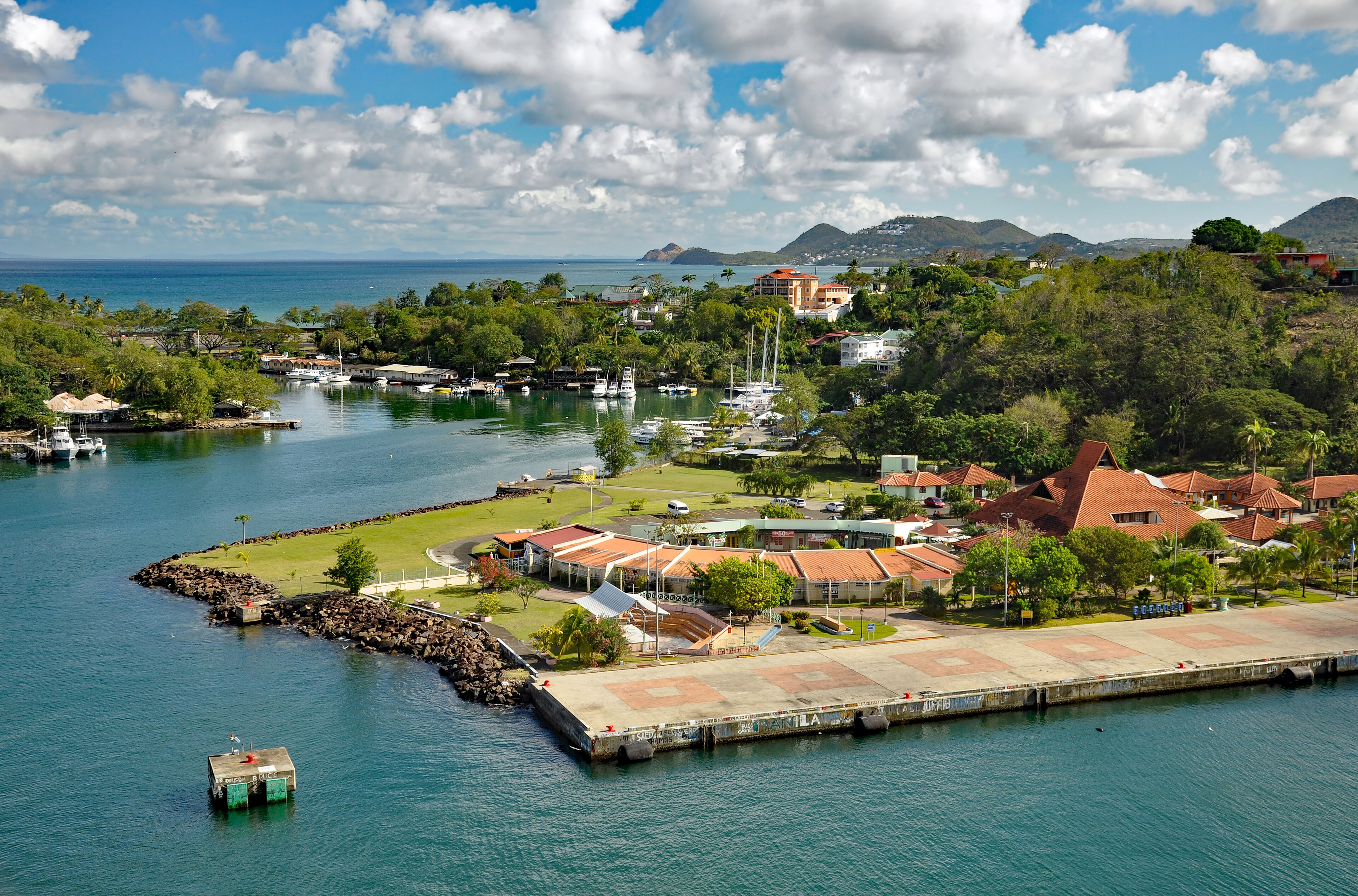
About Saint Lucia
The History of Saint Lucia: From First Settlers to Independence
Saint Lucia is a small island with an outsized past. Pottery makers from South America, fierce naval contests between France and Britain, a sugar economy built on enslaved labour and a peaceful road to independence in 1979 all left marks that you can still see, taste and hear today.
Saint Lucia's story in brief
Saint Lucia lies in the Windward Islands, between Martinique to the north and Saint Vincent to the south. It covers roughly 617 square kilometres, and its population was estimated at just over 184,000 in mid 2023. That is a small stage for a long drama. The island was home to Amerindian peoples for well over a thousand years before Europeans paid it much attention, then spent the seventeenth and eighteenth centuries as a prize in the struggle between France and Britain, then settled into more than a century and a half of British colonial rule before choosing independence in 1979.
If you like your history in manageable pieces, this page gives the overview and the other pages in this section go deeper. Our guide to first peoples and European contact covers the earliest centuries, French and British rule tells the story of the tug of war, slavery and emancipation looks at the plantation era and its legacy, and independence and modern history brings the tale up to date.
- Around 200 to 400 AD: Arawakan speaking potters arrive from northern South America.
- Around 800 AD: the Kalinago, often called Caribs, take control of the island.
- 1500s and early 1600s: Europeans know the island but fail to settle it for long.
- 1640s and 1650s: French settlers establish a lasting foothold.
- 1763 onwards: sugar plantations and the plantation system expand.
- 1778 to 1814: repeated fighting and changes of flag, ending with British control.
- 1834 and 1838: slavery is abolished, then the apprenticeship period ends.
- 1951 to 1979: universal suffrage, the West Indies Federation, associated statehood and independence.
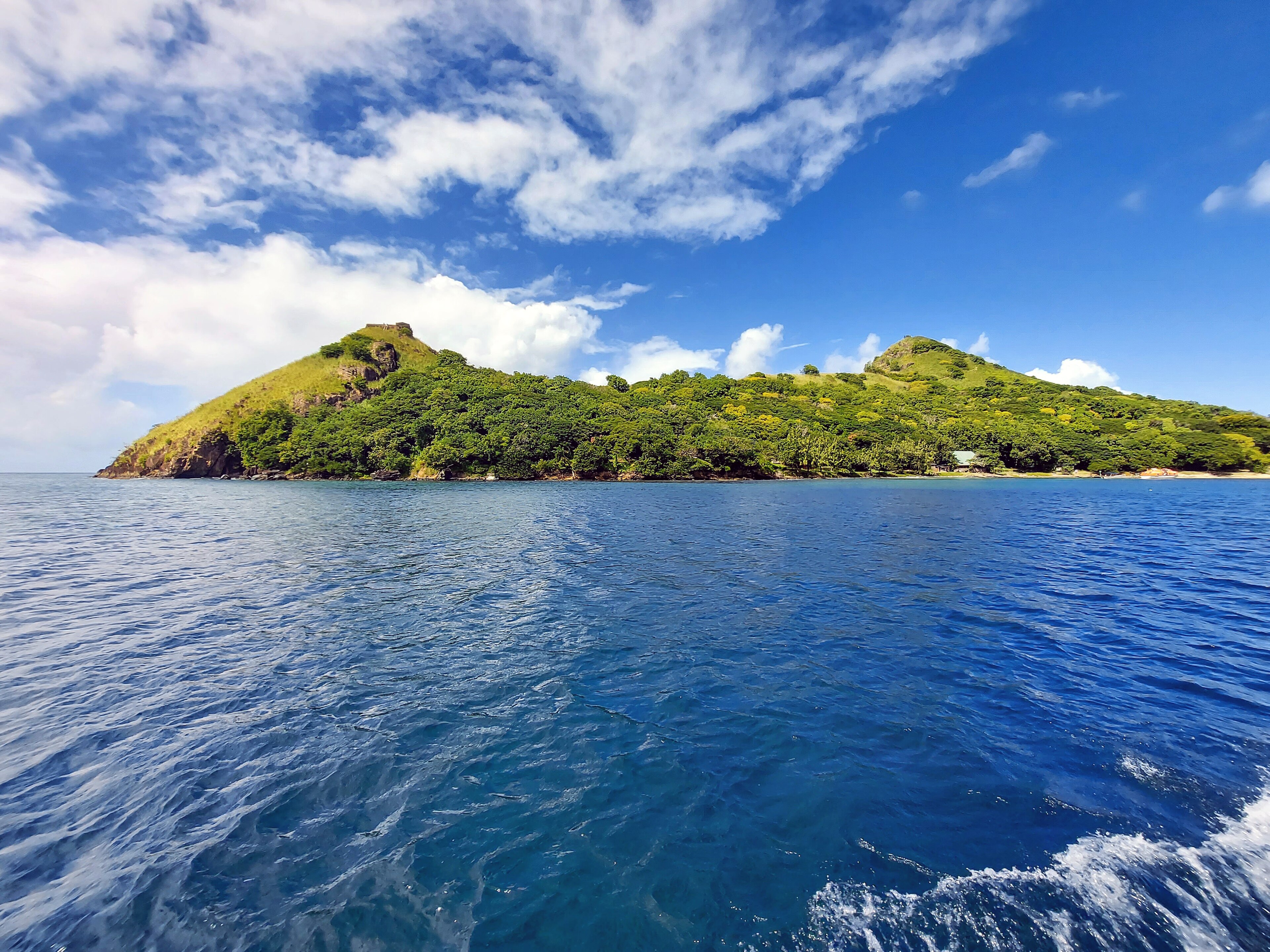
The first settlers
Nobody can name the very first people to reach Saint Lucia. Older books speak of the Ciboney, a people of the pre pottery age who may have arrived between about 1000 and 500 BC, but the evidence for them is thin. The first settlers we can prove are Arawakan speaking farmers and potters who came up the island chain from northern South America, usually dated to around 200 to 400 AD. Their decorated pottery turns up at archaeological sites across the island, and they are credited with the first name we know for the land, Iouanalao, which is generally translated as the place where the iguana is found.
Around 800 AD the Kalinago arrived and took over. Europeans later called them Caribs. They were skilled seafarers whose large dugout canoes could carry dozens of paddlers, and they lived in a society with hereditary leaders and spiritual specialists. The name Hewanorra, which survives in the name of Hewanorra International Airport at Vieux Fort, comes from this period. Historians still debate whether the name began with the Arawakan speakers or the Kalinago, which is a good reminder that much of the island's early history rests on fragments.
Europeans arrive, and fail to stay
Exactly when the first European saw Saint Lucia is disputed, and the stories do not always agree. The formal history of the Saint Lucia government is clear on one point, that Columbus never set foot on the island. By the early sixteenth century the name already appears on Spanish documents and maps, as Sancta Lucia in a Spanish decree of 1511 and Saint Luzia on a map of 1529, but Spain never colonised the island. In the late 1550s a French pirate known as Jambe de Bois, meaning wooden leg, is said to have used Pigeon Island as a base for raiding Spanish ships, an episode you can ponder when you walk the headland at Pigeon Island National Landmark.
The early 1600s brought a string of failed colonies. The Dutch are reported to have made a camp at Vieux Fort around 1600, an English ship carrying around sixty settlers was blown off course in 1605 and its colonists soon fled after sickness and clashes with the Kalinago, and a larger English party was driven out around 1640. The French made the next serious attempt from Martinique in the 1640s and 1650s, building a settlement near what is now Castries. Disease, hunger and Kalinago resistance had defeated everyone else, and the French succeeded partly because they were prepared to negotiate.
The long contest between France and Britain
Once the French had a foothold, Britain wanted the island too. For about a century and a half Saint Lucia was passed back and forth by treaty and invasion. The tally most often repeated is fourteen changes of control, although historians count the occupations, neutrality arrangements and brief captures differently. The reason was geography. Britain had its regional base in Barbados and France in Martinique, and Saint Lucia sat between them with a superb natural harbour at Castries and sheltered anchorages in the north.
The sugar boom raised the stakes. After 1763 the French cleared land for plantations, and Britain wanted a share. During the American Revolutionary War, the British took the island in 1778 and fortified Pigeon Island, and from there Admiral George Rodney sailed to win the Battle of the Saintes in April 1782. France recovered the island in 1784, the French Revolution brought violent upheaval, and the British finally secured it in 1814. The full story is on our page about French and British rule, and the places where it happened are collected in the guide to historic forts and ruins.
Sugar, slavery and freedom
Prosperity on the plantations rested on the forced labour of enslaved Africans. By the end of the 1770s well over ten thousand enslaved people were working on the island's sugar estates, far outnumbering the free population. The French Revolution reached Saint Lucia in the 1790s and briefly freed many of them, a period of civil war known as the Brigands' War, but slavery was restored under Napoleon and ended for good only when Britain abolished it. Slavery was abolished in 1834 and a four year apprenticeship followed, with full freedom in 1838.
Planters then looked elsewhere for labour. From 1859 indentured workers arrived from India, and their descendants are an important part of the island's culture today. Freedom did not bring equality, but it did allow a society of smallholders, fishing communities and market traders to take root. Much of what visitors enjoy today, from Kwéyòl language to the bustle of the market in Castries, grows out of that story. Our page on slavery and emancipation covers it in depth.
From colony to independent nation
After 1814 Saint Lucia became a British colony, and from 1838 it was administered as part of the Windward Islands group. Castries developed as a coaling port for steamships, and the island's politics opened up slowly. A constitution in 1924 introduced limited representative government, universal adult suffrage arrived in 1951, and from 1958 to 1962 Saint Lucia belonged to the short lived West Indies Federation. In 1967 it became an associated state of the United Kingdom, running its own internal affairs.
Full independence came on 22 February 1979, with John Compton of the United Workers Party as the first prime minister. The change was peaceful. Saint Lucia remains a member of the Commonwealth and shares the monarch with the United Kingdom. The decades since have seen the banana industry rise and fall, tourism become the main earner and the island win a place on the world stage through two Nobel laureates, as we explain in independence and modern history and literature and Nobel laureates.
Where the name Saint Lucia comes from
Saint Lucia is named after Saint Lucy of Syracuse, a Sicilian martyr who died around 304 AD and whose feast day is 13 December. A popular tradition says French sailors were shipwrecked here on that day and named the island in her honour, although the date given in some tellings is 1502 and the stories are better described as local tradition than documented fact. What is certain is that the name was in use on Spanish and French documents in the sixteenth century. The nation chose 13 December as its National Day, which is explained in national symbols and holidays. It is widely said to be the only sovereign country named after a real historical woman.
The island's other famous name, Helen of the West Indies, comes from its fate. Helen of Troy was fought over by rival armies, and Saint Lucia was fought over by the French and British so often that the comparison stuck. It is a fitting nickname for an island whose beauty has always drawn admirers, from the sailors who first sheltered in its bays to the travellers who now arrive at Hewanorra and Vigie.
Seeing the history for yourself
You can walk the story. Pigeon Island has the ruins of British barracks and Fort Rodney, with views towards Martinique. Morne Fortune above Castries holds the old military buildings of Fort Charlotte and some of the best views of the capital. The Saint Lucia Jazz Festival and other events bring locals and visitors together, and our guide to festivals and events lists the calendar. Soufrière, a town with deep French colonial roots on the west coast, has estates, gardens and plenty of stories in the Soufrière district to explore.
For a themed day, our history and culture experiences and the heritage and historic sites page suggest guided tours, museums and walks. If you are building a longer visit, read the culture and local experiences itinerary, and for Kwéyòl, the language that carries so much of the past, see languages and Kwéyòl. Whatever you choose, go with curiosity and ask local guides to share their family stories, because the best history here is often spoken.
Questions travellers ask
When did Saint Lucia become independent?
Saint Lucia became an independent nation on 22 February 1979, after twelve years as an associated state of the United Kingdom. John Compton became the first prime minister, and the island remains a Commonwealth realm.
Who were the first people to live on Saint Lucia?
The first settlers we can prove were Arawakan speaking potters from northern South America, around 200 to 400 AD. Earlier peoples may have visited, but the evidence is thin. The Kalinago, often called Caribs, took control around 800 AD.
Where does the name Saint Lucia come from?
The island is named after Saint Lucy of Syracuse, whose feast day is 13 December. A popular tradition says French sailors were shipwrecked here on that day, though the exact story is local tradition and not firmly documented.
Why is Saint Lucia called Helen of the West Indies?
The nickname compares the island to Helen of Troy, who was fought over by rival armies. Saint Lucia changed hands between France and Britain so often, traditionally counted as fourteen times, that the comparison stuck.
When did the British finally take control of Saint Lucia?
British control became final in 1814, when France gave up its claim in the Treaty of Paris after the Napoleonic Wars. Britain had held and lost the island many times before then.
When was slavery abolished in Saint Lucia?
Slavery was abolished across the British Empire in 1834, and Saint Lucia followed. A four year apprenticeship period then kept former slaves working for their old masters, and full freedom came in 1838.
Did Christopher Columbus visit Saint Lucia?
The Saint Lucia government history states that Columbus never set foot on the island. Some accounts say he may have sighted it from a distance, but that is uncertain and he did not land.
What is the best place to learn about Saint Lucia's history on a trip?
Pigeon Island National Landmark is the best single stop, with its ruins, museum and views. Combine it with Morne Fortune above Castries, and add a guided heritage tour or the town of Soufrière.
Is Saint Lucia still part of the British Empire?
No. Saint Lucia has been an independent country since 1979. It is a constitutional monarchy and a member of the Commonwealth, with its own prime minister, parliament and laws, and it shares the monarch with the United Kingdom.
Saint Lucia on the map
Saint Lucia lies in the Windward Islands of the eastern Caribbean, around 13.8830 degrees north, 60.9670 degrees west. Map data from OpenStreetMap contributors.
Ask Lucy about History of Saint Lucia
Ask about places to stay, things to do, the weather or getting here.
Keep exploring Saint Lucia
Looking for the industry view? Visit St Lucia on VisitTravelGroup.com covers the destination for travellers and the tourism trade.
More from the Visit Travel Group network: VisitTravelGroup.com, Benidorm.co.uk, Anguilla.co.uk, TheRedSea.co.uk.