About Saint Lucia
National Symbols and Public Holidays of Saint Lucia
A blue flag with two triangles, a rare green parrot and a pair of rival flowers: the symbols of Saint Lucia are small in number and rich in meaning.
Symbols that tell the island's story
Saint Lucia's national symbols were chosen as the island moved from colony to self-government and then to independence, and each one carries a piece of its history. The flag was adopted in 1967, when the island became an associated state of the United Kingdom, and the coat of arms was granted by royal warrant in January 1979, a few weeks before independence on 22 February 1979. The anthem, the motto and the national flowers complete a set that combines African, French, British and distinctly Saint Lucian elements. You can find the long story behind them in the history of Saint Lucia and the account of independence and modern history.
This page sets out each symbol in turn, then the calendar of public holidays, then the festivals that are not public holidays but shape the year. If you are planning a visit around a particular date, the holiday list below will also tell you when shops, banks and offices are likely to be closed.
- Flag: cerulean blue, gold and black and white, adopted on 1 March 1967.
- Motto: The Land, The People, The Light.
- Anthem: Sons and Daughters of Saint Lucia.
- National bird: the Saint Lucia parrot, known locally as the jacquot.
- National flowers: the Rose and the Marguerite.
- National tree: the calabash. National plant: bamboo.
The flag and its designer
The national flag has a cerulean blue field with a small gold triangle in front of a larger black triangle edged in white. It was designed by the Saint Lucian artist Dunstan St Omer, who won a national competition to create it, and it was first raised on 1 March 1967 to replace a British Blue Ensign carrying the colonial badge. The flag has stayed in use ever since, and only small details such as the exact shade of blue and the proportions of the triangles have changed over the years.
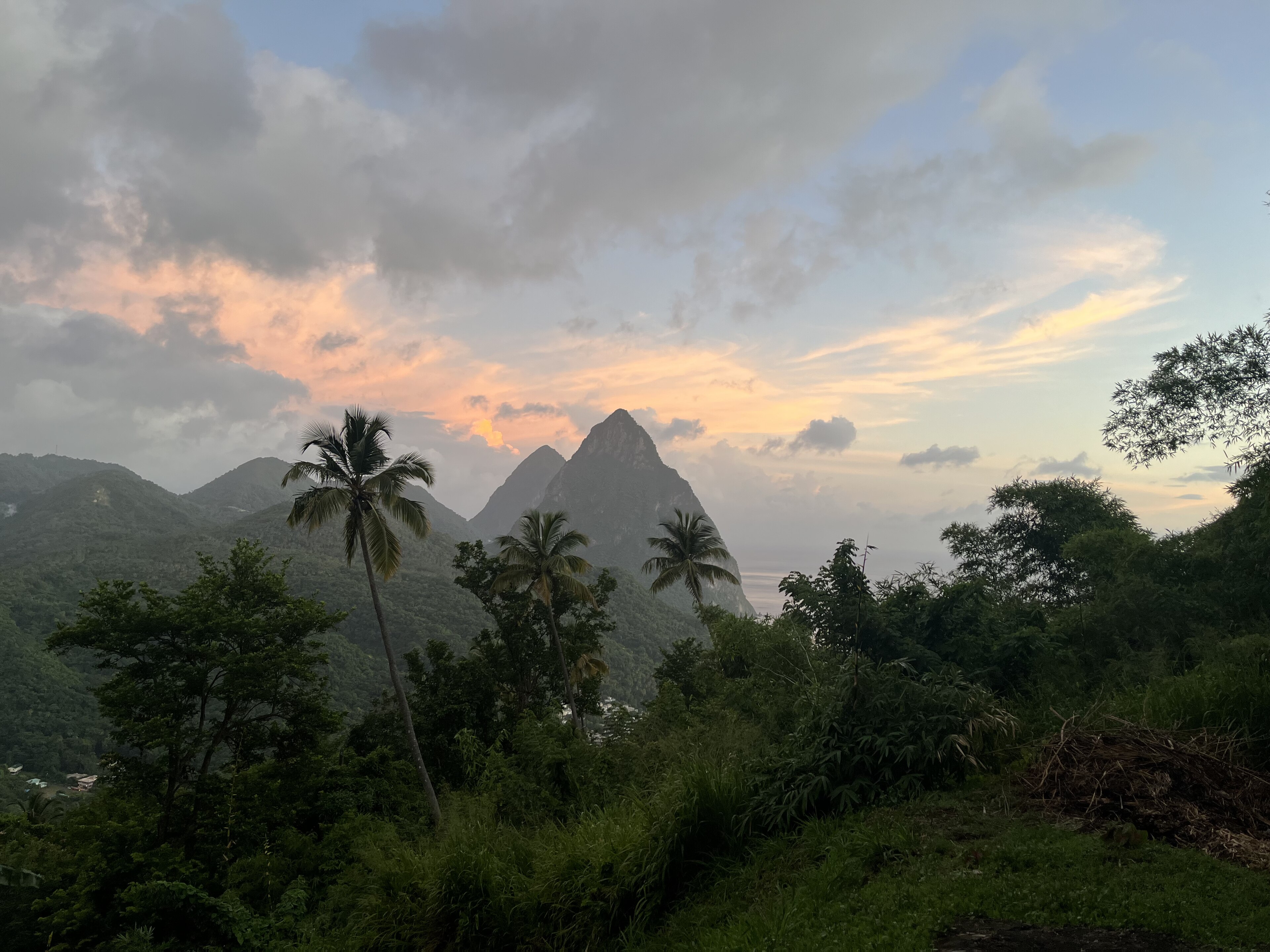
The colours are explained in several slightly different ways, but the broad meanings are well established. The blue stands for the sky and the surrounding Caribbean Sea and Atlantic Ocean, and for fidelity. The gold stands for sunshine and prosperity. Black and white represent the African and European heritage of the people, and the way those two strands live side by side. The two triangles are widely read as the twin peaks of the Pitons, the volcanic spires near Soufrière that are the island's best-known landmark. You can see the mountains the flag recalls on our Pitons guide, and the story of the flag's designer continues on the notable Saint Lucians page.
The coat of arms and the motto
The coat of arms was adopted on 8 January 1979 by a royal warrant of Queen Elizabeth II, shortly before independence. The design is credited to Sydney Bagshaw, and it is rich in symbols. The shield shows two crossed sticks of cut bamboo on a blue ground, with an African stool of authority in gold at the centre. In the four quarters are a Tudor rose for England and a fleur-de-lis for France, the two European powers that fought over the island, while the stool speaks for Africa. The crest above the shield is a raised arm holding a flaming torch, set against two fern fronds, and two Saint Lucia parrots stand as supporters.
Beneath it all runs the national motto, The Land, The People, The Light. The torch is understood as a beacon lighting the way for the nation, and bamboo is honoured as the national plant. For the historical backdrop to the French and British emblems, read about French and British rule, which explains why the island changed hands so many times.
The national anthem
The national anthem is Sons and Daughters of Saint Lucia. The words were written by the Reverend Charles Jesse and the music by Leton Felix Thomas. The anthem was first adopted in 1967, when the island achieved self-government, and it was confirmed as the national anthem when Saint Lucia became independent in 1979. It is sung at formal ceremonies, and you may hear it at Independence Day events in Castries or before a major sporting fixture.
Respect for the anthem is part of public etiquette. If you find yourself at a ceremony or a sporting event when it is played, stand quietly until it ends. The song is one of the pieces of culture covered in our guide to music and dance, alongside the folk songs and soca that most visitors come to hear.
Bird, flowers, tree, dress and dish
The national bird is the Saint Lucia parrot, Amazona versicolor, known on the island as the jacquot. It is a green parrot marked with blue and red that is found nowhere else in the world, and it was declared the national bird in 1979. The species is rare and protected, and forest reserves in the interior are where the island's conservation effort is focused. Our wildlife and ecology guide explains how the species is protected, and the birdwatching guide suggests ways to look for it responsibly.
The national flowers are the Rose and the Marguerite. They won the National Flower Competition in September 1985, and they stand for the two rival flower societies, La Rose and La Marguerite, who hold their great celebrations on 30 August and 17 October. The calabash is the national tree and bamboo the national plant. The national dress is the madras, with the wob dwiyet for women, and the national dish is saltfish with green fig. You can read about both in the culture and traditions guide, and you can taste the dish in the restaurants listed in our food and rum guide.
Independence Day, National Day and other public holidays
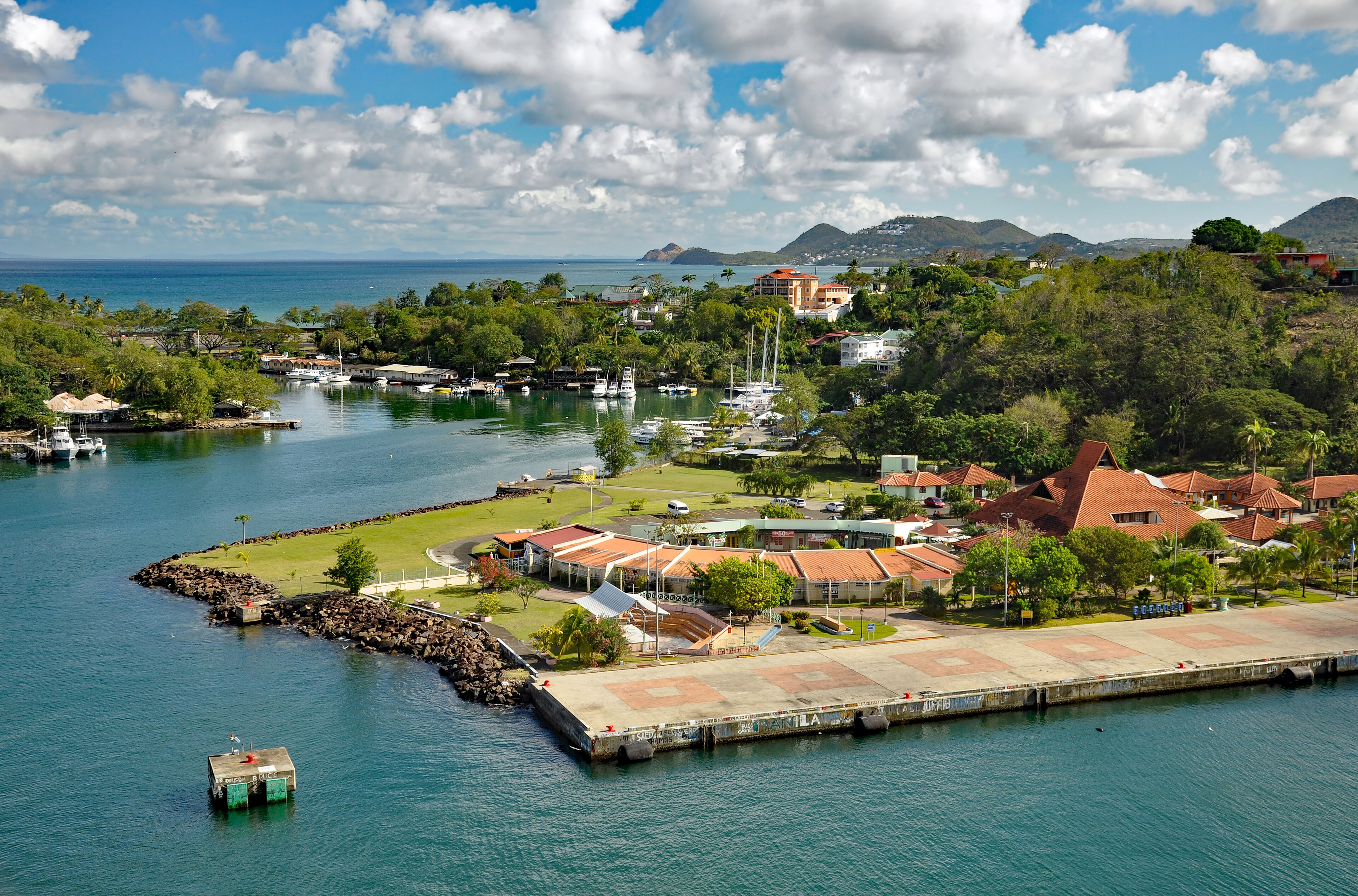
Independence Day falls on 22 February each year and marks the day in 1979 when Saint Lucia became an independent nation within the Commonwealth, with John Compton as its first prime minister. The day is marked with ceremonies and cultural events, and the capital, Castries, is the natural place to experience them. National Day on 13 December is the feast day of Saint Lucy, the island's patron saint, and also a public holiday. Thanksgiving is observed on the first Monday in October, and Emancipation Day on 1 August commemorates the abolition of slavery in the British colonies in 1834, which was followed by a period of apprenticeship. The story behind that date is told in our guide to slavery and emancipation.
The calendar below lists the public holidays shown for 2026. Fixed dates are given first, and the moveable Christian holidays follow the Easter calendar. In 2026 some calendars also list the Monday after a holiday that fell on a Sunday as a day in lieu, for example 23 February and 14 December, so check with your employer or hotel if the dates matter to your plans.
- New Year's Day: 1 January, plus 2 January (Thursday 1 and Friday 2 in 2026).
- Independence Day: 22 February (Sunday in 2026).
- Good Friday: 3 April in 2026.
- Easter Monday: 6 April in 2026.
- Labour Day: 1 May (Friday in 2026).
- Whit Monday: 25 May in 2026.
- Corpus Christi: 4 June in 2026.
- Emancipation Day: 1 August (Saturday in 2026).
- Thanksgiving Day: first Monday in October (5 October in 2026).
- National Day: 13 December (Sunday in 2026).
- Christmas Day: 25 December, and Boxing Day: 26 December.
Carnival and other festivals that are not public holidays
Several of the island's biggest occasions are not public holidays but dominate the calendar all the same. Carnival is held in July, with the 2026 season running from 1 to 22 July and the Parade of the Bands in Castries on 20 and 21 July. The two parade days do not appear on the standard holiday lists, so check locally whether they have been declared holidays in the year you visit. The flower societies celebrate on 30 August and 17 October, Creole Day falls on the last Sunday of October, and the Saint Lucia Jazz and Arts Festival takes place in spring. The festivals and events guide gives the current calendar.
Expect government offices and many shops and banks to close on public holidays, so run errands the day before, and check opening hours for restaurants and attractions if your plans fall on one. Resorts generally carry on as normal. If a holiday falls during your trip, treat it as an invitation: join a parade, hear a church choir, eat at a stall or take a quiet beach day. Our festivals and events guide and the best time to visit guide help you choose dates that suit your interests.
Using the symbols as a visitor
The flag flies from public buildings and you will see its colours around Independence Day on 22 February. Souvenirs with the flag, parrot or madras pattern make good gifts, and our artisan markets and crafts guide shows where to buy items made by local makers.
To see the symbols in their setting, take a drive to the forest reserves of the interior in search of the parrot, as described in our hiking and rainforest guide, or stand beneath the Pitons and imagine the two triangles of the flag in blue and gold. On Independence Day, a morning in Castries will give you a taste of the parade and the anthem together.
Questions travellers ask
What do the colours of the Saint Lucia flag mean?
Blue stands for the sky and sea and for fidelity, gold for sunshine and prosperity, and black and white for the African and European heritage of the people.
Who designed the Saint Lucia flag?
The flag was designed by the artist Dunstan St Omer, who won a national competition, and it was adopted on 1 March 1967 when the island became an associated state.
What is the national motto of Saint Lucia?
The national motto, shown beneath the coat of arms, is The Land, The People, The Light.
What is the national anthem of Saint Lucia?
It is Sons and Daughters of Saint Lucia, with words by Reverend Charles Jesse and music by Leton Felix Thomas, first adopted in 1967 and confirmed at independence in 1979.
What is the national bird of Saint Lucia?
The national bird is the Saint Lucia parrot, called the jacquot locally. It is found only on the island, is rare and is protected.
What are the national flowers of Saint Lucia?
The Rose and the Marguerite are the national flowers. They represent the two flower societies, which celebrate on 30 August and 17 October each year.
When is Independence Day in Saint Lucia?
Independence Day is on 22 February each year, marking the day in 1979 when Saint Lucia became an independent nation within the Commonwealth.
When is Thanksgiving in Saint Lucia?
Thanksgiving is a public holiday observed on the first Monday in October, which was 5 October in 2026.
Is Carnival a public holiday in Saint Lucia?
Carnival is held in July and is a major event, but its parade days are not on the standard public holiday lists, so check local announcements each year.
What is National Day in Saint Lucia?
National Day is on 13 December, the feast day of Saint Lucy, the island's patron saint, and it is a public holiday.
Saint Lucia on the map
Saint Lucia lies in the Windward Islands of the eastern Caribbean, around 13.8830 degrees north, 60.9670 degrees west. Map data from OpenStreetMap contributors.
Ask Lucy about National symbols and holidays
Ask about places to stay, things to do, the weather or getting here.
Keep exploring Saint Lucia
Looking for the industry view? Visit St Lucia on VisitTravelGroup.com covers the destination for travellers and the tourism trade.
More from the Visit Travel Group network: VisitTravelGroup.com, Benidorm.co.uk, Anguilla.co.uk, TheRedSea.co.uk.