Plan your trip
Getting to Saint Lucia
Two airports, a scenic island road and a few practical points worth knowing before you travel.
The two airports
Hewanorra International Airport is in the south, at Vieux Fort, and handles most long-haul international flights. George F. L. Charles Airport is in Castries, in the north, and mainly serves regional and domestic services. Which one you use depends on your flight and where you are staying.
British Airways is the only airline flying direct from the UK to Hewanorra. Its service runs from London Gatwick and, according to the Saint Lucia Tourism Authority, becomes daily from 25 October 2026 for the 2026 to 2027 winter season. The flight takes roughly nine hours, and schedules vary by season, so check the airline and your travel agent for current times. Virgin Atlantic ended its winter flights from Heathrow in March 2025 and has not restored them.
Many travellers also reach the island through connections in the Caribbean or North America, for example through Barbados or a United States hub, which add time but can widen the choice of fares.
Transfers by road
Saint Lucia is a small island but the roads are winding, so journeys take longer than the map suggests. From Hewanorra to Soufrière and the Pitons the drive is roughly an hour. To Rodney Bay and the north it is longer, often more than an hour and a half. Arrange transfers in advance with your hotel or a licensed operator, and try to travel in daylight, as the roads are narrow and steep in places.
If you stay in the north, such as at Cap Maison, consider whether a transfer or a short regional flight into Castries suits your plans better. If you are heading to the southwest, for example Ladera or Sugar Beach, Hewanorra is the more convenient airport.
Arriving by sea
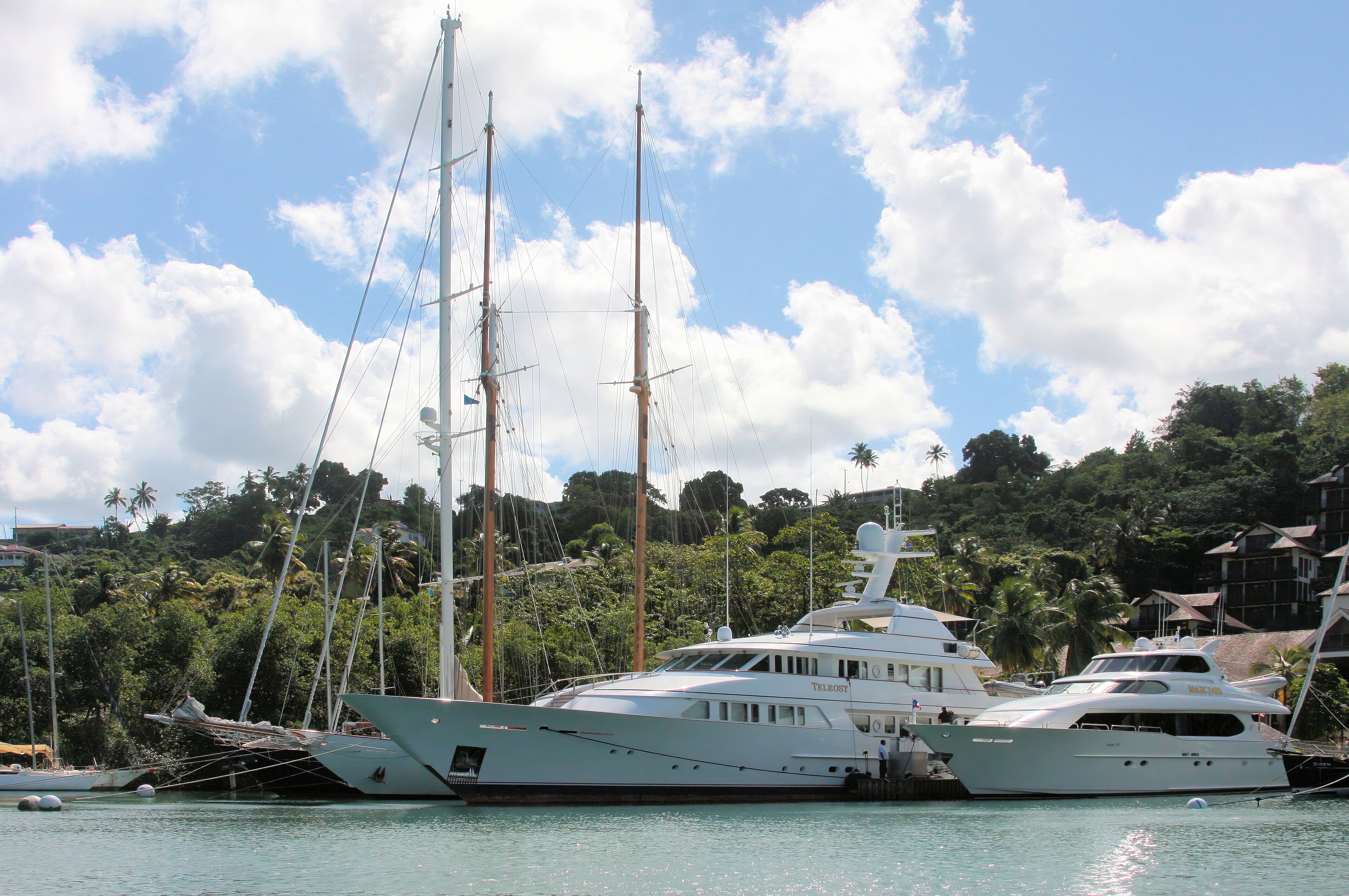
Cruise ships call at Castries, and the harbour is a base for visits to the rest of the island. A ferry link with the neighbouring French island of Martinique has operated in the past. Check current availability before you plan around it. Yachts arrive at the marinas at Rodney Bay and Marigot Bay.
Driving and getting around
Traffic drives on the left, as in the UK. Visitors who want to drive need a temporary local driving licence, which car hire companies can usually arrange. Many visitors prefer taxis or organised tours for the winding roads, particularly in the southwest.
The currency is the Eastern Caribbean dollar, and US dollars are widely accepted in tourist areas. English is the language of the state, and Kwéyòl, a French-based Creole, is spoken widely.
- Check passport validity and current entry rules before you book.
- Sockets are the British three-pin type on 240 volts, so UK plugs work without an adaptor.
- Take out travel insurance that covers any activities you plan, such as diving.
Planning the rest
Once you know how you will arrive, read about the best time to visit and compare the places to stay. When you are ready, the trip planning page can help you shape the rest.
A sample arrival day
Long-haul flights often land in the afternoon or evening. After immigration and baggage, your transfer takes you by road to your hotel. If you are heading to the southwest, the drive will be mostly in the dark in the winter months, so some guests prefer to book a first night near the airport and make the journey in daylight the next morning.
If you are heading north, the drive is longer, and a stop for a drink on the way is welcome. Keep your documents handy, carry some small currency for tips, and tell your hotel your flight number so they can track delays.
Money, phones and health
Cash machines are available in the main towns, and cards are widely accepted at hotels and larger restaurants. Carry some cash for markets, taxis and small cafés. Mobile coverage is good in populated areas but patchy in the hills. Check roaming charges with your provider, or buy a local SIM.
Check the latest health advice for travellers before you go, including recommended vaccinations. Tap water is generally treated, though many visitors prefer bottled water. Use mosquito repellent, especially around dawn and dusk, and wear sun protection throughout the year. Our best time to visit guide explains seasonal considerations.
- Keep a copy of your passport and insurance details.
- Tell your bank you are travelling.
- Check electrical adaptors if you carry UK devices.
How long is the flight from the UK to Saint Lucia?
The flight from the UK to Saint Lucia is a long-haul journey of several hours, with British Airways operating from London to the island, and you should check current schedules and durations when booking because routes and timings change. Flights usually land at Hewanorra International Airport near Vieux Fort in the south. Plan to travel in comfortable clothes, keep medicines in hand luggage and drink water. Our visa and entry guide explains the paperwork to complete before you fly, including the online immigration form and the documents that officers may ask to see, so that you arrive prepared and relaxed after a long day of travel.
Choose seats and times that suit your plans. A daytime arrival gives you light for the transfer, which matters if you are heading to the north or south on winding roads. Connecting itineraries via other cities are possible but add time. Our how many days guide helps you decide whether a short stay is worthwhile. A long flight is easier to justify with a week or more on the ground, and the extra nights allow time for the body clock to settle before the more energetic parts of the holiday begin, such as hikes, boat trips and long days in the sun.
Allow for recovery. Jet lag is modest because the time difference with the UK is only a few hours, but a night flight and a long transfer can leave you tired. Keep your first day gentle. Our trip planning guide suggests how to structure the opening days. A relaxed start sets the tone for the week, and a swim, a simple dinner and an early night are usually the best way to arrive, ready to wake with the island's first light and begin to explore with fresh energy and a clear head, instead of feeling rushed.
Which airport in Saint Lucia is closer to my hotel?
Hewanorra International Airport in Vieux Fort is closer to hotels in the south and the Soufrière area, while George F L Charles Airport beside Castries is closer to the north and handles regional flights, and international visitors from the UK normally land at Hewanorra. The island is about twenty seven miles long, so the choice matters. Our Vieux Fort guide describes the area around the main airport, and the Castries guide explains the capital, where the smaller airport sits just outside the city and serves inter-island flights across the region, linking Saint Lucia with its neighbours.
From Hewanorra, transfers to the north take a long, winding drive, while the south is nearer. Many visitors book private transfers or arrange them through their hotel. Our getting around guide explains options. Some travellers use a boat or a helicopter for part of the journey. If you are staying in the north, build the transfer into your plans as part of the day, perhaps stopping for lunch on the way, so that the drive becomes a pleasant introduction to the island rather than an ordeal at the end of a long flight, and so that you see something of the countryside.
Think about your whole itinerary. If your hotel is in the north and you want a short transfer, consider whether regional connections or a helicopter suit. Our helicopter tours page describes aerial options. Choose the combination that gives you the best balance of cost, time and comfort. For many travellers the simplest plan is a prearranged road transfer with a named driver, a stop for refreshments on the way and an early night on arrival, with the more ambitious excursions saved for later in the week, once you have found your feet and your appetite.
How do I arrange my airport transfer in Saint Lucia?
Arrange your airport transfer in Saint Lucia by booking through your hotel or a reputable operator before you travel, giving your flight details and agreeing the price, so that a named driver meets you after customs. This is the simplest way to avoid uncertainty after a long flight. Our money and tipping guide explains how to pay and whether to tip. Send your flight number in advance so that the driver can track delays, and keep their phone number handy in case you have trouble finding each other in the arrivals hall, which can be busy when several flights land together.
If you prefer to arrange transport on arrival, use the licensed taxi desk and agree the fare first. Keep small notes for the driver. Our hotels in Saint Lucia pages describe locations, which helps you tell the driver exactly where you are going. Check that the vehicle is licensed and that the driver knows your destination, particularly if it is a small hillside resort with a steep access road. A friendly conversation on the way can also yield useful tips about restaurants, beaches and the best time to visit local markets, and a driver you like can become your guide for the whole holiday.
Plan for the return as well. Confirm pick-up times the day before and allow generous time for the road. If plans go wrong, call your hotel and your driver first, then your airline. A calm transfer is a good beginning and a good ending to a holiday. Leave plenty of margin for check-in at the airport, particularly in the busy winter months, and keep your passport, boarding pass and any remaining local cash in an easy-to-reach pocket until you are through security, so that the final hour of your trip is as smooth as the first.
Your arrival in context
Knowing how the island is connected helps you plan the journey. Transport and infrastructure describes the airports, ports and road network you will meet on arrival, and geography shows where the island sits among its neighbours.
For the longer view, the island's economy explains why travel matters so much here, and the history of Saint Lucia gives your first steps off the plane some welcome background.
From flights to hotels
Once the flights are sorted, choose where to stay: the guide to hotels in St Lucia compares the main resorts, including Cap Maison in the north and Sugar Beach, Jade Mountain and Ladera in the south.
Our holiday planner covers the rest, including the best time to visit, how many days to stay and itineraries. For couples there is also a weddings and honeymoons guide.
Questions travellers ask
Which airport should I fly into?
Most international flights use Hewanorra in the south. George F. L. Charles Airport in Castries mainly serves regional and domestic flights.
How long does the transfer take?
Roughly an hour from Hewanorra to Soufrière and longer to the north. Confirm timings with your transfer provider.
Do I need a visa?
Entry rules depend on your nationality and change from time to time. Check current government advice before you travel.
How far is Hewanorra Airport from Castries?
Hewanorra International Airport is at the southern tip of the island and Castries is in the north, so the road between them is a long and winding drive. Allow ample time, and consider a prearranged transfer so that you can relax and enjoy the scenery.
Is there a ferry to Saint Lucia?
A ferry operates between Saint Lucia and Martinique. Check the operator for schedules and book ahead, and remember that you will need to follow entry rules for each island you visit.
Is departure tax included in my flight ticket?
For air passengers over twelve, departure tax is included in the ticket, while sea passengers pay at departure. Check your booking confirmation if you are unsure what has been paid.
How long is the flight from the UK to Saint Lucia?
Direct flights from the UK typically take a little under ten hours, though timings vary by airline and season, and connecting routes take longer. Check current schedules before booking, and read visa and entry so your documents are ready.
Do I need a car in Saint Lucia?
Not always. Many visitors rely on resort transfers and taxis, while a hire car gives freedom but roads are winding and hilly, and driving is on the left. Think about where you are staying first. Read getting around before deciding.
Can I arrive in Saint Lucia by cruise ship?
Yes, cruise ships call at Castries, so many visitors see the island for a day. Time ashore is limited, so plan excursions carefully and allow for traffic. See cruise arrival and check port details with your cruise line.
Is it worth paying for a private transfer in Saint Lucia?
Often yes after a long flight, especially to hotels far from the airport, because the roads are winding and the journey can feel long. Taxis and shared options exist and costs vary, so confirm the price in advance. Choose your base on where to stay first.
Hewanorra International Airport on the map
Hewanorra International Airport is at 13.7343 degrees north, 60.9539 degrees west. Map data from OpenStreetMap contributors.
Ask Lucy about Getting here
Ask about places to stay, things to do, the weather or getting here.
Keep exploring Saint Lucia
Looking for the industry view? Visit St Lucia on VisitTravelGroup.com covers the destination for travellers and the tourism trade.
More from the Visit Travel Group network: VisitTravelGroup.com, Benidorm.co.uk, Anguilla.co.uk, TheRedSea.co.uk.