About Saint Lucia
Transport and Infrastructure in Saint Lucia: Airports, Roads, Power and Phones
Saint Lucia is a small island with mountainous terrain, and its airports, harbours, winding roads and utilities all reflect that. A little understanding makes arrival and getting around much easier.
Two airports, two very different jobs
Saint Lucia has two airports, both run by the Saint Lucia Air and Sea Ports Authority. Hewanorra International Airport, at the southern tip of the island near Vieux Fort, is the one that matters for most visitors. It has a single long runway that takes wide-bodied long-haul jets, which is why transatlantic flights from the United Kingdom, Europe and North America land there. It handles in the region of 700,000 passengers a year on commonly quoted figures, and it sits roughly 53 kilometres from Castries by road. Our getting here guide covers the flights and airlines in detail.
The site has a wartime past. It began as Beane Field, a United States Army Air Forces base activated in early 1941 to defend the Caribbean, and it became a commercial airport after the war. The present name comes from an Amerindian word for the island, often translated as land of the iguana. Today the terminal is under pressure from growing passenger numbers. In early 2024 the ports authority announced interim improvements, including new immigration booths, expanded queuing areas and an automated queue management system, while it awaited a new terminal. Check the current position before you travel, as the project has moved on in stages.
George F. L. Charles Airport, usually called Vigie, is a short drive north of Castries, and its runway lies beside Vigie Beach. It was renamed in 1997 in honour of Sir George Charles, a leading figure in the island's politics. There are no scheduled jet services, so the airport is used by turboprops on regional flights, charters and private aircraft. If you are arriving by regional connection or taking a helicopter hop between the two airports, you may well use it. Our helicopter tours guide explains how to see the island from the air.
Ports, cruise berths and cargo
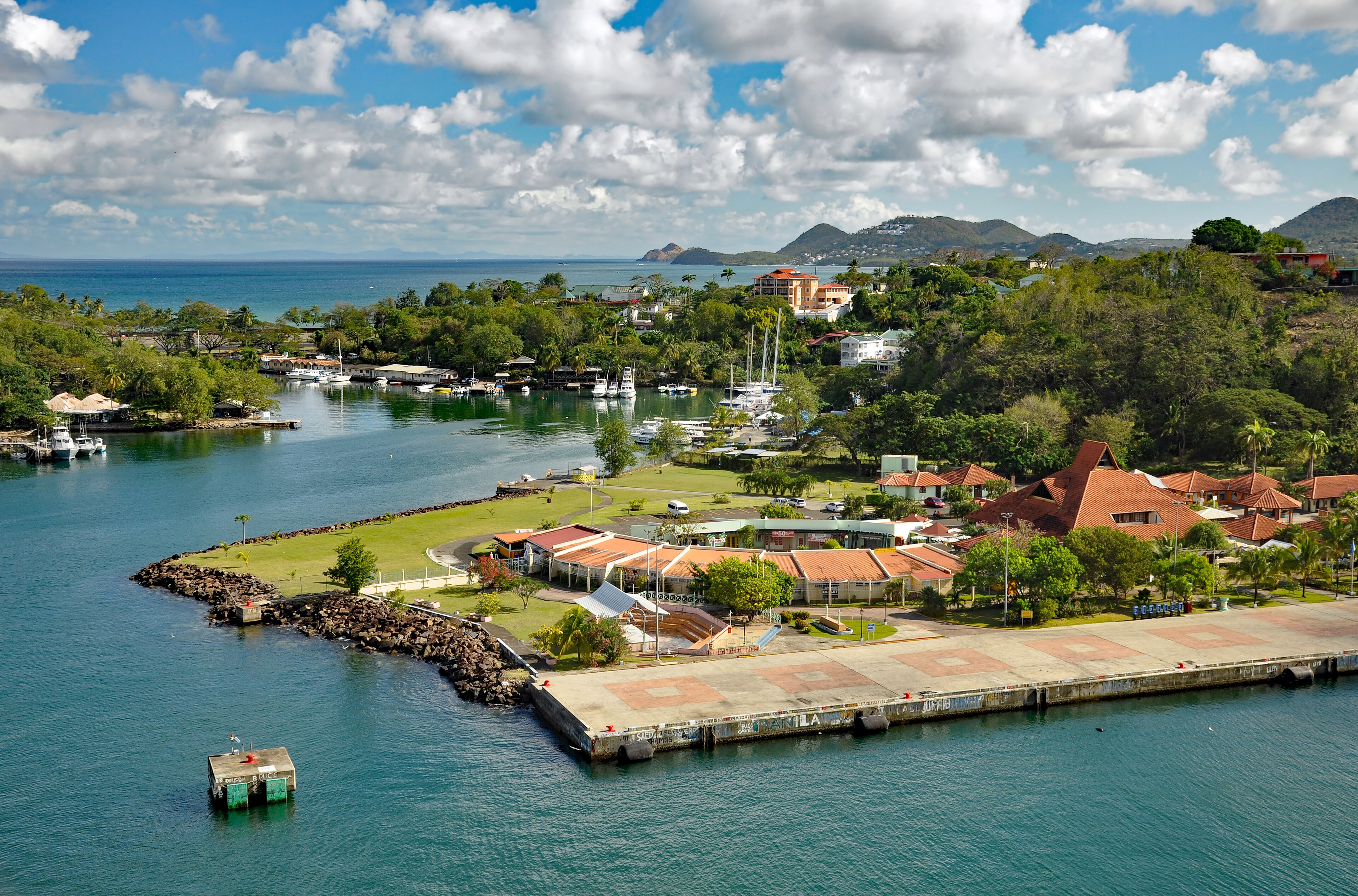
Saint Lucia's sea ports are as important as its airports, because nearly everything the island does not grow, from fuel to cars to breakfast cereal, arrives by ship. Castries is the main harbour, a natural bay that serves cruise liners and cargo vessels. In the cruise season, which runs from the autumn into spring, several ships may call on the same day, and passengers step off into the heart of the capital. Our cruise arrival guide explains where ships dock and how to get the most from a day ashore.
Vieux Fort, in the south, is a commercial port, with container and cargo handling close to Hewanorra airport. The government has long seen the south as a place for logistics and industry, and the area has seen investment in recent years. Fuel is received at Cul de Sac, on the west coast, which is also home to the island's main power station. Small craft use other harbours around the coast, and fishermen land their catch at jetties in Dennery, Anse la Raye and elsewhere.
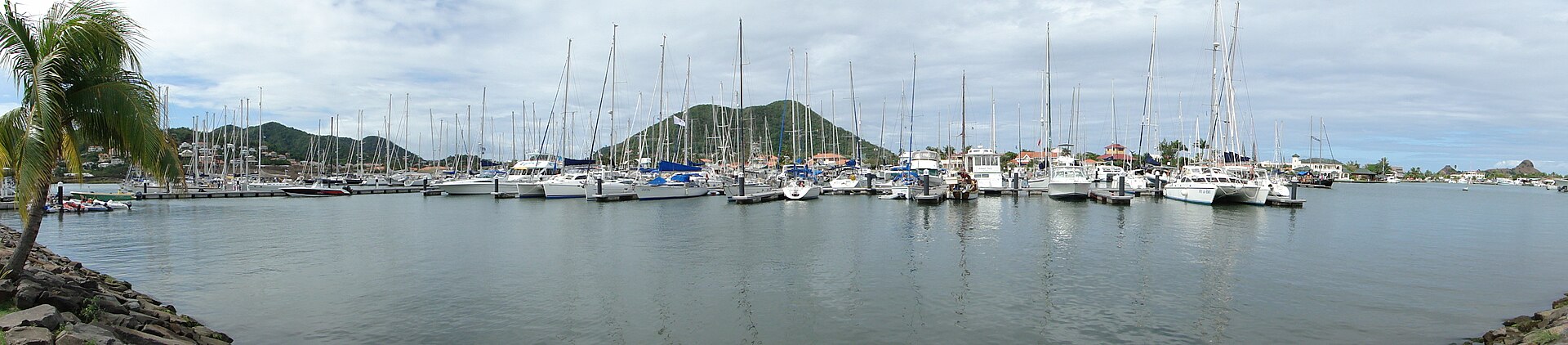
Yachts clear in at marinas in Rodney Bay and Marigot Bay, and at Soufrière. Rodney Bay Marina is the largest and welcomes the finish of the Atlantic Rally for Cruisers each year. Details of clearance, fees and moorings are in our yacht arrival and clearance guide, and the Rodney Bay guide describes the area around the marina.
Ferries, water taxis and links to neighbours
Saint Lucia has no ferry network for local journeys, but it is joined to its neighbours by sea. A fast catamaran service links the island with Martinique, which is a short crossing to the north, and the same operator has connected Saint Lucia with Dominica and Guadeloupe. Timetables change from season to season, so check the ports authority and the operator for current sailings. Passports are needed, and French territory rules apply on arrival in Martinique, so see our visa and entry guide if you plan a side trip.
Around the coast, water taxis run from beaches and marinas, including Reduit Beach in the north and Marigot Bay on the west coast, and they connect to beaches, villages and excursions. A return trip on a short hop is inexpensive, but you should agree a price before you board. Boats are also a practical way to reach places the road barely touches, such as the beaches under the Pitons. Our sailing and boat trips guide describes the options, and Marigot Bay is one of the prettiest starting points.
There is no railway and no domestic airline route network beyond the helicopter and a few charter services. The island is only about 43 kilometres long, so most journeys are short in distance but long in time, because the roads are steep and winding. Always allow longer than the map suggests.
Driving in Saint Lucia: the left, the licence and the hairpins
Saint Lucians drive on the left, as in the United Kingdom, so British visitors have an advantage over many others. Roads are narrower, the bends are tighter and the drops are steeper, however, and potholes, roadworks, pedestrians, dogs and goats are all part of the picture. The West Coast Road between Castries and Soufrière is famous for its hairpins and views, and it is best driven slowly and in daylight. A four-wheel-drive vehicle is useful for the more adventurous routes, and our off-road jeep adventures guide covers guided options.
Visitors must buy a temporary local driving licence before driving, using their valid home licence. At the time of writing the licence costs around US$20 or EC$54 and lasts three months, and you can obtain it at the airport, from rental companies and from police stations. Some rental firms set a minimum age of 25, and hire often costs from about US$50 to US$100 a day, depending on the season and the vehicle. Check the current rules and charges when you book, because they change.
Traffic builds around the morning, lunchtime and early evening rush, particularly around Castries and the Rodney Bay corridor, so plan journeys around those hours. Parking is easy in most places but scarce in central Castries during the day. Do not drive after dark on unfamiliar mountain roads unless you must, and keep valuables out of sight when you park. Our getting around guide sets out every option, including taxis, tours and car hire.
- Drive on the left, as in the United Kingdom.
- Buy a temporary licence on arrival; it lasts three months.
- Allow 1.5 to 2 hours from Hewanorra to Rodney Bay.
- Avoid mountain roads after dark if you do not know them.
Minibuses, taxis and ride-hailing
The minibus is the way most Saint Lucians get around, and it is cheap, friendly and an experience in itself. The vans are privately run, carry green number plates marked with an M, and serve routes across the ten districts. You flag one down from the roadside, tell the driver where you are going and pay at the end. Fares range from about EC$1.25 for a short hop to around EC$10 for the longest routes, and the run from Castries to Rodney Bay costs about EC$2.50. Services run from early morning until the evening and thin out on Sundays, though Friday nights in Gros Islet are busier because of the weekly street party. See our Gros Islet guide for the party.
Taxis are plentiful at the airports, hotels, supermarkets and malls, and their plates begin with TX. Fares are not metered. They are agreed for the destination, and they depend on the number of passengers, luggage and sometimes the time of day, so confirm the price and the currency before you set off. Cards are rarely accepted, so carry cash. A taxi between Hewanorra and Rodney Bay is a long ride and costs a significant amount, so many travellers book a transfer in advance through their hotel. Our money and tipping guide explains what to carry and what to tip.
A local ride-hailing app called Allez has also appeared and lets you pay by card, which is useful if you have no cash. Availability varies by area and time of day, so keep a taxi number to hand as a backup.
Electricity, energy and the push for renewables
Electricity is supplied by LUCELEC, the Saint Lucia Electricity Services Limited, an investor-owned company. For most of its history the island has generated power almost entirely from imported diesel, burned at the main power station at Cul de Sac, which makes electricity expensive and tied to oil prices. A national regulator, the National Utilities Regulatory Commission, was created in 2016 to oversee the sector. Visitors will notice the cost of power in hotel running charges and in the habit of local people of switching off lights and air conditioning.
The island has been working to change that. A National Energy Transition Strategy was agreed in 2016 and set out a path of solar, wind, storage and efficiency, with later geothermal. LUCELEC built the first utility-scale solar farm, around 3 megawatts, at Vieux Fort near Hewanorra airport, and more solar has since been added or planned. A wind farm has been proposed at Dennery, and the government has explored geothermal power in the Soufrière and Choiseul area. Targets set in the 2010s aimed at 35 per cent renewable electricity by 2025 and 50 per cent by 2030, but progress has been slower than hoped, so treat any current share as a work in progress. The volcanic geology behind the geothermal idea is explained in our guide to geology and volcanoes.
Many hotels and villas now use solar panels and hot water, and a growing number advertise sustainable stays. Our sustainable stays guide and eco tips and local initiatives guide show how to choose accommodation that treats energy carefully. Power cuts happen, especially after storms, and good hotels have generators.
Water, telecoms and the practicalities for visitors
Water is provided by the Water and Sewerage Company, known as WASCO, which treats and distributes it across the island. Much of the supply comes from rivers and from the John Compton Dam in the Roseau Valley, and the dam has needed rehabilitation work to restore its storage. In dry spells or after heavy rain, supplies can be interrupted, and hotels hold storage tanks to cope. Most visitors drink bottled or filtered water to be safe, and our health, insurance and safety guide has further advice. Short showers and reusing towels help the local supply.
Mobile coverage is provided by two companies, Digicel and Flow. Both run 4G networks that cover the main towns and resort areas well, while signal can be weak in the mountainous interior, deep rainforest and parts of the east coast, so do not rely on a phone map on a remote hike. Check your UK provider's roaming charges before you travel, or consider a local SIM or an eSIM. Broadband is available in hotels and many cafes. For the history of the island's media, see media and communications.
Power sockets are of the British three-pin type in most places, with a supply of 240 volts, though American flat-pin sockets also appear, so pack a spare adapter. Our what to pack guide has a full checklist. Finally, remember that hurricanes and heavy rain can damage roads and utilities, and the climate and hurricanes guide explains the season. A flexible plan and a little patience will see you through almost any disruption.
Questions travellers ask
Which airport do I fly into for Saint Lucia?
Most international visitors, including those from the United Kingdom, land at Hewanorra International Airport near Vieux Fort in the south. George F. L. Charles Airport near Castries handles regional turboprop flights and has no scheduled jet services.
How far is Hewanorra Airport from the main resorts?
Hewanorra is roughly 53 kilometres from Castries by road. The drive to Rodney Bay and the northern resorts usually takes between one and a half and two hours, while Soufrière and the Pitons are closer, at around an hour.
Do they drive on the left in Saint Lucia?
Yes, traffic drives on the left, as in the United Kingdom. The roads are narrow and winding, though, and you should expect hairpin bends, potholes and animals, so drive carefully and avoid unfamiliar mountain roads after dark.
Do I need a special licence to drive in Saint Lucia?
Visitors need a temporary local driving licence, which is issued on presentation of a valid home licence. It costs around US$20 or EC$54, lasts three months and can be bought at the airport, from rental firms or at police stations.
How do the minibuses work?
Minibuses are privately run vans with green number plates marked M. You wave one down, tell the driver your destination and pay at the end, with fares from about EC$1.25 to EC$10. Services thin out in the evening and on Sundays.
Are there ferries to other islands from Saint Lucia?
A fast catamaran service links Saint Lucia with Martinique and has also connected it with Dominica and Guadeloupe. Schedules change, so check the current timetable and bring your passport. There is no domestic ferry for local journeys.
Who supplies electricity in Saint Lucia?
LUCELEC, an investor-owned company, supplies the island. Most power comes from diesel generators at Cul de Sac, with a growing contribution from solar. The island has also explored wind and geothermal energy to cut its reliance on imported fuel.
Is the tap water safe to drink?
Tap water is treated by WASCO and many locals drink it, but most visitors prefer bottled or filtered water to avoid upset stomachs. Supplies can be interrupted in dry spells, so hotels keep storage tanks and ask guests to use water sparingly.
Will my phone work in Saint Lucia?
Yes, in most places. Digicel and Flow both run 4G networks that cover the towns and resorts well, though signal can fade in the rainforest and on the east coast. Check roaming charges or use a local SIM or eSIM.
What plugs and voltage should I pack?
The supply is 240 volts, and British three-pin sockets are common, although some places also use American flat-pin sockets. Bring an adapter just in case, and check that your hotel has the type you need.
Hewanorra International Airport on the map
Hewanorra International Airport is at 13.7343 degrees north, 60.9539 degrees west. Map data from OpenStreetMap contributors.
Ask Lucy about Transport and infrastructure
Ask about places to stay, things to do, the weather or getting here.
Keep exploring Saint Lucia
Looking for the industry view? Visit St Lucia on VisitTravelGroup.com covers the destination for travellers and the tourism trade.
More from the Visit Travel Group network: VisitTravelGroup.com, Benidorm.co.uk, Anguilla.co.uk, TheRedSea.co.uk.