About Saint Lucia
Climate and Hurricanes in Saint Lucia: Seasons, Storms and What to Expect
Saint Lucia is warm all year, cooled by steady trade winds, and the real question for a visitor is not whether it will be hot but how much rain and what the hurricane season means.
A tropical climate cooled by the trade winds
Saint Lucia sits well inside the tropics, only about fourteen degrees north of the equator, and its climate is warm, humid and remarkably steady. There is no winter in the British sense. What changes through the year is mostly the rain, not the temperature. The northeast trade winds blow across the island for much of the year and take the edge off the heat, particularly on east-facing and upland sites.
The surrounding sea helps too. Sea surface temperatures stay within a narrow band, roughly 25 to 28 degrees Celsius through the year, so the coastal air does not swing much between seasons. That is why a holiday in January and one in July feel similar in terms of warmth, though very different in terms of showers. Our best time to visit guide turns this into practical advice.
The dry and wet seasons
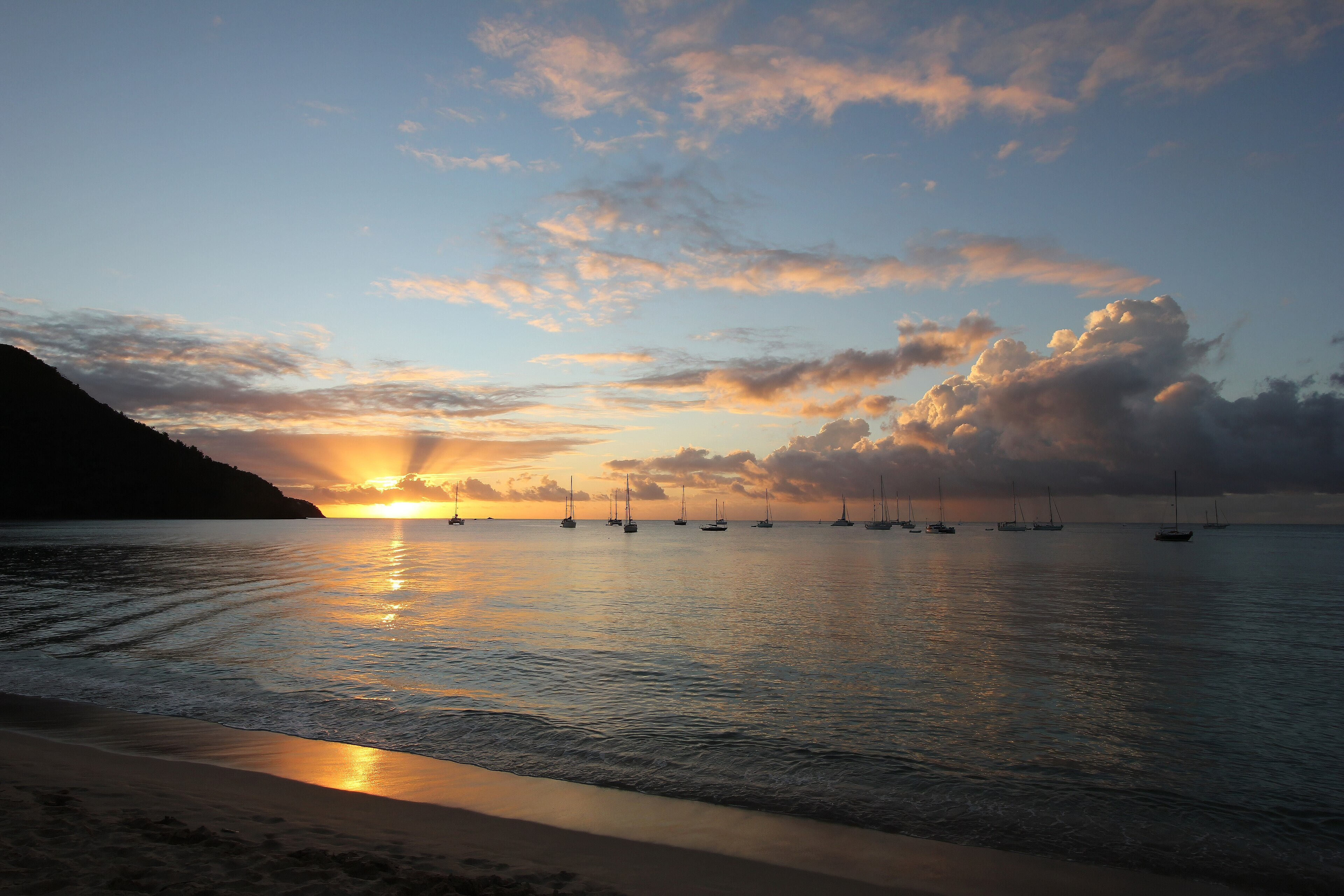
The year divides roughly into a drier season, from about December to May, and a wetter season, from about June to November. The drier months bring more sunshine, lower humidity and calmer seas on the west coast, and they coincide with the main tourist season and the peak of yachting. February to April is often the driest stretch, with warm days, light breezes and cooler nights.
The wetter season is not a constant downpour. Showers tend to arrive as short, heavy bursts, often in the afternoon or overnight, followed by blue sky, and many visitors enjoy the greener scenery, lower prices and quieter beaches. It is also the time when humidity is highest and when the island is most exposed to tropical storms. If you travel then, see our rainy day ideas for things to do when the weather turns.
Temperatures through the year
On the coast, daytime temperatures typically sit around 30 degrees Celsius, or 86 degrees Fahrenheit, with nights around 24 degrees Celsius. The warmest months are usually in the wet season, and the coolest are in the winter months, but the difference is only a few degrees. Humidity can make the air feel warmer than the thermometer suggests, particularly on still days.
Temperatures fall with height. In the mountains the air can be many degrees cooler than on the beach, and the summits can be damp and misty even on a hot day. That is worth remembering if you plan a hike through the forest, where a light waterproof and a spare layer make a real difference. Our what to pack guide covers clothing for both coast and hills.
- Coastal days: around 30 degrees Celsius all year.
- Coastal nights: around 24 degrees Celsius.
- Sea temperature: roughly 25 to 28 degrees Celsius.
- Mountain peaks: noticeably cooler, damp and often cloudy.
Rainfall and why elevation matters
Rain in Saint Lucia depends heavily on where you stand. The coast receives around 1,300 millimetres a year on average, while the high rainforest of the central mountains can receive nearly 3,800 millimetres, almost three times as much. Moist air rises over the central range, cools and drops its water, which is why the interior is so lush and why the island's rivers flow all year.
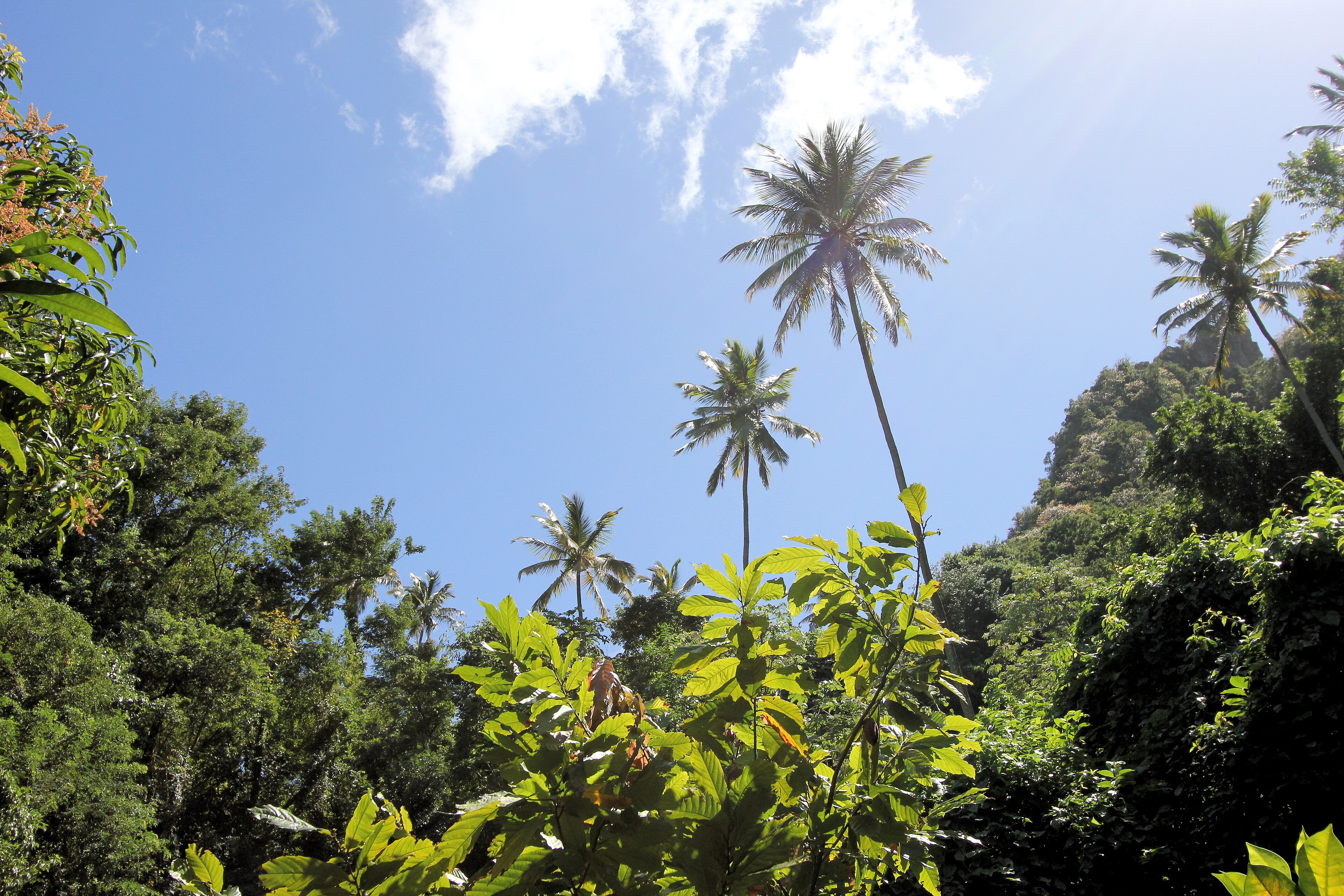
For a visitor this means that a dull, wet morning in the hills does not imply a wet day at the beach. The leeward west coast is often sunny while the mountains are in cloud, and the eastern side catches more showers from the Atlantic. Plan rainforest walks for the morning, before cloud builds, and read our hiking and rainforest guide for routes. The dense forest is described in the rainforest and plant life guide.
Hurricane season
The Atlantic hurricane season runs from 1 June to 30 November, and the peak for the Windward Islands tends to fall in the later part, from August to October. Saint Lucia lies on the southern edge of the usual storm tracks, so it is hit less often than islands further north, but it is not immune. Storms can bring flooding and landslides even when the wind is modest, because so much rain falls on steep ground.
For travellers, the sensible approach is practical rather than anxious. Buy travel insurance that covers weather disruption, check your accommodation's cancellation policy, and follow forecasts from the Saint Lucia Meteorological Services and the US National Hurricane Center. Hotels and the national disaster agency have well-drilled plans. Our health, insurance and safety guide has more on cover, and getting here explains how flights may be affected.
Storms the island remembers
Hurricane Allen struck in 1980 and devastated the banana crop, causing deaths and wiping out much of the island's agricultural income that year. In August 2007 Hurricane Dean passed through the channel between Martinique and Saint Lucia. The island escaped the worst, but strong winds, storm surge and flooding damaged roofs, coastal roads and hospitals, and banana farms in the main valleys lost around three quarters of their crop.
Hurricane Tomas, at the end of October 2010, was a Category 2 storm that passed close to the island. It brought heavy rain, landslides and flooding, and at least seven people died in Saint Lucia. Roads, bridges, homes and farms were badly hit, and the cocoa crop was damaged. Hurricane Beryl, in early July 2024, was an exceptionally powerful storm that devastated the southern Grenadines, but it weakened as it passed Saint Lucia. There were no deaths on the island, though the Soufrière waterfront, Laborie and Vieux Fort jetty suffered damage and banana farms were hit. The island has rebuilt after each event, and the lessons shaped current building standards.
Climate change and sea-level risk
Like other small island states, Saint Lucia is on the front line of climate change. Scientists expect rising sea levels, warmer seas and more intense rainfall, and those changes matter on an island where most people, roads and hotels sit on a narrow coastal strip. The capital stands on low, partly reclaimed land, and beach erosion, storm surge and flooding threaten shorelines and harbours.
Warm seas also stress coral reefs, which protect the coast and attract divers. The government has made resilience a priority, supporting coastal protection, better drainage and renewable energy, and many hotels and local groups run reef-protection and sustainability projects. Visitors can help by choosing responsible operators, as described in our responsible travel guide and eco tips. The conservation and protected areas guide shows how nature is being safeguarded.
Planning around the weather
For the most settled weather, aim for the period from January to April. If you prefer lower prices and a greener island, May and the early wet season can be a good compromise, while September and October bring the highest storm risk and some businesses close for maintenance. Whatever the month, pack sun protection, a light rain jacket and insect repellent, and keep an eye on forecasts a few days before travel.
Make the most of the weather by matching activities to the day. Beaches and boat trips suit bright mornings, rainforest walks and gardens suit damp afternoons, and spa days, cooking classes and rum tastings make fine wet-weather alternatives. See Creole cooking classes and spa rituals and mud baths for ideas.
Questions travellers ask
What is the weather like in Saint Lucia?
It is tropical, with daytime coastal temperatures around 30 degrees Celsius all year, cooled by the northeast trade winds. The main seasonal change is rainfall rather than temperature.
When is the dry season?
The drier season runs from about December to May, with February to April often the driest. Expect more sunshine, less humidity and calmer sea on the west coast.
When is the wet season?
The wetter season runs from about June to November. Rain usually falls in short heavy bursts rather than all day, and humidity is higher than in the dry months.
When is hurricane season in Saint Lucia?
The Atlantic hurricane season runs from 1 June to 30 November, with the greatest risk for the island usually between August and October. Insurance and flexible bookings are wise.
Does Saint Lucia get hit by hurricanes often?
Less often than islands further north, because it lies on the southern edge of typical tracks. Storms such as Allen in 1980, Dean in 2007 and Tomas in 2010 still caused damage.
What happened in Saint Lucia during Hurricane Tomas?
Tomas passed close by at the end of October 2010 as a hurricane, bringing floods and landslides. At least seven people died, and roads, homes and farms were badly damaged.
How did Hurricane Beryl affect Saint Lucia?
Beryl weakened as it passed in early July 2024. There were no deaths, but flooding, landslides and wind damaged the Soufrière waterfront, Laborie, Vieux Fort and banana farms.
Is it much cooler in the mountains?
Yes. The summits are noticeably cooler, wetter and often cloudy, so bring a waterproof and spare layer for rainforest hikes even if the beach is hot.
Is climate change a risk to Saint Lucia?
Yes. Rising seas, warmer water, coral stress and heavier rain all threaten coastal land and reefs, so resilience and coastal protection are national priorities.
Saint Lucia on the map
Saint Lucia lies in the Windward Islands of the eastern Caribbean, around 13.8830 degrees north, 60.9670 degrees west. Map data from OpenStreetMap contributors.
Ask Lucy about Climate and hurricanes
Ask about places to stay, things to do, the weather or getting here.
Keep exploring Saint Lucia
Looking for the industry view? Visit St Lucia on VisitTravelGroup.com covers the destination for travellers and the tourism trade.
More from the Visit Travel Group network: VisitTravelGroup.com, Benidorm.co.uk, Anguilla.co.uk, TheRedSea.co.uk.