Explore Saint Lucia
Castries, the Capital
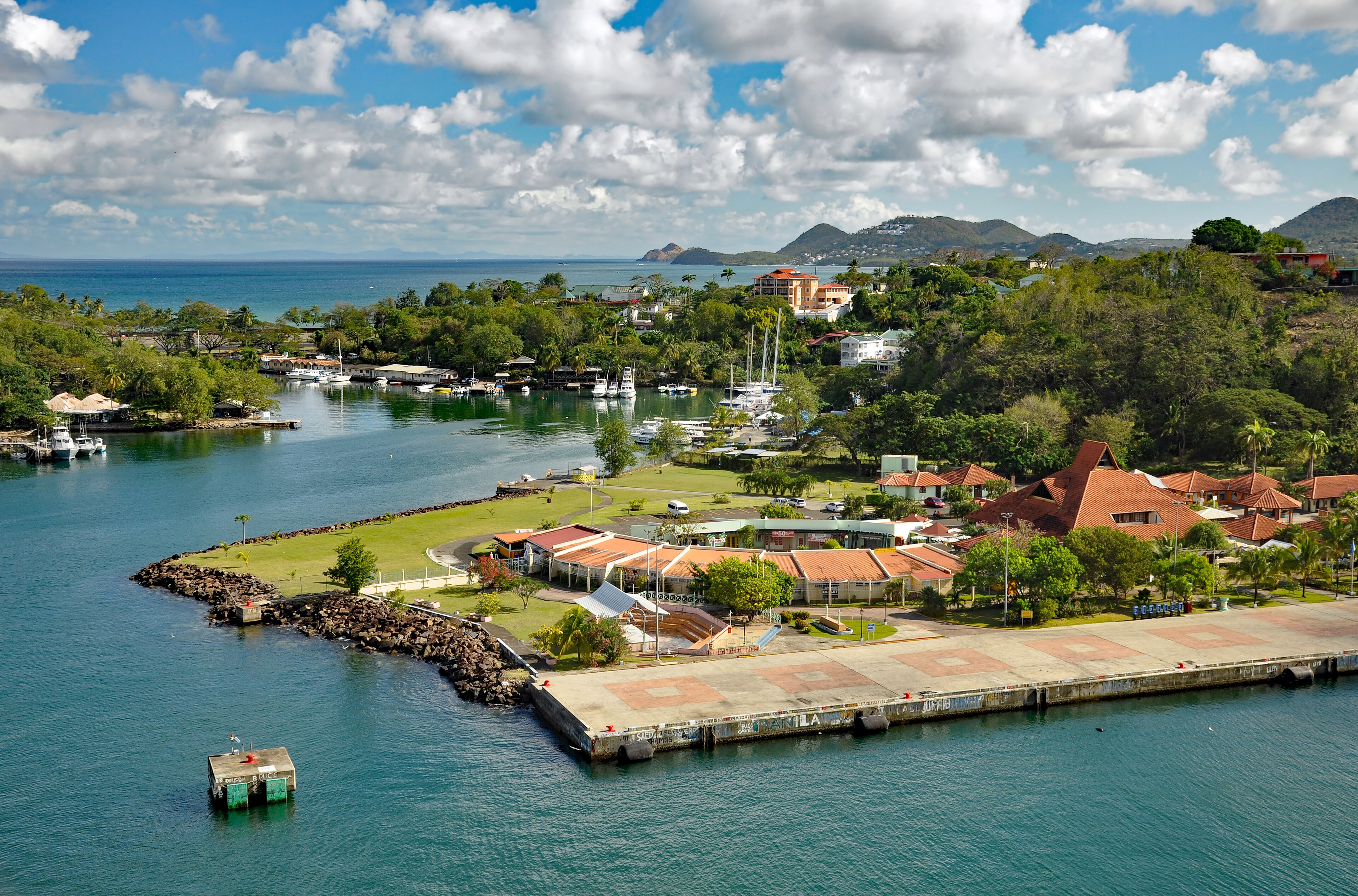
The island's capital and main harbour, with a lively market, a historic square and wide views from the hill above.
A working capital
Castries sits around a deep natural harbour on the northwest coast. It is the administrative centre and the main port, and cruise ships call here. It is busy, practical and full of life, and a morning in the city shows a different side of the island from the resorts.
What to see
The central market is the highlight, with stalls of fruit, spices, crafts and local produce. Derek Walcott Square, named for the Nobel prize-winning poet born on the island, is a pleasant green space with a cathedral beside it. The hill of Morne Fortune, above the city, has old fortifications and some of the best views over the harbour.
Saint Lucia has produced two Nobel laureates, Derek Walcott in literature and Sir Arthur Lewis in economics, a point of national pride that visitors often hear about.
- Visit the market in the morning when it is at its busiest.
- Take a taxi up to Morne Fortune for the view.
- Leave valuables at the hotel and carry only what you need.
Beyond the city
Castries is close to Rodney Bay and Marigot Bay, and it is the starting point for many road trips to the southwest. The domestic airport is here, as explained in our getting here guide. See the full list of things to do to plan the rest of your stay.
Market, squares and views
The Castries Central Market is the best place to see everyday Saint Lucia. Stalls sell vegetables, fruit, spices, herbs, fish and handicrafts, and the atmosphere is busy and friendly. Take small notes and ask before photographing people. A separate craft market sells souvenirs, baskets and carvings.
Derek Walcott Square is the city's civic heart, with the cathedral at one side. Morne Fortune, the hill above, was the site of a fortified garrison, and the viewpoints give a sweeping view of the harbour and the coast. A taxi up and back is the easiest way to see it.
Practical notes
Castries can be hot, crowded and noisy, and it is better as a morning outing than an all-day one. Wear light clothes and a hat, carry water, and keep valuables close. On cruise-ship days the centre is busier, so aim for early morning or late afternoon if you prefer calmer streets.
From the capital it is easy to reach Rodney Bay to the north and Marigot Bay to the south. If you are heading down the coast to Soufrière, a stop in the capital for supplies is useful.
- Visit the market in the morning for the best choice.
- Take a taxi to Morne Fortune for the view.
- Check opening hours for churches and museums.
How should I spend a morning in Castries?
Spend a morning in Castries, the capital of Saint Lucia, visiting the central market first, then Derek Walcott Square and the cathedral, and finishing with a taxi up Morne Fortune for the view over the harbour. Start early, before the heat and any cruise ship crowds. The market is at its busiest and most colourful in the morning, with stalls of fruit, spices, fish and crafts, and vendors are happy to explain what each item is if you ask. Buy a few spices or a bag of local cocoa to take home, and carry small notes, since stallholders rarely have change for large bills. Keep your camera or phone close to hand, but be discreet when photographing stallholders.
Derek Walcott Square, formerly Columbus Square, was renamed to honour the poet who won the Nobel Prize in Literature in 1992. Beside it stands the Cathedral of the Immaculate Conception, a major landmark of the city. A quiet look inside is rewarding, and the square has old trees under which you can sit for a few minutes and watch the city go by. Our guide to literature and Nobel laureates tells the story of the island's remarkable writers, and the square is the natural place to think about them. If time allows, pause at one of the benches and read a few lines of his poetry before you move on.
From the square it is a short taxi ride up Morne Fortune, the hill above the city, where Fort Charlotte stands at the summit. The views over the harbour and the coast are the best in the capital, and on a clear day you can see far along the shore. Our historic forts and ruins guide puts the fortifications in context. Return to the city for lunch at a local restaurant, and keep the afternoon for the beach, since the capital can be hot and busy by the middle of the day. Agree the fare and the waiting time with the driver before you set off, and tip if the service was good.
What is the history of Castries and why has it been rebuilt so often?
Castries was founded by the French in 1650, renamed in the 1750s after a French naval minister, and rebuilt several times after major fires in 1805, 1813 and 1948, which is why few very old buildings survive. It grew around a deep, sheltered natural harbour, once called the Carénage, a name that referred to the careening of ships. The city's motto describes it as a safe harbour for ships, and the port remains central to its life. The harbour still shapes the character of the place, with ferries, cargo vessels and cruise ships passing the waterfront every day. Each rebuilding left its own mark, and you can see the mixture of styles in the buildings around the main squares.
The island changed hands between Britain and France many times, and Castries was caught up in the fighting. British forces burned the town during the recapture of the island in 1796, and it has been rebuilt more than once since. Our page on French and British rule explains how the struggle shaped the island, and the history of Saint Lucia gives the wider picture. Today the city is the administrative and commercial centre, with a mixture of old and new buildings. Ask a local guide to point out the surviving old walls and stones, since they tell the story better than any plaque. Several forts on the hills above the city date from those years and make good viewpoints.
A walk through the streets reveals the layers. Colourful wooden houses sit among modern offices, churches stand beside markets, and the harbour is busy with ferries, cargo ships and, on many days, cruise ships docked at Pointe Seraphine, where there is duty-free shopping. Look up as you walk, since details of balconies and shutters are often charming. Ask before photographing people, and be patient with traffic, which can be heavy at the start and end of the working day. A slow, curious stroll rewards you more than a rushed tour. Wear comfortable shoes, since pavements can be uneven. Ask a taxi driver to point out the oldest buildings. Wear a hat and take water.
Is Castries worth visiting on a cruise stop or as a day from the resorts?
Castries is worth a morning on a cruise stop or from the resorts for the market, the squares and the harbour views, but it is hot and busy, so keep it to half a day and spend the rest on the coast. It is a working city, not a resort, and its pleasures are those of everyday life. Cruise passengers arriving at Pointe Seraphine can walk to many sights, but a taxi is wise for Morne Fortune. Our cruise arrival guide explains what to expect on a day in port, and how to make the most of limited time ashore. Keep an eye on the time, and allow a generous margin for the return to the ship, because traffic can be heavy at the end of the afternoon.
From the resorts in the north, Castries is a short drive, so a morning visit fits easily. Combine it with lunch and a swim at Vigie Beach, close to the city airport, or continue south to Marigot Bay for the afternoon. Our Rodney Bay guide shows how the north fits together with the capital, and how to plan a day that includes both. A taxi driver who offers a half day tour can be good value, as long as you agree the price and the route in advance. The drive takes you past the beaches and bays of the northwest coast, and the views make the trip pleasant in itself.
Practical tips help. Carry small notes, wear light clothes and a hat, keep valuables out of sight and drink water. On busy ship days, the centre is crowded, so aim for early morning or late afternoon. The money and tipping guide explains local currency and how much to leave for good service. Use licensed taxis, agree fares first, and leave plenty of time to return to your ship or your hotel, since traffic in and out of the city can slow to a crawl at the end of the working day. Dress modestly if you intend to go inside the cathedral. Remember that Sunday is quiet and many shops are closed.
Understanding the capital
A capital carries more history than a short visit can show. The guide to government and politics explains how Saint Lucia is run, and the account of independence and modern history puts the public buildings and squares in context.
To see how the city fits the island, read about its economy and transport and infrastructure. The heritage and historic sites page suggests further places worth finding.
Where to stay near Castries
If Castries is on your list, compare it with the other hotels in St Lucia before you book. Cap Maison is the leading boutique choice in the north, while Sandals Grande is the all-inclusive option.
To plan a holiday in St Lucia, read the best time to visit, how to get here and itineraries, and see honeymoon in St Lucia ideas if you are travelling as a couple.
Where to eat and drink around Castries
Castries is a working capital, so its best-known restaurants sit slightly apart from the market streets, and two of them are worth planning a day around. The Coal Pot is at Vigie, on the waterfront beside the marina, and has long been the capital's reliable choice for French and Creole cooking, especially fish and seafood, with a view of boats and the bay. It suits a long lunch after a morning at the central market, or a quiet dinner at the end of a city day.
The Pink Plantation House sits up on Morne Fortune, the hill above the city, in a former colonial mansion with a garden and a Creole menu. It pairs naturally with the viewpoints described in our main guide, so many visitors combine the two, taking in the view over the harbour and then staying for lunch. Both places are best reached by taxi, and it is sensible to ask your driver to wait or return at an agreed time, since the hill road is steep and winding.
Cruise days change the rhythm of the city. If a ship is in port the waterfront and market streets are at their busiest, so a table at either restaurant is worth booking in advance. Resorts on either side of the capital, such as Sandals Regency La Toc and Windjammer Landing, have restaurants of their own if you would rather return for dinner.
South along the coast, Marigot Bay has a handful of waterside tables that we describe in our Marigot Bay guide, and north in Rodney Bay there is a far larger choice, covered in the Rodney Bay guide. For ideas on high tables with a view of the water, see restaurants with a view, and for the wider picture of Creole dishes to try in the market and beyond, read the food and rum guide.
Questions travellers ask
Is Castries worth a visit?
Yes, for the market, the squares and the viewpoint at Morne Fortune. Half a day is usually enough.
Which airport is in Castries?
George F. L. Charles Airport serves regional and domestic flights. International flights mostly use Hewanorra in the south.
Who is Derek Walcott?
A poet and playwright born in Castries who won the Nobel Prize in Literature in 1992.
What is there to see in Castries, Saint Lucia?
The central market, Derek Walcott Square, the Cathedral of the Immaculate Conception, the harbour and Morne Fortune with Fort Charlotte at its summit. A taxi up the hill is easier than walking.
How much time do I need in Castries?
Half a day is enough for the market, the square and the view from Morne Fortune. Spend the rest of the day at a beach.
Where do cruise ships dock in Castries?
Cruise ships dock at Pointe Seraphine on the harbour, where there is duty-free shopping, within reach of the market and the city centre. Taxis wait at the terminal for onward trips.
Is Castries safe to walk around?
Castries is generally fine to explore in daylight if you use normal city sense, keep valuables out of sight and avoid quiet streets after dark. Ask your hotel about areas to avoid. Read our safety guide for sensible precautions.
What is there to buy in Castries?
Castries is the place for local crafts, spices, fresh produce and everyday island goods. The central market is the main draw, and haggling is not usually expected. Learn more in our guide to artisan markets and crafts.
How far is Castries from Rodney Bay?
Castries is close to Rodney Bay, a drive of well under an hour in normal traffic, though rush hour can slow things. Taxis and buses link the two. See Rodney Bay to plan your base.
Can I visit Castries on a cruise stop?
Yes, Castries is the main cruise port, and the market, cathedral and waterfront are within easy reach of the berths. Plan your time ashore around any tours you book. Our cruise arrival guide covers what to expect.
Where should I have lunch in Castries?
The Coal Pot at Vigie serves French and Creole dishes beside the marina, and The Pink Plantation House on Morne Fortune serves Creole food in a colonial house with a garden and a good view.
Do I need to book a table in Castries on a cruise day?
It is wise to. The Coal Pot and The Pink Plantation House are well known, and cruise days bring extra visitors to the city, so reserve ahead and agree a taxi time.
Castries on the map
Castries is around 14.0096 degrees north, 60.9902 degrees west. Map data from OpenStreetMap contributors.
Ask Lucy about Castries
Ask about places to stay, things to do, the weather or getting here.
Keep exploring Saint Lucia
Looking for the industry view? Visit St Lucia on VisitTravelGroup.com covers the destination for travellers and the tourism trade.
More from the Visit Travel Group network: VisitTravelGroup.com, Benidorm.co.uk, Anguilla.co.uk, TheRedSea.co.uk.