Plan your trip
Visa and Entry Requirements for Saint Lucia
Most holidaymakers need little more than a valid passport and a short online form. This guide sets out the steps in the order you will meet them.
The short version
Saint Lucia is easy to enter. If you are travelling on a British passport for a holiday, you do not need a visa, your passport must stay valid beyond the day you plan to leave, and you are asked to complete an online immigration form shortly before you fly. Visitors from the United States, Canada and a number of European countries are also usually able to arrive without a visa for a short stay, although rules differ by nationality and can change.
Because entry conditions are set by the island's own authorities, treat this page as a planning guide and check your own situation before you book. The UK government publishes up to date travel advice for British citizens, and the Saint Lucian High Commission in London can answer questions about unusual cases such as dual nationality, long stays or travel for work. Our getting here guide covers flights and airports, and our trip planning page is the place to ask anything this page does not answer.
Passports and how long you can stay
Your passport needs an expiry date after the day you intend to leave the island. Check this when you book rather than a week before you travel, because airlines can refuse boarding if the document does not meet the rules, and a passport reported lost or stolen will not be accepted. Make sure the immigration officer stamps your passport on arrival. The stamp shows how long you are allowed to stay, and officers use it to check that nobody overstays.
British visitors are normally allowed to stay for up to six weeks on arrival. Anyone who needs longer, whether to work, to study or for another reason, must meet the Saint Lucian government's entry conditions and apply to the Immigration Department in Castries to extend. Overstaying is an offence, and so is working without a permit, so do not assume that a long holiday can quietly turn into a longer one. Dual nationals returning to the United Kingdom should carry a valid British passport or certificate of entitlement.
- Check that your passport expires after your planned departure date.
- Ask for the arrival stamp and keep an eye on the permitted length of stay.
- Apply in person at the Immigration Department in Castries if you need an extension.
The online immigration form
Everyone arriving by air is encouraged to complete the electronic immigration form before travelling. You can fill it in at home, in the departure lounge or on board a flight that has internet, and it should be submitted no more than three days before you arrive. One form covers a whole family, and the confirmation arrives by email with a QR code that you show to the authorities when you land.
If you forget, you can complete the form at the airport using the free wireless network, and a paper version may be available. Doing it in advance is quicker, because it saves you from queuing with a phone in one hand and a passport in the other after a long flight. Keep the confirmation email somewhere you can open without a signal, such as a screenshot or a printed copy in your hand luggage.
Health entry rules
Saint Lucia asks for proof of yellow fever vaccination from travellers who arrive from a country with a risk of transmission. Most holidaymakers flying direct from the United Kingdom, North America or Europe are not affected, but if your journey includes a stop in an affected country, take your certificate with you. Beyond that, routine vaccinations should be up to date, and a doctor or travel health clinic can advise on anything further at least eight weeks before you go.
Our health, insurance and safety guide explains what to ask your insurer, how healthcare works on the island and how to protect yourself from mosquitoes. Entry rules for medicines are also worth checking. Carry prescriptions in their original packaging, bring a copy of the prescription, and look up the status of any controlled medicine before you pack it.
Customs, drugs and what to declare
There are strict rules on what you can bring in and out of the country, and you must declare anything that could be prohibited or liable for tax or duty. Penalties for drug offences are severe, so pack your own bags and never carry anything through customs on behalf of someone else. It is also illegal for anyone, children included, to wear camouflage clothing, which catches out a surprising number of visitors who pack casual outdoor wear.
If you plan to bring home cocoa products, rum or other souvenirs, check the allowances for your own country first. Our guides to cocoa and chocolate and food and rum describe what is worth buying, and the answer usually fits easily within a normal allowance.
Arriving by cruise or by yacht
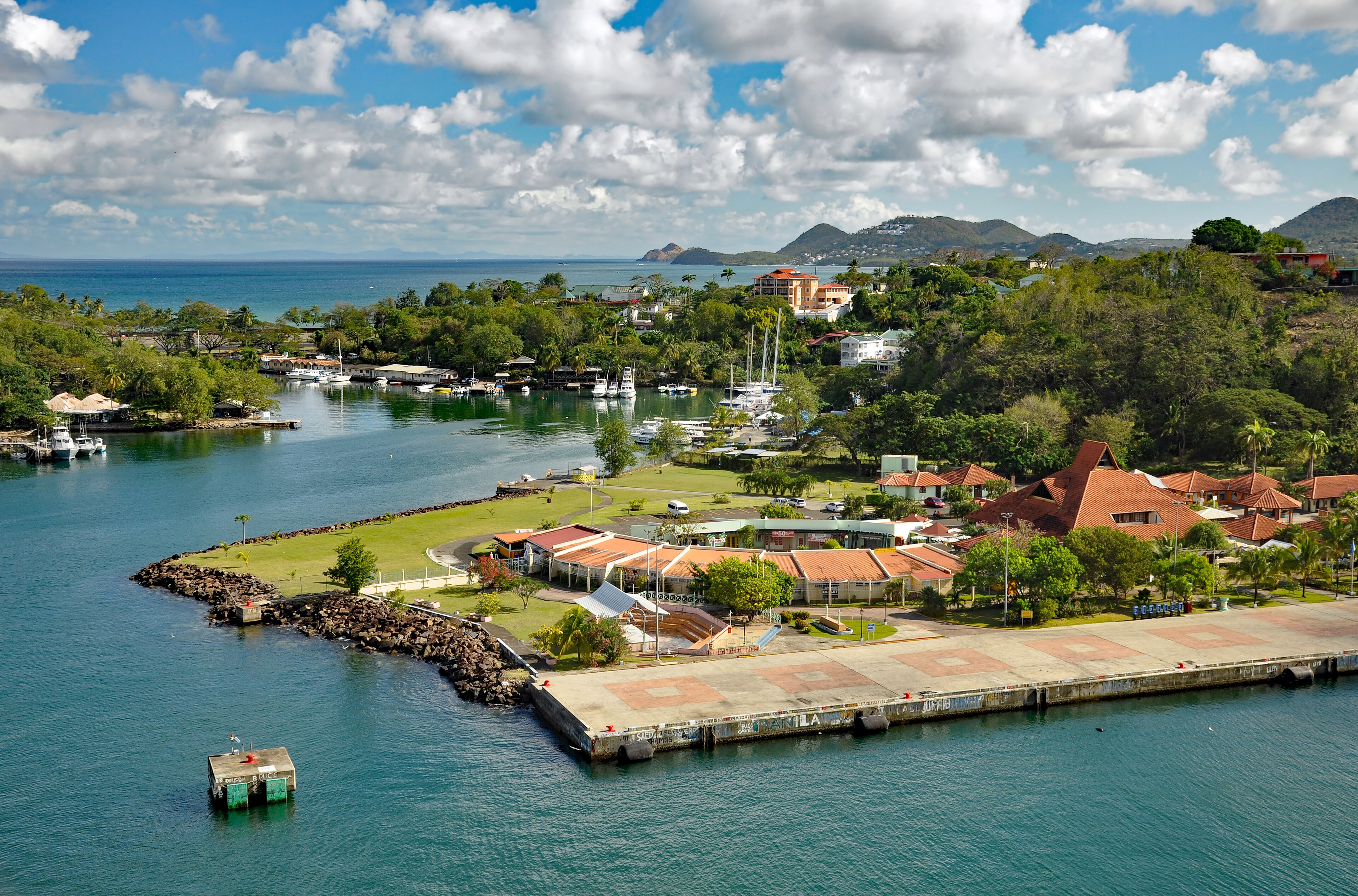
Cruise passengers are processed under the arrangements of the port authority and their cruise line, so documents and timings vary by itinerary and nationality. Follow the instructions your line gives you and carry your passport when you go ashore. If you are visiting Castries on a cruise day, our Castries guide suggests how to spend a few hours.
Yachts must clear customs and immigration at a designated port of entry, and nobody should leave the boat until clearance has been granted. Crew and passengers need passports, and the skipper needs the vessel's papers and clearance from the last port of call. Rodney Bay and Marigot Bay are popular entry points on the west coast, and our sailing and boat trips guide introduces the cruising scene. A yacht crew can stay for up to three months, and extensions are requested at the Immigration Office in Castries.
Leaving the island
For passengers over twelve flying out, the departure tax is already included in the ticket price, so there is nothing to pay at the airport. Passengers who leave by sea pay a departure tax at the time of departure, in local or US currency, so keep a little cash for it. Allow plenty of time for the journey to the airport, particularly if you are staying in the north, as the drive to Hewanorra can take around two hours in traffic.
What documents do I need for a holiday in Saint Lucia?
For a holiday in Saint Lucia, carry a valid passport, your online immigration form confirmation, your accommodation address and proof of return or onward travel, keeping copies on your phone and the originals in your hand luggage. Put them in one folder, either on paper or saved on your phone where you can reach them without a signal. Immigration officers in the Caribbean commonly ask where you are staying and how long you intend to remain, and having the answers to hand keeps the queue moving. Take a second form of identification and keep a photocopy or photograph of your passport photo page separate from the passport itself, because a replacement is far easier to arrange when you hold a copy. Our getting here guide describes the airports so you know what to expect on landing.
Think about the people travelling with you as well. Children need their own passports, and families who do not share a surname may want to carry a birth certificate or a short letter of consent from an absent parent, since officials sometimes ask about the relationship between adults and children. If you are travelling for a wedding, check the paperwork on our legal requirements page well before you fly, because some documents take weeks to obtain. Anyone travelling to work, study or volunteer, rather than simply holiday, should ask the Saint Lucian authorities directly about permits, as a standard visitor stay does not cover those activities. Having these details written down also helps if a relative needs to reach you at short notice.
Keep your health paperwork and your insurance details in the same folder. If you take prescription medicines, carry them in their original packaging with a note from your doctor, and keep them in your hand luggage rather than your suitcase. The health, insurance and safety guide explains what to look for in a policy, and it is sensible to save the insurer's emergency number somewhere you can find it quickly. Finally, check the UK government's travel advice for Saint Lucia in the days before you leave, since entry conditions and health notices can change between booking and departure. Download your airline and hotel apps while you still have a reliable connection, because Wi-Fi at arrivals can be patchy.
What happens at the airport when I arrive in Saint Lucia?
On arrival at Hewanorra International Airport or George F L Charles Airport, you queue at immigration, answer questions about your stay, collect your bags and pass through customs before meeting your transfer. Most visitors arrive at Hewanorra International Airport near Vieux Fort in the south, or at George F L Charles Airport beside Castries, which handles regional flights. The sequence is much the same at both. After a long flight the queue can feel slow, so keep a pen to hand, wear comfortable shoes and treat the wait as the last part of the journey rather than the first part of the holiday. Have your immigration form confirmation and your accommodation address ready, and let the officer finish one question before you answer the next.
Be courteous and direct with the officer. Answer what is asked, say clearly where you are staying, and avoid joking about anything that could be misunderstood, because border staff everywhere take a dim view of flippant remarks. The officer will normally stamp or record your entry and may note how long you are permitted to stay, so glance at the stamp before you walk away and ask if anything looks wrong. Keep your passport accessible rather than packing it away at once, since some hotels also ask to see it at check-in. If you are met by a driver, look for your name on a sign once you are through customs, or head for the licensed taxi desk if you have not arranged a pick-up.
Allow for the road as well as the airport. From the south, the journey to the northern resorts is a long, winding drive, while a transfer to the Soufrière area is shorter but equally curving, and both can feel more tiring after a night flight. If you have a late arrival, a prearranged transfer with a named driver is more comfortable than negotiating at the kerb, and it helps to send your flight number in advance so the driver can follow any delay. Our getting around guide explains the taxi system and what to expect, and our money and tipping guide explains how to pay and whether to tip at the end of the journey.
Can I stay longer or travel on unusual documents to Saint Lucia?
If you want to stay longer than a normal holiday, work remotely or travel on unusual documents, ask the Saint Lucian authorities or the High Commission in London before you travel, because entry is decided by the officer on the day. Most holidays sit comfortably inside the permitted period for visitors, but some travellers want to linger. Rules for extending a stay exist, but they involve an application, supporting documents and sometimes a fee, and the time to start is before your permitted period runs out, not at the airport on departure. A short email to the immigration department or the High Commission in London will give you a definitive answer for your own circumstances, and keeping that reply to show on arrival is sensible.
Dual nationals, people with recent criminal convictions and travellers who hold passports from countries that need a visa should be especially careful. Entry is a decision for the officer on the day, and the airline can also refuse to carry you if your documents do not look in order. If you hold more than one passport, use the same one to leave that you used to enter, and carry both. Anyone with a conviction on record should check the position directly with the authorities well ahead, because a last-minute surprise at the immigration desk is the worst way to find out. Anyone worried about an irregular document should write weeks ahead, not days.
If you are combining Saint Lucia with other islands, check each country's rules separately. Neighbouring islands have their own requirements, and a ferry or a regional flight is treated as an international journey. Cruise passengers and yacht crews follow slightly different procedures, which are set out in our cruise arrival guide and yacht arrival and clearance guide. Whatever your route, the principle is the same: carry your documents, answer honestly, keep a calm manner, and if something changes during your stay, contact the authorities or your hotel reception sooner rather than later. Keep a note of anything agreed with an officer, including the date and the name of the person.
Entry rules in their wider setting
Entry requirements are set by the country's government and can change, so always confirm them directly before you travel. For background on how the country is organised, see government and politics and law and foreign relations.
To understand how Saint Lucia came to manage its own affairs, read independence and modern history. These pages are background only and do not replace current guidance from the relevant authorities.
Help with visas, passports and documents from London
If you need a visa or help with paperwork before you travel, the Saint Lucia High Commission in London handles tourist, business and transit visas and gives case by case guidance by appointment. Our guide to government departments and useful agencies shows who to contact for customs, ports and other practical questions.
Families with Saint Lucian roots may also be interested in citizenship by descent and vital records and marriage certificates. Once the paperwork is sorted, return to planning your holiday in St Lucia.
Questions travellers ask
Do British citizens need a visa for Saint Lucia?
No. British citizens can visit Saint Lucia for a holiday without a visa, provided their passport is valid beyond the day they leave. They are normally allowed to stay for up to six weeks.
How long before travel should I complete the immigration form?
Complete the online form no more than three days before you arrive. One form covers a family, and the confirmation with a QR code is sent by email.
Can I fill in the immigration form at the airport?
Yes. You can complete it on arrival using the free wireless network at the airport, but doing it beforehand saves time in the queue.
Do I need a yellow fever certificate?
Only if you arrive from a country with a risk of yellow fever transmission. Most direct flights from the United Kingdom, North America and Europe are not affected.
What happens if I want to stay longer than my permitted period?
Apply in person to the Immigration Department in Castries before your permitted stay ends. Overstaying and working without a permit are both offences.
Is there a departure tax when I fly home?
For passengers over twelve leaving by air, departure tax is included in the airline ticket. Passengers leaving by sea pay a small departure tax at the port.
Can I wear camouflage clothing in Saint Lucia?
No. It is illegal for anyone, including children, to wear camouflage clothing, so leave it at home.
Who should I ask about unusual entry situations?
Contact the Saint Lucian High Commission in London or your own government's travel advice service, especially for dual nationality, work or study, or stays beyond a holiday.
What documents should I carry in my hand luggage when flying to Saint Lucia?
Keep your passport, immigration form confirmation, accommodation address, return or onward ticket, insurance details and prescription medicines in your hand luggage, so they are available at the immigration desk and cannot be lost with a suitcase.
Do children need anything extra to enter Saint Lucia?
Children need their own passports. Families with different surnames, or one parent travelling alone, may find a birth certificate or a short consent letter useful, because officials sometimes ask about the relationship between adults and children.
Where can I check current entry rules before I travel?
Read the UK government's travel advice for Saint Lucia in the days before departure and, for unusual cases, contact the Saint Lucian High Commission in London. Rules can change, so confirm them close to travel rather than relying on an older source.
Hewanorra International Airport on the map
Hewanorra International Airport is at 13.7343 degrees north, 60.9539 degrees west. Map data from OpenStreetMap contributors.
Ask Lucy about Visa and entry requirements
Ask about places to stay, things to do, the weather or getting here.
Keep exploring Saint Lucia
Looking for the industry view? Visit St Lucia on VisitTravelGroup.com covers the destination for travellers and the tourism trade.
More from the Visit Travel Group network: VisitTravelGroup.com, Benidorm.co.uk, Anguilla.co.uk, TheRedSea.co.uk.