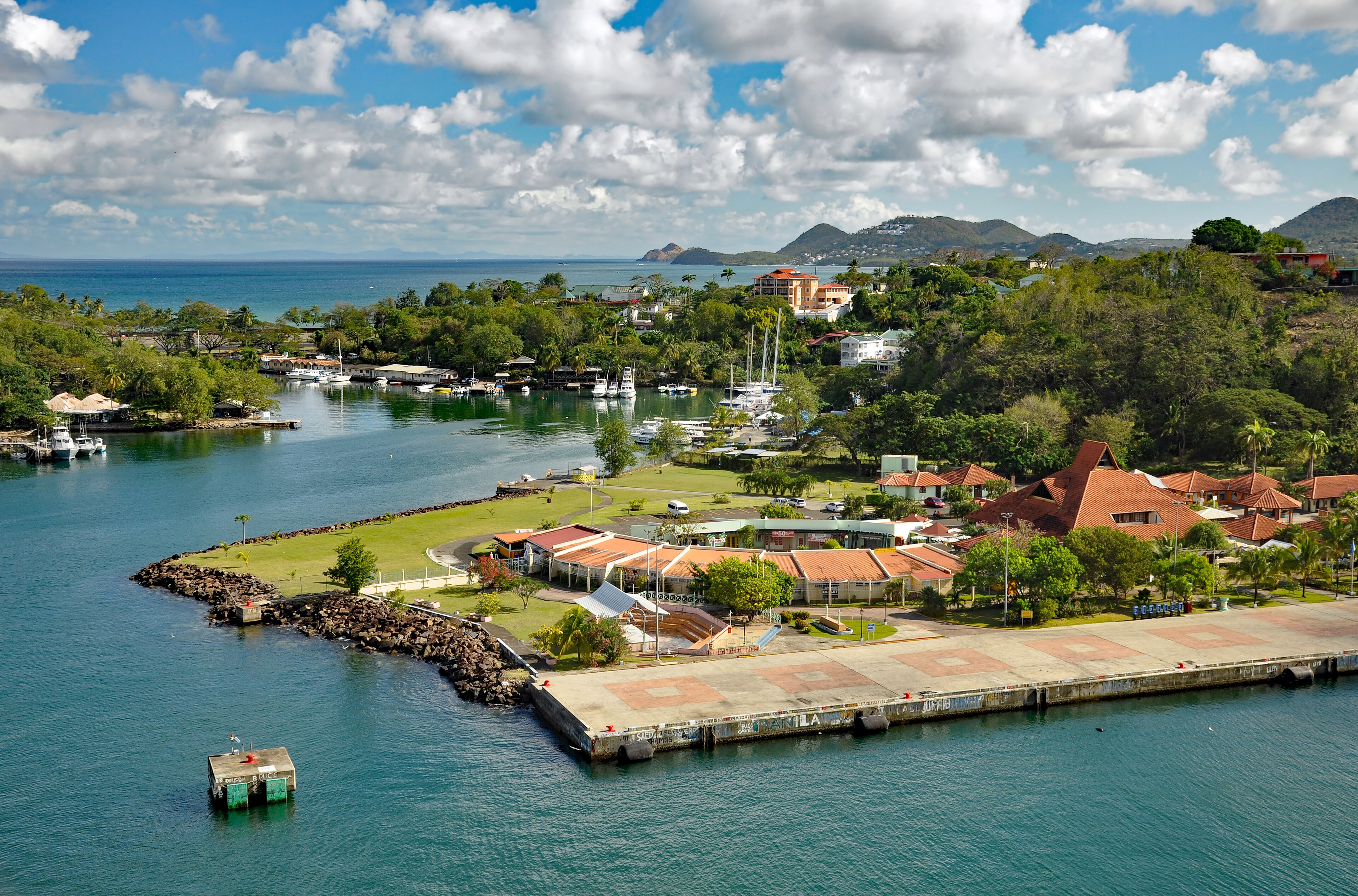
About Saint Lucia
Government and Politics in Saint Lucia: A Visitor's Guide
Saint Lucia is a small, stable parliamentary nation with a British-style system, lively party politics and a habit of changing its government more often than most.
A constitutional monarchy within the Commonwealth
Saint Lucia became an independent state on 22 February 1979, after centuries of alternating French and British control and a period as an associated state of the United Kingdom. It chose to remain a Commonwealth realm, which means that the British monarch is also the monarch of Saint Lucia. King Charles III is head of state, but the role is separate from his position in the United Kingdom, and in practice it is largely symbolic. If you want the story of how that came about, our guide to independence and modern history covers the road from colony to nation.
The King is represented on the island by a Governor-General, who acts on the advice of the Prime Minister and Cabinet. The Governor-General opens Parliament, appoints ministers and carries out ceremonial duties, and the constitution also reserves a few residual powers that can be used on personal judgement. Sir Errol Charles held the post until 31 July 2026, and Felix Finisterre has been acting Governor-General since 1 August 2026, appointed on the Prime Minister's advice. Because this is a role that can change, it is worth checking the current holder on the government's website if you need to cite it.
Government House stands in Castries, and the Governor-General takes part in the national occasions you may see during a visit, including the Independence Day parade on 22 February. The festivals and events guide explains the calendar of public celebrations.
Parliament: the House of Assembly and the Senate
Saint Lucia's Parliament has two chambers. The House of Assembly is the elected chamber and has 17 members, each chosen by first-past-the-post voting in a single-member constituency. A full term runs for up to five years, although the Prime Minister can ask for an early election, and the constitution sets a latest date by which a new Parliament must be called.
The Senate has 11 members, all appointed by the Governor-General. Six are appointed on the advice of the Prime Minister, three on the advice of the Leader of the Opposition, and two are independent senators chosen on the Governor-General's own judgement. The upper chamber reviews legislation and can propose amendments, but real power sits in the House, where the government of the day holds its majority.
Universal adult suffrage arrived in 1951, and the island has voted in regular multi-party elections ever since. Voters tend to follow national politics closely, and constituencies are small enough that candidates are often known personally. That closeness is part of the island's character, and you will notice that conversation in taxis, markets and rum shops often turns to politics with surprising frankness.
The Prime Minister and Cabinet
Executive power belongs to the Prime Minister and Cabinet. After an election, the Governor-General invites the member of the House who appears most likely to command a majority to become Prime Minister, and that person then recommends the other ministers. The Prime Minister must be a member of the House of Assembly, and must resign if the House passes a motion of no confidence and the situation is not resolved within a set number of days.
The Cabinet runs ministries covering finance, tourism, health, education, infrastructure, agriculture and more. Several of those portfolios matter directly to travellers, because they shape airport projects, cruise berths, tourism marketing and the rules for visa and entry. The Deputy Prime Minister has also served as the minister responsible for tourism, which shows how central the visitor economy is to government priorities.
Philip J. Pierre of the Saint Lucia Labour Party has led the government since he was sworn in on 29 July 2021. He was re-elected for a second term in December 2025, and his party's performance is described below.
The main parties and the 2025 general election
Two parties have dominated Saint Lucian politics since the 1950s. The Saint Lucia Labour Party, a social democratic party, was founded in 1949 and won the first elections held under universal suffrage. The United Workers Party, a centre-right party, was formed before the 1964 election by a breakaway group that included John Compton, who became its dominant figure and the country's first Prime Minister at independence.
The most recent general election was held on 1 December 2025. The Labour Party won 14 of the 17 seats in the House of Assembly, the United Workers Party won one seat, and two seats are held by independent members. Our guide to the Prime Minister, Cabinet and MPs sets out who represents each constituency. The campaign focused on crime, health care, infrastructure, jobs for young people and economic growth, and the future of the citizenship by investment programme was also debated. You can read more about that scheme in our guide to citizenship by investment.
A word of reassurance for visitors: elections here are orderly, and nothing in the political calendar affects ordinary holiday plans beyond the occasional public holiday, a quieter day in the shops, or some noisy campaign vehicles in the final week. Treat political conversation with the same courtesy you would at home and you will find people open and good humoured.
A short history of the island's Prime Ministers
John Compton led Saint Lucia to independence in 1979, but Labour won the first post-independence election later that year, and the party then went through a period of internal disagreement that saw Allan Louisy, Winston Cenac and Michael Pilgrim each lead the government in turn. Pressure from unions and business forced early elections in 1982, and Compton returned with a large majority. He remained in power until he stepped down in 1996, handing over to Vaughan Lewis.
Kenny Anthony led Labour to a landslide in 1997 and governed until 2006, when Compton came back for a final term and died in office the following year. Stephenson King took over, and Anthony returned in 2011. Allen Chastanet of the United Workers Party won in 2016, and Philip Pierre and Labour won in 2021. Over four decades the pattern has been one of fairly regular swings between the two main parties, which is typical of small parliamentary states and a sign of healthy competition.
That history is woven into the landscape. The John Compton Dam supplies water to much of the island, the George F. L. Charles Airport in Castries is named after a Labour founder, and Derek Walcott Square honours the poet and Nobel laureate. For more on the people behind the names, see our guide to notable Saint Lucians.
Districts and local government
The island is divided into ten districts, which were once known as quarters, a legacy of the French period. They are Anse la Raye, Castries, Choiseul, Dennery, Gros Islet, Laborie, Micoud, Soufrière, Vieux Fort and Canaries, and each has its own character. The 17 parliamentary constituencies are drawn broadly along these lines, with the larger districts holding more than one seat.
Local government is carried out through elected councils. Castries has a city council, and towns and villages around the island have their own councils and village groups. They look after matters such as markets, sanitation, cemeteries and minor roads, and you will see their work in the tidy market halls and bus stops of towns such as Soufrière and Vieux Fort. Our guide to districts and towns describes each in turn.
Saint Lucia has no army. The Royal Saint Lucia Police Force includes a Special Service Unit and a Coast Guard, and regional security is a shared responsibility within the Eastern Caribbean. The wider legal framework, including the courts, is covered in our guide to law and foreign relations.
What this means for travellers
For a visitor, the political system shows up in small, practical ways. Public holidays follow the national calendar, including Independence Day on 22 February, Emancipation Day on 1 August, and a national day on 13 December that honours the island's patron saint. Offices, banks and some shops close on those dates, so plan your errands around them, and read our best time to visit guide for the busiest weeks.
Government decisions also shape the experience on the ground: the tourism authority markets the destination, the ports authority runs the airports and cruise berths, and ministers decide on investment incentives for hotels. If you are considering buying or building here, our why invest guide and incentives and tax guide set out how the system treats overseas buyers.
Finally, keep the flag and the monarchy in perspective. The island is proudly independent, with its own national symbols, language and culture, even while it shares a head of state with the United Kingdom. Our guide to national symbols and holidays explains the flag, the anthem and the national bird, and history and culture experiences suggest ways to learn more on the ground.
- Independence Day: 22 February.
- Emancipation Day: 1 August.
- National Day: 13 December.
- General election most recently held: 1 December 2025.
Questions travellers ask
Who is the head of state of Saint Lucia?
The head of state is King Charles III, who is King of Saint Lucia in his own right as well as monarch of the United Kingdom. He is represented on the island by the Governor-General, who carries out most ceremonial duties.
Who is the Governor-General of Saint Lucia now?
Sir Errol Charles left the post on 31 July 2026, and Felix Finisterre has been acting Governor-General since 1 August 2026. The role can change, so check the government's website for the latest holder before quoting it.
Who is the Prime Minister of Saint Lucia?
Philip J. Pierre of the Saint Lucia Labour Party has been Prime Minister since July 2021 and won a second term at the general election held on 1 December 2025, when his party took 14 of the 17 seats.
How many seats are there in the Saint Lucian Parliament?
The elected House of Assembly has 17 seats, each chosen by first-past-the-post voting in a single-member constituency. The Senate has a further 11 members, all of them appointed by the Governor-General on the advice of different parties.
What are the two main political parties?
The two main parties are the Saint Lucia Labour Party, a social democratic party founded in 1949, and the United Workers Party, a centre-right party formed in 1964 around John Compton, who was the first Prime Minister after independence.
When did Saint Lucia become independent?
Saint Lucia became independent from the United Kingdom on 22 February 1979, and it is still celebrated each year as Independence Day. The island remained a Commonwealth realm, so the monarch continues to be its head of state.
Does Saint Lucia have an army?
No. Saint Lucia has no standing army. The Royal Saint Lucia Police Force includes a Special Service Unit and a Coast Guard, and the island works with regional neighbours on wider security matters.
Is Saint Lucia politically stable for visitors?
Yes. The island has held regular, orderly elections since universal suffrage arrived in 1951, power has changed hands peacefully many times, and politics rarely affects holidays beyond the occasional public holiday or noisy campaign vehicle.
How is the island divided locally?
Saint Lucia has ten districts, formerly called quarters, and 17 parliamentary constituencies. Castries has a city council, and towns and villages have their own councils that look after markets, sanitation and minor roads.
Government House, Castries on the map
Government House, Castries is at 14.0057 degrees north, 60.9979 degrees west. Map data from OpenStreetMap contributors.
Ask Lucy about Government and politics
Ask about places to stay, things to do, the weather or getting here.
Keep exploring Saint Lucia
Looking for the industry view? Visit St Lucia on VisitTravelGroup.com covers the destination for travellers and the tourism trade.
More from the Visit Travel Group network: VisitTravelGroup.com, Benidorm.co.uk, Anguilla.co.uk, TheRedSea.co.uk.