Plan your trip
Getting Around Saint Lucia: Taxis, Buses, Car Hire and Boats
The island is only 27 miles long, but its roads climb and twist, so choosing the right way to travel makes a real difference to your days.
Understanding the distances
Saint Lucia is roughly 27 miles long and 14 miles wide, which sounds small until you meet the roads. The island is mountainous, and the main routes follow the coast through towns and around headlands, with steep gradients, hairpin bends and the occasional pothole. A journey that looks like twenty miles on the map can take well over an hour, and the transfer between Hewanorra airport in the south and the resorts of the north can take around two hours, as our getting here guide explains.
The sensible approach is to choose a base that suits your plans, take one or two day trips by the method that suits them best, and avoid crossing the island every day. Our area guides describe what each part of the island offers, so you can match a base to the way you like to travel.

Taxis
Taxis are the most common way for visitors to travel. You will find them at taxi stands, outside hotels and at both airports, and they can be booked by telephone. Authorised taxis carry a light blue number plate with the prefix TX, which is the quickest way to check that a vehicle is licensed. Fares are not metered. There are standard rates for most destinations, but they vary with distance, the number of passengers and the amount of luggage, so agree the fare in advance and confirm whether it is in Eastern Caribbean or US dollars.
Many drivers double as guides and will take you on a half or full day tour at a fixed price, which is often better value than a series of individual journeys. Hotels can recommend drivers they trust, and a regular driver is useful for late evenings, when walking is not a good idea. Only use licensed taxis, and avoid accepting rides from unmarked vehicles.
- Look for the light blue TX number plate.
- Agree the fare and the currency before you set off.
- Ask your hotel to book a driver for evenings out.
The Allez rideshare app
For flexibility, the island has a home-grown rideshare app called Allez, which connects visitors with verified local drivers. It gives an upfront fare estimate, offers cashless payment and works on demand, so you can plan your day as you go rather than agreeing everything in advance. It is useful for airport arrivals, beach days and evenings out, and you can download it from the usual app stores before you travel.
As with any app, availability depends on where you are and the time of day, so keep a licensed taxi number as a fallback in quieter areas.
Minibuses
Minibuses are how most Saint Lucians travel, and they are the cheapest way to see the island and to meet people. They run on fixed routes, mainly between towns, and fares are a few Eastern Caribbean dollars for most journeys, rising for the longest routes. Minibuses have a green number plate with the letter M, and they stop when you ask, so a friendly wave is all you need.
Services are less frequent in the evening and on Sundays, and drivers can be fast, so they suit the adventurous traveller more than someone with a tight schedule. Keep small notes of local currency for fares, and ask a local or your hotel which route goes where.
Hiring a car
Cars, four-wheel-drive vehicles and scooters can be booked in advance through a travel agent or at the airports, hotels and rental offices. Visitors need a temporary local driving permit, which is issued on presentation of a valid driving licence. The rental company can often arrange it for you, and it can also be obtained at the airport on arrival or from the licensing authorities in Castries, so check the current arrangements when you book. Traffic drives on the left, as in the United Kingdom.
Driving here takes concentration. Roads can be narrow and steep, drivers do not always signal, pedestrians often walk on the road, and some stretches are unlit at night. Hire companies often set stricter conditions than the law, such as a minimum age or a year of driving experience. If you do hire a car, keep doors locked, do not stop for people flagging you down, and call the police if there is an accident without moving the vehicle. Many visitors decide that a driver is more relaxing than a hire car.
By sea
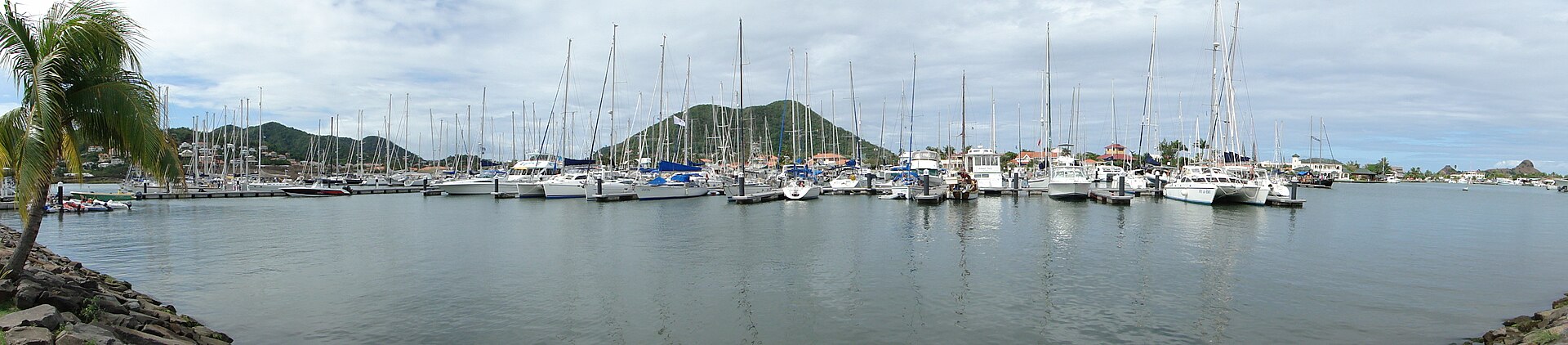
The Caribbean coast is sheltered, and boats link places that are slow to reach by road. A water taxi service runs between Hewanorra airport and resorts on the northwest side of the island, which avoids the long drive and makes arrival part of the holiday. Private charters and fast boats can be arranged for transfers between beaches, resorts and towns, and a charter along the coast beneath the Pitons is one of the best ways to see the island. Our sailing and boat trips guide describes the main options.
Ferries connect Saint Lucia with Martinique, Dominica and Guadeloupe, which makes the island an easy stop on an island-hopping trip. Check schedules and passport requirements for each leg before you travel, and see our visa and entry guide for departure arrangements.
By air
A helicopter transfer between Hewanorra and George F. L. Charles airport shortens the journey between south and north, and sightseeing flights give an unforgettable view of the Pitons and the rainforest. They cost more than a taxi, but they save hours and are popular with couples and honeymooners. If you are planning one, ask your hotel or travel agent to book it, and confirm the weather policy.
Is it better to hire a driver or a car in Saint Lucia?
For most visitors a local driver is easier than a hire car in Saint Lucia, because the roads are steep, winding and driven on the left, though confident drivers staying in the north may enjoy having a car. The island is mountainous, and the main routes follow the coast and cross the interior in long sequences of bends, climbs and drops. Distances on a map look short but journeys take longer than newcomers expect, and a drive that seems modest on paper can fill a morning once you allow for hairpins, villages, school traffic and the occasional roadside stop. Traffic drives on the left, as it does in Britain, which helps British visitors, but road width, gradient and surface vary from smooth highway to narrow lane. Our geography guide explains why the landscape shapes everything.
That is why many visitors choose a driver rather than a hire car. A local driver knows the bends, the places where the road floods after rain, the best viewpoints and the reliable lunch stops, and you can look out of the window rather than at the tarmac. The cost of a day with a driver can compare favourably with a hire car once you add fuel, insurance and the stress of unfamiliar roads, especially for a party of three or four. Confident drivers who relish independence will enjoy a car, particularly in the north, where the roads are gentler and the places of interest are close together. Ask your hotel to recommend a driver they trust, and save the number in your phone.
Weather matters as well. After heavy rain, some roads become slippery and minor landslips can occur, and visibility on the hillside routes drops sharply in a downpour. Daylight driving is far more comfortable than driving at night, since lighting can be limited and pedestrians, dogs and livestock sometimes appear without warning. If you are staying south of the capital, plan your arrivals and departures so that the winding stretches fall in daylight. Our west coast guide describes the road that links many of the best-known places, and gives a sense of what each section demands, which helps you judge how much driving you really want to do on your holiday.
How long do journeys take between places in Saint Lucia?
Journeys in Saint Lucia take longer than the map suggests because roads wind through hills and villages, so plan one main outing per day and pair neighbouring places such as Pigeon Island and Rodney Bay. The most successful itineraries are built around travel time rather than the number of attractions. A day trip to the south from the north could involve a long drive each way, so it is best used for a single memorable experience, such as a walk, a boat trip or a long lunch, rather than five stops that all feel rushed. Think of it as a morning out and an afternoon back, with the middle of the day given to whatever draws you there. Our Pitons guide shows how much time a single area can fill.
Pairing places that are neighbours is the simplest way to save time. Pigeon Island and the Rodney Bay area sit within easy reach of each other, as do the harbour at Marigot Bay and the capital, and a visit to Soufrière naturally combines with the volcanic springs, the gardens and a cocoa estate. If you are staying in the south, you can do the same in reverse and treat the north as a day trip. Building a day from places that cluster together means you spend more time experiencing and less time in the car, and it leaves room for the unplanned stop at a viewpoint, a stall or a quiet beach that so often becomes the best part of the day.
Leave slack for the unexpected. A closed road, a long lunch, a sudden storm or a chat with a friendly stallholder can all shift the schedule, and the island rewards travellers who accept that. If a deadline matters, such as a flight, a ferry or a dinner reservation, leave an additional margin and consider travelling the day before. For those who want to see the coast from the water, a boat can bypass the roads entirely, and our sailing and boat trips guide explains how an hour on the sea can replace a long drive on land. Whatever you choose, tell your hotel where you are going and roughly when you expect to return.
How do I move between resorts in the north and south of Saint Lucia?
Move between resorts in Saint Lucia by prearranged driver or hotel car on a relaxed morning, stopping at a viewpoint or village on the way, and allow for the long, winding road between Vieux Fort and the north. A change of base mid-holiday is easiest when you treat it as a half-day journey rather than an errand. Check out in the morning, ask your driver to stop somewhere interesting along the way, such as a viewpoint, a fishing village or a beach, and arrive at your next hotel in time for a late lunch and a swim. That turns a transfer into a small excursion. Hotels can often arrange cars, and the price is usually clear in advance. The Marigot Bay stretch is a natural place to pause between north and south.
If your trip starts or ends in the south, remember that the airport and the resorts are not as close as the map suggests. The journey from Vieux Fort to the northern resorts is long and winding, so some visitors prefer to stay at least their first or last night in the south or near the capital. Others use the smaller airport near Castries for regional connections. Each option has a different cost and rhythm, so compare them while you are planning rather than at the baggage carousel, and ask your hotel what it would suggest for your own dates. Our getting here guide sets out the choices, and it is worth asking your hotel whether it can store luggage if your check-out and the next check-in do not line up.
Finally, keep small change and a charged phone. Drivers and minibus conductors prefer smaller notes, and a phone with a map and a stored contact number is invaluable if plans change. Ask your hotel to write down the name and number of a driver they trust, and agree fares before you set off. In the evening, ask the restaurant to call a taxi for you rather than waiting at the roadside, particularly outside the busiest resort areas. A little planning of this kind costs almost nothing and removes the small frictions that can otherwise accumulate, leaving you free to enjoy the journey and to arrive at each new base rested rather than rattled.
Why the island's layout shapes every journey
Journey times make more sense once you see the terrain. Geography and geology and volcanoes explain the steep hills and winding coastal routes that define travel on the island.
For a broader view of the network itself, read transport and infrastructure, and use districts and towns to decide which areas to combine in a single day.
From planning to booking
Most visitors fit this into holidays to St Lucia, so choose your base first. Compare St Lucia hotels by area and style, and read our guides to luxury hotels in St Lucia and all inclusive resorts in St Lucia if you are choosing between a boutique stay and an all in package.
Then set your dates with the best time to visit St Lucia, book flights to St Lucia and pick days out from our St Lucia itineraries. Couples can also read about a honeymoon in St Lucia or weddings in St Lucia.
Questions travellers ask
How do I recognise a licensed taxi in Saint Lucia?
Authorised taxis carry a light blue number plate with the prefix TX. Agree the fare and currency before you set off, as taxis are not metered.
Is there a rideshare app?
Yes. Allez is a home-grown app that connects visitors with verified local drivers, gives upfront fares and offers cashless payment.
Do I need a special licence to drive in Saint Lucia?
Visitors need a temporary local driving permit, which the rental company can often arrange. Traffic drives on the left, as in the United Kingdom.
How much do minibuses cost?
Fares are a few Eastern Caribbean dollars for most journeys. Minibuses have a green number plate with the letter M and run on fixed routes between towns.
Is there a boat from the airport to the northwest resorts?
Yes. A water taxi service links Hewanorra airport with resorts on the northwest coast, avoiding the long drive by road.
Can I travel to other islands by ferry?
Ferries link Saint Lucia with Martinique, Dominica and Guadeloupe. Check schedules and entry rules for each destination.
Is it difficult to drive on the island?
Roads are steep, narrow and winding, and drivers do not always signal. Many visitors prefer to use a taxi or a driver for longer journeys.
Can I get a helicopter transfer?
Yes. Helicopters link the two main airports and offer sightseeing flights over the Pitons. Book through your hotel or a travel agent.
Is a driver better than a hire car for a first visit?
For many first-time visitors a driver is more relaxing, because the roads are winding and steep and a local knows the conditions. A hire car suits confident drivers staying mainly in the north, where the roads are gentler and distances are shorter.
Can I do a day trip from the north to the Pitons?
Yes, but it is a long day on winding roads, so it works best with a single focus, such as a hike or a boat trip. Staying a night or two in the south is usually more enjoyable than a rushed return journey.
How should I arrange evening transport to restaurants?
Ask your hotel or the restaurant to book a licensed taxi and agree the return time and fare before you set out. Roads can be dark and winding at night, so a prearranged driver is more comfortable than looking for a car on the roadside.
Saint Lucia on the map
Saint Lucia lies in the Windward Islands of the eastern Caribbean, around 13.8830 degrees north, 60.9670 degrees west. Map data from OpenStreetMap contributors.
Ask Lucy about Getting around
Ask about places to stay, things to do, the weather or getting here.
Keep exploring Saint Lucia
Looking for the industry view? Visit St Lucia on VisitTravelGroup.com covers the destination for travellers and the tourism trade.
More from the Visit Travel Group network: VisitTravelGroup.com, Benidorm.co.uk, Anguilla.co.uk, TheRedSea.co.uk.