Best beaches
Reduit, Sugar Beach, Anse Chastanet and the other shores that define a Saint Lucia beach holiday.
Read the guide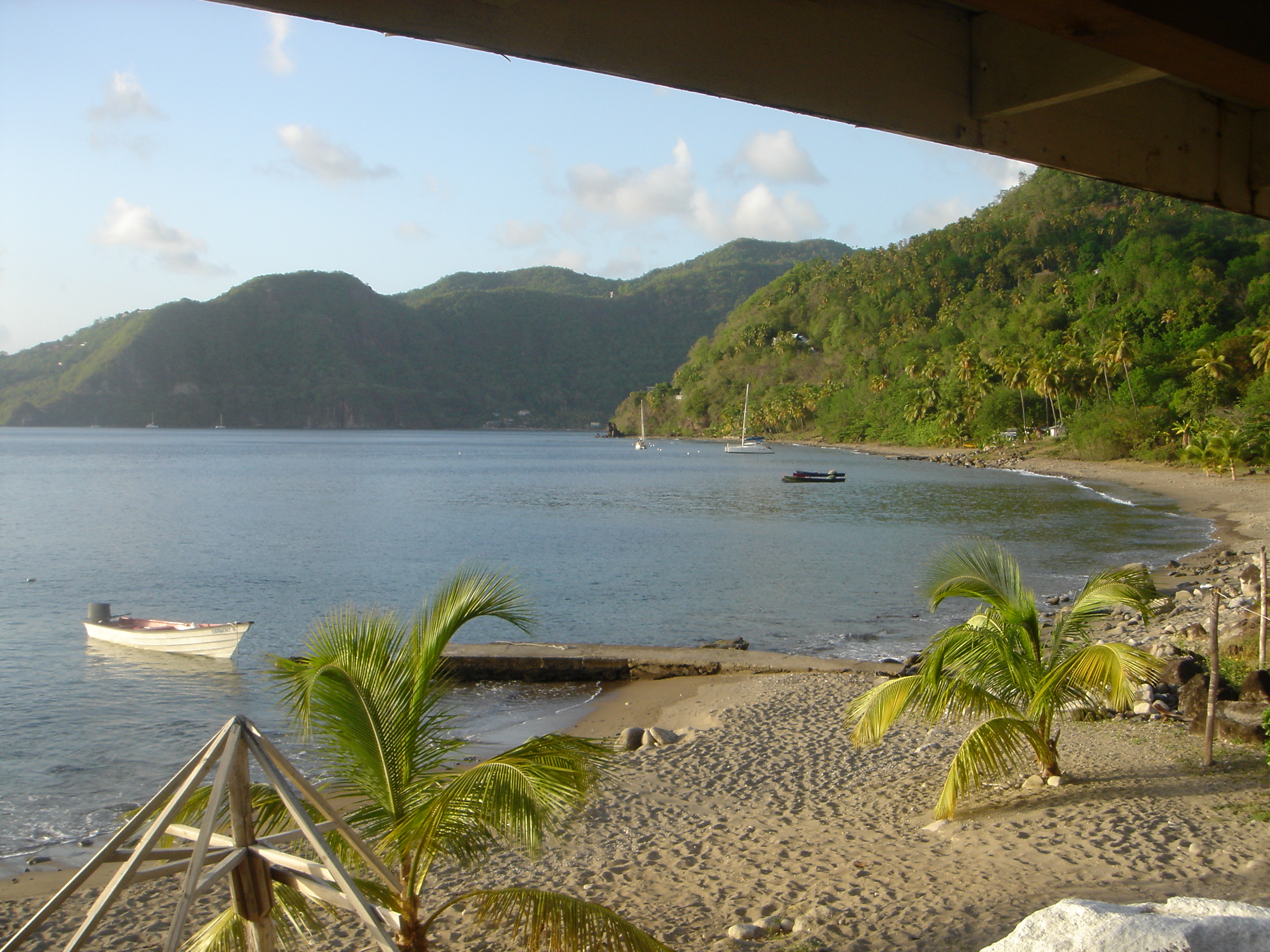
Beaches
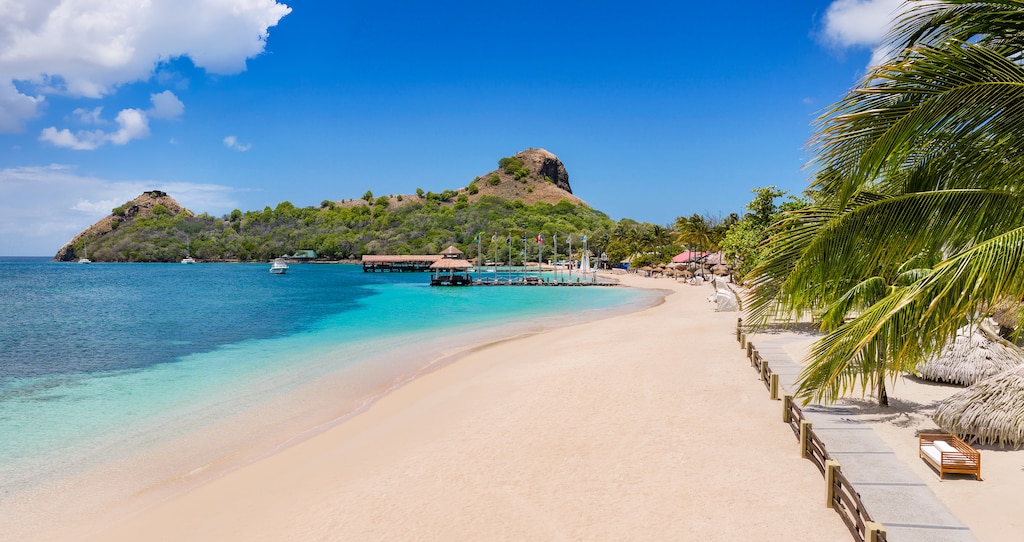
From the long golden sweep of Reduit to the dark volcanic coves beneath the rainforest, the island has a beach for every kind of day.
Saint Lucia faces the Caribbean Sea on its west side and the Atlantic Ocean on its east, and that single fact explains most of what you will find on the sand. The west coast is sheltered, with calm water, good snorkelling and nearly all of the resorts. The east coast is wilder, with long open beaches, stronger currents and far fewer people. The guides below help you choose the right shore for the day you have in mind, and our safety guide explains how to enjoy the water sensibly.
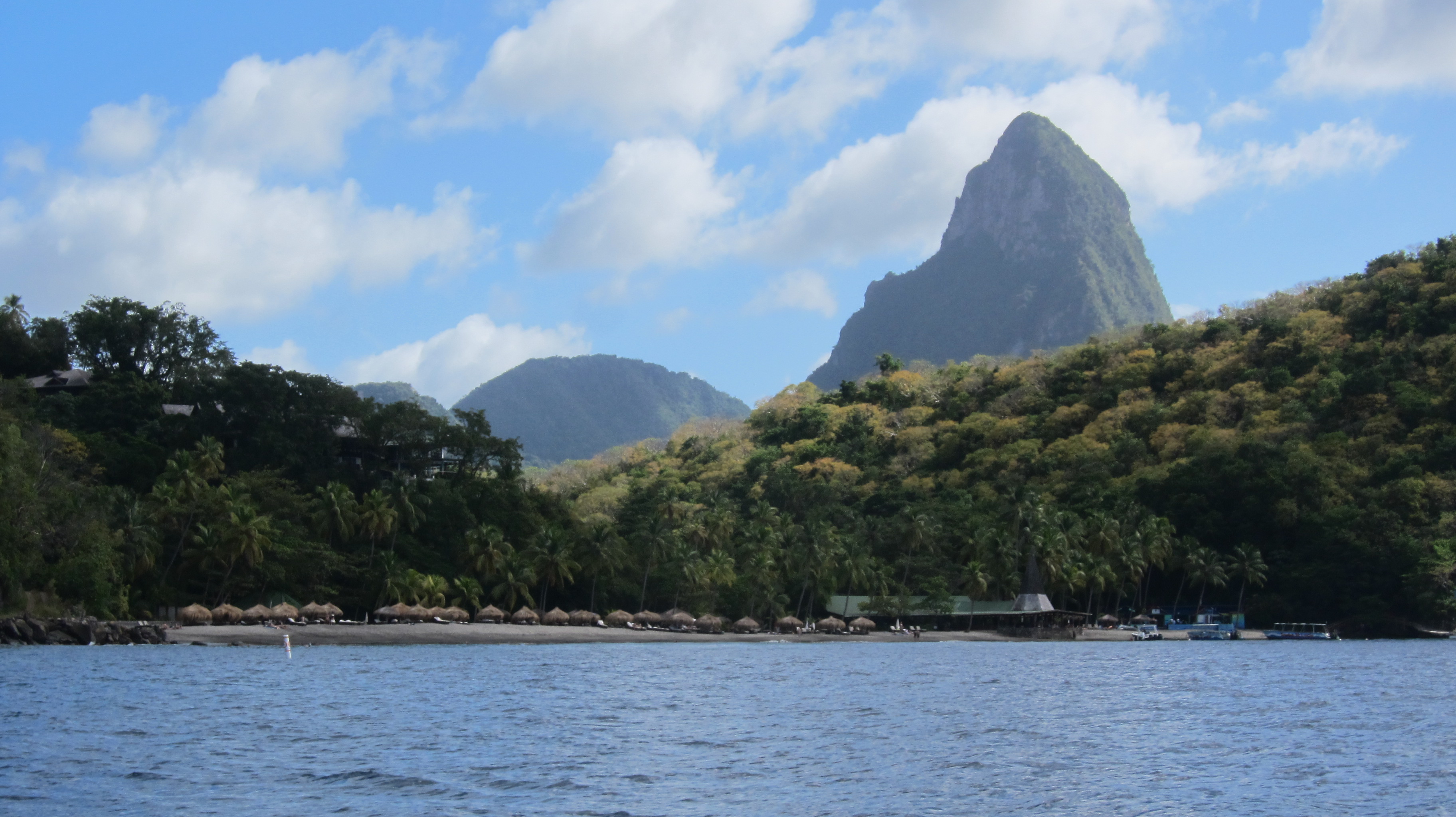
The island's volcanic origins also colour the sand. Along the southwest, near Soufrière, several beaches are dark grey or black, framed by rainforest, while the northern beaches around Rodney Bay are golden and lively. Many visitors enjoy a mixture of both during a week, and our best beaches guide is the place to start.
Three or four varied beaches are plenty for a week of holidays in Saint Lucia: one lively northern beach such as Reduit, one dark sand cove near the Pitons, one quiet local shore and, if you can, one reached by boat. Most people arrive with a picture of a single perfect beach and then discover several quite different ones within an easy drive of each other. A sensible week often begins in the north, where the sand is long, the water is forgiving and the first jet-lagged afternoons can be spent doing nothing more strenuous than ordering a second drink. Once your body clock has settled, the southwest becomes the obvious next chapter. Our guide to the best beaches in Saint Lucia sets out the headline shores.
If you can only manage one change of base, split the week between the two coasts. Spend the first half somewhere with restaurants and activity on the doorstep, then move south for scenery and quiet, where rainforest tumbles almost to the waterline and the reef begins a few strokes from the sand. Travellers staying in one place can still sample both, because a long day trip by road or by boat will take you to a beach that feels entirely different from the one outside your hotel. Our guide to hotels in Saint Lucia compares the bases that make this easiest, and it is worth reading before you commit to dates or book flights. Remember that the drive between the coasts takes a good part of a morning, so allow for it.
Think, too, about what each beach asks of you. Some reward a full day with a book, a cool bag and a good hat. Others are best visited for an hour at the edges of the day, when the light is low, the heat has eased and the sand is almost empty. Planning one lazy beach day and one early swim or late walk for every few days of your stay tends to produce a holiday that feels varied without being rushed. It also leaves space for the island's other pleasures, from rainforest walks to long lunches, which you will want once the novelty of the sea has settled into a comfortable routine. Keep a flexible mind, and let the weather help you decide which shore suits each morning.
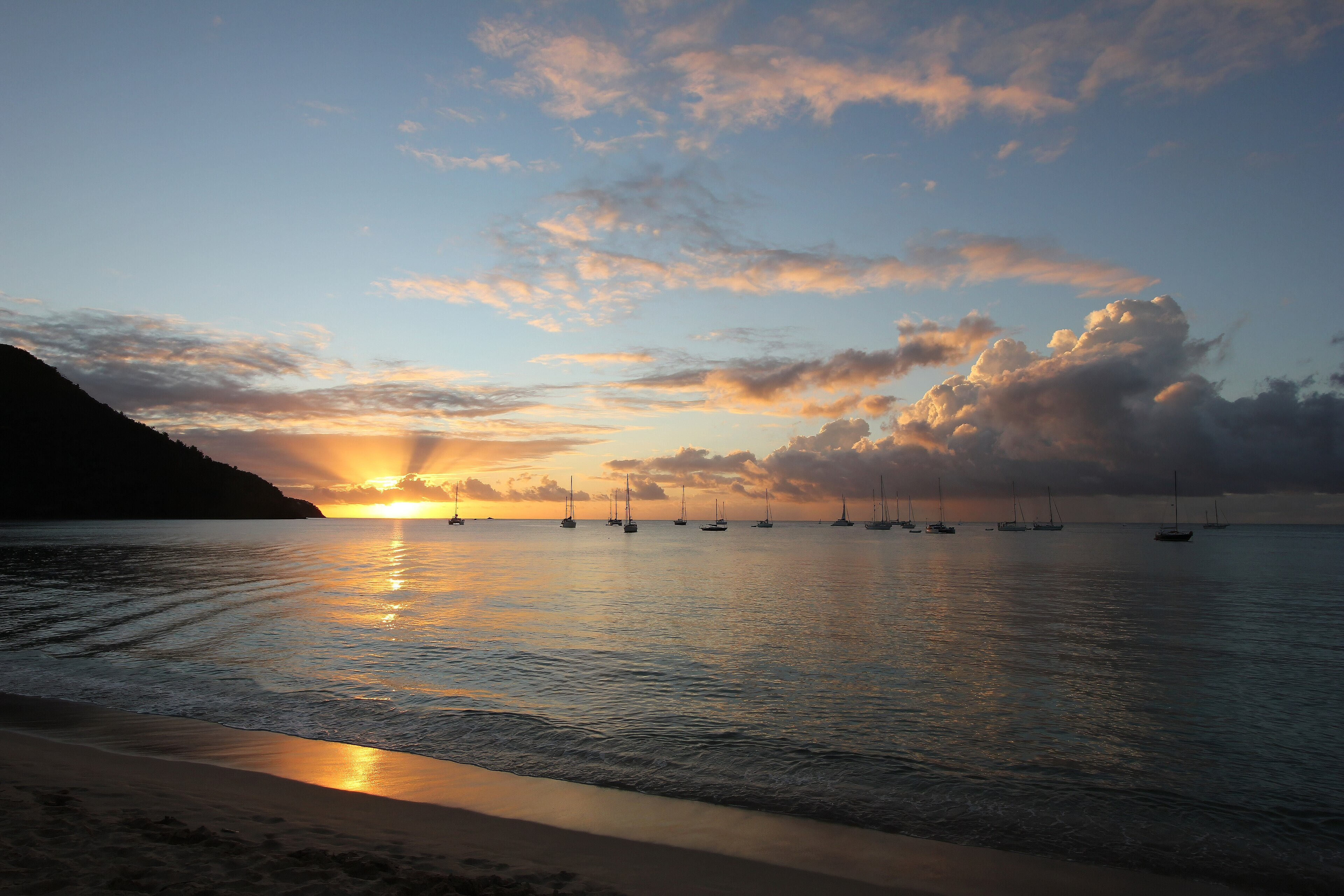
The Caribbean coast of Saint Lucia is sheltered and generally calm, while the Atlantic coast takes wind and swell across an open ocean, so west coast beaches suit swimming and east coast beaches suit walking, kitesurfing and watching the surf. The Caribbean side has a particular rhythm. Mornings are usually the stillest part of the day, with the sea flat and the horizon sharp, which is why serious swimmers and snorkellers like to be in the water early. By midday the trade winds often pick up a little, rattling palm fronds and keeping the heat bearable, and by late afternoon the western light turns the sand gold. The beach bars and sunsets guide explains how to enjoy that hour.
The Atlantic side is a different animal altogether. The beaches there are long, bright and often empty, with a restless sea that is better admired than entered. Cas en Bas, on the windy northern Atlantic coast, is known for kitesurfing lessons, picnics and horse rides along the sand, while the southern shore near Vieux Fort draws the same crowd for its steady wind. If you are tempted to swim on that coast, read our beach safety guide first, and always ask a local about the day's conditions rather than trusting the postcard. Treat these shores as places for walking and watching, and save your swimming for the sheltered west. The east coast rewards patience and a good pair of walking shoes, and a picnic on an empty Atlantic beach is one of the island's quiet luxuries.
Seasons shift the picture gently. The dry season runs from December to May, bringing the clearest water and the bluest skies, while the wetter months give greener hillsides, warm showers that pass quickly and fewer people on the sand. The sea stays warm all year, and the average daytime temperature barely changes, so the real question is how much sunshine certainty you want and how much you value a quieter shore. Our best time to visit guide helps you weigh that against price and crowds, and explains when the Atlantic side is at its roughest. Booking shoulder months can bring good weather and gentler prices at the same time. Whichever month you choose, pack a light rain jacket and treat any shower as a brief pause.
A beach morning pairs naturally with a fort, a boat trip, a snorkel or a hot spring, because Saint Lucia is compact enough that almost everything is within a half day's journey. A swim at Pigeon Island suits a walk up to the old fort afterwards, with the sea breeze at your back. A snorkel at a southwest bay sits well beside a cocoa tasting or a soak at the Sulphur Springs. The trick is to put the beach at the beginning or the end of the day, so that the middle can be spent on something with a little more energy, and so that the hottest hours are spent in shade or on the move.
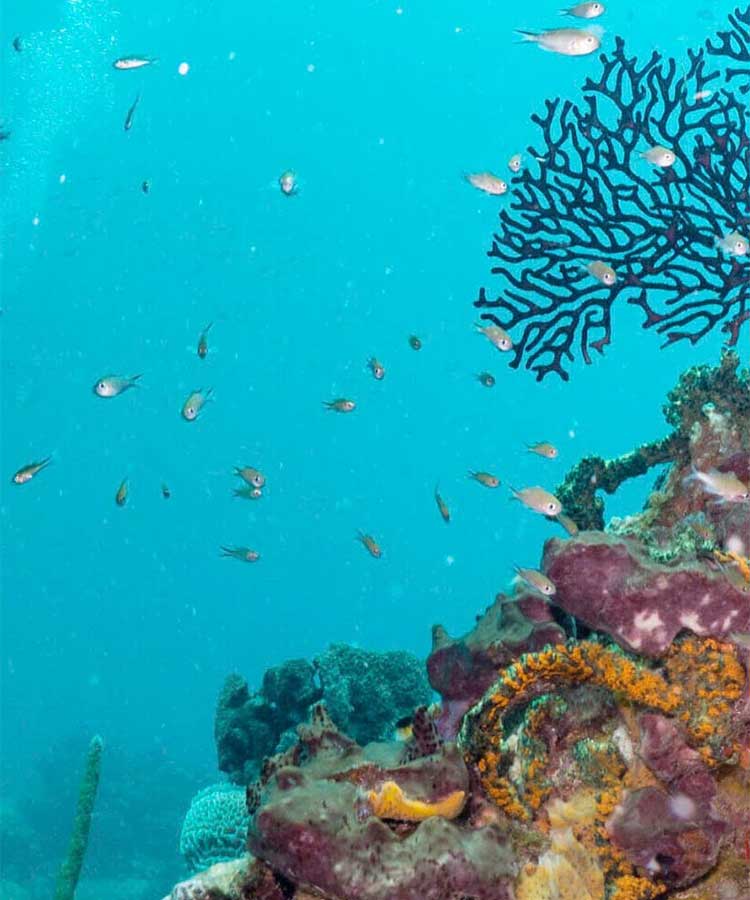
Boats make the most interesting connection of all, because many of the island's best stretches of sand are reached most comfortably from the water. A catamaran or small boat trip along the west coast can include a swim stop, a lunch and a snorkel in a single easy day, with the Pitons sliding past on the way. Our sailing and boat trips guide describes the options. For those who prefer to stay below the surface, the diving and snorkelling guide shows where the reefs begin and which beaches give the easiest entry. Ask your operator which bays are on the route and whether the snorkel stop is included, since itineraries vary. Early departures tend to have the calmest water and the quietest bays.
Couples often build an entire trip around a particular beach, whether for a wedding, an elopement or simply a few days of quiet. If that sounds like you, our pages on a honeymoon in Saint Lucia show how the island's resorts use their shorelines for ceremonies, dinners and sunrise swims, and what couples tend to book first. Families, meanwhile, will find the family beaches guide a sensible companion, since it focuses on calm water, shade and easy facilities. Whoever you are travelling with, keep one afternoon free for the simple pleasure of doing nothing at the water's edge. Planning ahead is wise, because the most popular dates in the dry season are booked months in advance.
Beaches are shaped by geology, weather and the sea. The geology and volcanoes guide explains why sands differ in colour, and the climate and hurricanes page describes the conditions that move them.
Offshore, marine life and coral reefs and conservation and protected areas show why the coast deserves careful treatment. The geography of Saint Lucia ties it all together.
Most visitors fit this into a holiday in St Lucia, so choose your base first. Compare places to stay in St Lucia by area and style, and read our guides to luxury hotels in St Lucia and all inclusive resorts in St Lucia if you are choosing between a boutique stay and an all in package.
Then set your dates with the best time to visit St Lucia, book flights to St Lucia and pick days out from our St Lucia itineraries. Couples can also read about a honeymoon in St Lucia or weddings in St Lucia.
It depends on the day. Reduit Beach suits swimming and lively surroundings, Sugar Beach has the Pitons as a backdrop, and Anse Chastanet suits snorkellers.
Yes. Beaches in Saint Lucia are open to the public, although access to some may pass through a resort or a private road, so ask locally.
The west coast on the Caribbean side is generally calm, while the Atlantic east coast has stronger currents and larger waves.
Yes. Volcanic black sand beaches are found mainly along the west and south coasts, including Anse Chastanet near Soufrière.
Three or four is plenty. Choose one lively northern beach, one dark sand cove near the Pitons, one quiet local shore and one reached by boat, and leave other days free for activities.
No, not usually. Hotel guests have loungers included, and public beaches such as Reduit hire chairs and umbrellas for a fee, so booking ahead is only needed for private beach clubs.
Yes, because the island is small and most sights are within a half day's journey. A beachfront base works well if you plan one or two long excursions to the Pitons and the capital.
Pack reef-safe sun cream, a hat, a rash vest, water shoes and a light cover-up. The sun is strong all year, and some beaches have little shade. Bring cash for loungers and drinks, and see the packing guide for the wider list.
Calm, sheltered bays on the west coast suit families best, as the water is gentler and many have nearby cafes and toilets. Choose beaches with easy access and lifeguard-style supervision where possible. Our family beaches guide compares the options in more detail.
Yes, several west coast beaches have reefs close to the shore, so you can snorkel without a boat. Conditions vary with swell and the season, so ask locally before entering the water. The snorkelling beaches guide lists the most reliable spots.
Saint Lucia lies in the Windward Islands of the eastern Caribbean, around 13.8830 degrees north, 60.9670 degrees west. Map data from OpenStreetMap contributors.
Reduit, Sugar Beach, Anse Chastanet and the other shores that define a Saint Lucia beach holiday.
Read the guideCalm water, soft sand and easy facilities at Reduit, Pigeon Island, Vigie, Marigot Bay and more.
Read the guideVolcanic shores at Anse Chastanet, Anse Mamin, Anse Cochon, Laborie, Balenbouche and Anse L'Ivrogne.
Read the guideReef from the sand at Anse Chastanet, Sugar Beach, Anse Cochon, Anse Mamin and Pigeon Island.
Read the guideHow to read the water, what to do in a current and how to keep children safe on the sand.
Read the guideSunset drinks and simple Caribbean food at Rodney Bay, Marigot Bay, Laborie, Vieux Fort and Pigeon Island.
Read the guideAsk about places to stay, things to do, the weather or getting here.
Looking for the industry view? Visit St Lucia on VisitTravelGroup.com covers the destination for travellers and the tourism trade.
More from the Visit Travel Group network: VisitTravelGroup.com, Benidorm.co.uk, Anguilla.co.uk, TheRedSea.co.uk.