About Saint Lucia
Marine Life and Coral Reefs of Saint Lucia: Turtles, Whales and Reef Health
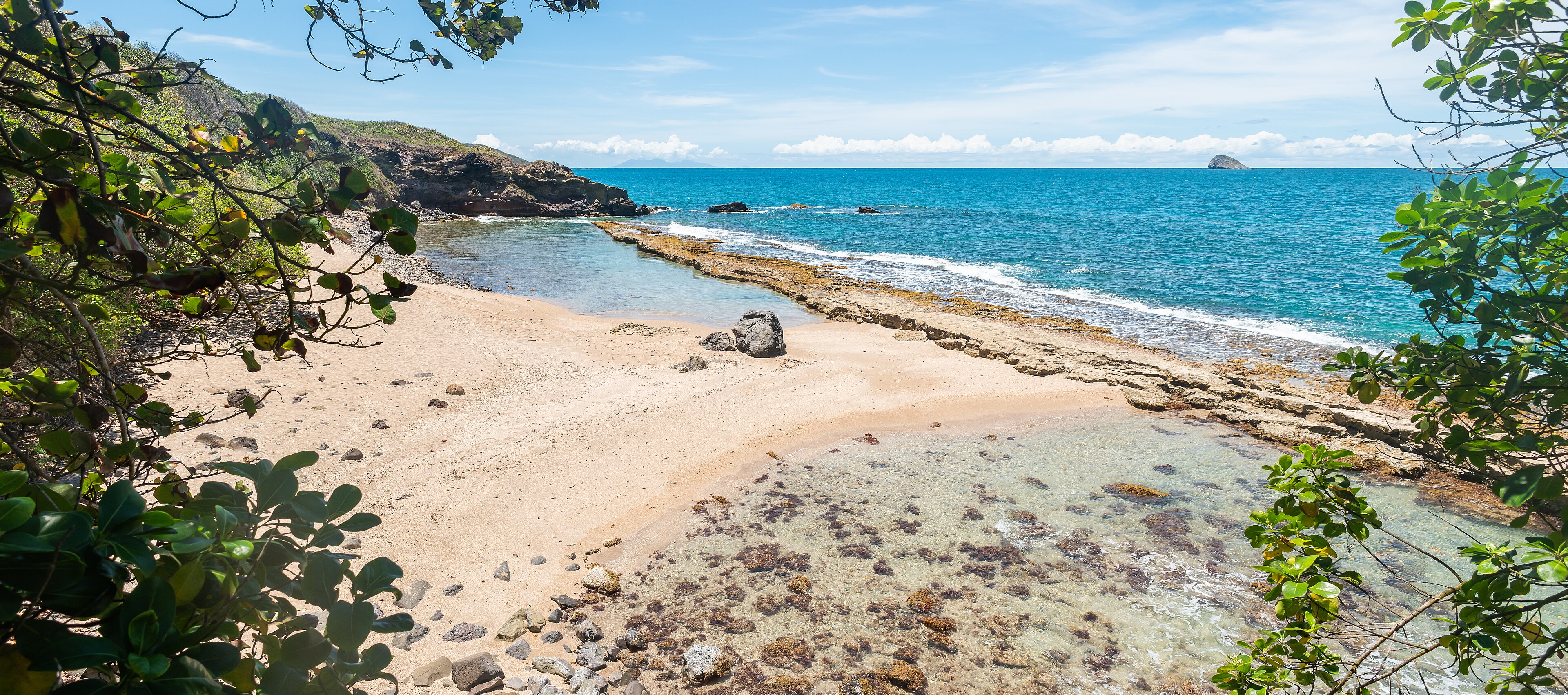
The Caribbean Sea along Saint Lucia's western coast is warm, clear and sheltered, and beneath the surface lie reefs, seagrass and mangroves that shelter turtles, dolphins and a rich variety of fish.
Two seas, one island
Saint Lucia sits where the Atlantic Ocean meets the Caribbean Sea, and the two coasts are very different. The east is battered by Atlantic swells and has rougher water, rocky headlands and few reefs. The west is sheltered from the trade winds by the island itself, with calm, clear water and a narrow shelf that drops quickly to deep sea. That steep drop is why whales and dolphins can be found surprisingly close to the shore.
The west coast's volcanic origins shape the underwater landscape. Lava flows, boulders and submerged walls provide a rocky framework on which corals attach, and the same underwater walls drop below diving depth within a short distance of the coast. If you are wondering about the island's geology, our guide to geology and volcanoes explains how the Pitons and the surrounding sea floor formed.
The marine environment also underpins the island's economy, from fishing communities to dive operators, boat tours and beach hotels. Healthy reefs protect shorelines from storms, support fish stocks and attract visitors, so their care is a practical as well as an ecological concern.
Coral reefs and what lives on them
Saint Lucia's fringing reefs are home to a range of hard and soft corals, including brain coral, star coral, elkhorn and staghorn coral, sea fans and sea whips, along with sponges in every shape and colour. The reefs near Soufrière and the Pitons are the best known, with walls and slopes that start close to the beach and offer excellent snorkelling and diving for different abilities. Our diving and snorkelling guide explains the main sites.
Fish life is varied and colourful. Parrotfish, surgeonfish, angelfish, butterflyfish, damselfish, trumpetfish and groupers are common, and squid, moray eels, lobsters and octopus hide among the crevices. Seahorses and frogfish need a trained eye to find. Parrotfish are especially important, since they graze algae that would otherwise smother young corals, and they are one reason the reefs in protected zones tend to look healthier.
Seagrass beds in sheltered bays give turtles somewhere to feed, and mangroves in places such as lagoons and river mouths act as nurseries for juvenile fish. In combination, reef, seagrass and mangrove form one connected system, and damage to one part ripples through the rest.
- Hard corals: brain, star, elkhorn and staghorn.
- Soft corals: sea fans and sea whips.
- Reef fish: parrotfish, surgeonfish, angelfish and butterflyfish.
- Hiding animals: moray eels, octopus, lobsters and squid.
Sea turtles and their nesting beaches
Three sea turtle species nest on Saint Lucia: the leatherback, the hawksbill and the green turtle. The leatherback is the largest turtle in the world and comes ashore at night to lay eggs on a handful of beaches, including Grand Anse on the northeast coast. Hawksbills favour reef areas and feed on sponges, while green turtles graze on seagrass. All three are threatened globally, and nesting beaches in Saint Lucia are monitored by trained local groups and community volunteers.
The formal nesting season runs from 1 March to 30 November, as set out by the Department of Fisheries. During this period it is an offence to interfere with nesting turtles or their eggs, and the maximum fine is EC$5,000. Most nesting takes place at night, and the peak months fall in the middle of the season. Specific dates vary from year to year, so ask a local guide or the Fisheries Department for current information.
Visitors can enjoy turtles responsibly. Join a guided turtle watch where available, use red or no light, keep your distance, stay behind the turtle, and never touch a female or handle hatchlings. Do not drive on nesting beaches, and avoid leaving holes or sandcastles that may trap hatchlings. Our guide to beach safety covers general rules, and the east coast guide describes the wilder shores where nesting is most common.
Whales and dolphins
Deep water close to the shore makes the west coast one of the best places in the eastern Caribbean to watch whales and dolphins from a boat. Pods of dolphins are seen on many trips, and pilot whales and sperm whales are among the large whales that visit. Humpbacks pass through the region on migration but are less regularly seen than some of the others. Sightings cannot be guaranteed, but reputable operators have a good success rate.
Boats leave from Rodney Bay, Marigot Bay and other harbours along the coast, and trips usually last a few hours. The best time of year is generally the dry season, when seas are calmer, though sightings occur year-round. Choose an operator that keeps its distance, turns off the engine when whales are close and never lets swimmers chase animals. We describe the options in our guide to whale and dolphin watching and in the sea tours guide.
Dolphins and whales are protected, and approaching them too closely, or too fast, causes stress and wastes their energy. A good skipper will explain the rules as you go and will limit the time spent with each group.
The Soufrière Marine Management Area
The Soufrière Marine Management Area, run by the Soufrière Marine Management Association, was set up in the mid 1990s to resolve conflicts between fishers, divers, yachts and the growing tourism trade along an 11 kilometre stretch of coast. Management began with zoning that included marine reserves, fishing priority areas, multiple use areas and yacht mooring zones. It was one of the first attempts in the Caribbean to manage a coast through co-management with the people who use it.
The idea was simple. Fishers keep access to productive grounds, while some areas are protected as reserves so that fish stocks can recover and spill over into the surrounding water. Divers and snorkellers pay a fee that helps fund patrols and moorings, which in turn protects corals from anchor damage. The area sits within the setting of the Pitons Management Area, a World Heritage Site.
Rules are enforced and permits are required for diving and snorkelling in marked zones. Before you go, read our guide to the Pitons and the Soufrière guide for practical planning, and see conservation and protected areas for how the management system fits together.
Mangroves, seagrass and sandy shores
Mangroves are salt-tolerant trees with tangled roots that stabilise sediment, filter run-off and shelter young fish, crabs and birds. Saint Lucia's largest stands are in the south at Savannes Bay and along the east coast, with smaller patches at river mouths on the west. They also lock away carbon and buffer the coast against waves, which is one of many reasons that clearing them is damaging.
Seagrass meadows grow on soft sand in shallow bays, and they feed green turtles and nurse young fish. They are fragile, easily torn by anchors and propellers. Sandy beaches, including the island's famous black sand beaches, are home to ghost crabs and sandpipers. Beach cleaning machines, sea walls and lighting can all reduce habitat value, so choose accommodation that follows sustainable practices, such as those listed in our sustainable stays guide.
Threats: lionfish, bleaching and pollution
Reefs worldwide are under pressure and Saint Lucia is no exception. Warming seas cause coral bleaching, where stressed corals expel the algae that feed them and turn white. Mild bleaching can be survived, but repeated events cause die-offs. Storms, run-off from land, sewage, sedimentation, overfishing and careless anchoring add to the strain.
The Indo-Pacific lionfish is an invasive predator that arrived in the Caribbean from the 1980s onward and now lives throughout the region, including Saint Lucia. It eats large numbers of juvenile reef fish and has few predators. Local divers are encouraged to hunt lionfish, and the meat is eaten in restaurants, so a plate of lionfish can be a conservation meal. See our where to eat guide for places to try it.
Plastic and sunscreen are a further concern. Choose reef-safe, mineral sun protection, carry out all rubbish, and avoid single-use plastics where possible.
Diving and snorkelling responsibly
Good behaviour in the water is simple. Never stand on or touch coral, since even a light touch can kill the living layer. Keep fins clear of the bottom, maintain good buoyancy, and do not chase or feed fish. Do not collect shells, coral or starfish, and refuse any souvenir made from turtle shell or black coral. Use moorings where provided, and anchor only on sand away from reef and seagrass.
Use a certified operator, wear a flotation device if you are unsure, and follow the permit rules in marine areas. Beginners should start from a beach with calm water; our snorkelling beaches guide lists good ones. For wider advice on keeping your impact low, see the responsible travel guide.
Questions travellers ask
Which sea turtles nest in Saint Lucia?
Leatherback, hawksbill and green turtles all nest on the island's beaches. Leatherbacks are the largest and nest mainly on a few quiet, exposed beaches, usually at night.
When is turtle nesting season in Saint Lucia?
The nesting period set by the Department of Fisheries runs from 1 March to 30 November. It is an offence to disturb nesting turtles or their eggs during this period.
Can I swim with turtles in Saint Lucia?
Snorkellers sometimes see turtles feeding over seagrass and reef, and it is fine to watch from a respectful distance. Do not touch, chase or ride them, and give them space to surface.
What whales can I see in Saint Lucia?
Sperm whales and pilot whales are the main large whales, along with several kinds of dolphin. Sightings are never guaranteed, but trips from the west coast often find animals.
Is it safe to eat lionfish?
Yes. Lionfish meat is safe and tasty once the venomous spines are removed by someone trained. Eating it helps control this invasive species, so restaurants and divers are encouraged to do so.
Do I need a permit to dive or snorkel in Soufrière?
Yes, in the managed marine zones around Soufrière, fees and permits fund moorings and patrols. Dive operators arrange these for you, and independent snorkellers can ask at the association office.
Is coral bleaching a problem in Saint Lucia?
Like reefs across the Caribbean, Saint Lucia's corals are affected when sea temperatures rise. Protecting reefs from other pressures helps them recover, and many operators monitor reef health.
What is the best place to snorkel in Saint Lucia?
Anse Chastanet and the reefs near the Pitons are famous. Calm bays on the west coast suit beginners, and our snorkelling beaches guide lists several easy options with facilities.
How can I protect the reef while on holiday?
Use mineral sun cream, never touch coral, keep your fins off the bottom, take all rubbish home and choose operators who use moorings rather than dropping anchors on the reef.
Anse Chastanet beach and reef on the map
Anse Chastanet beach and reef is at 13.8652 degrees north, 61.0777 degrees west. Map data from OpenStreetMap contributors.
Ask Lucy about Marine life and coral reefs
Ask about places to stay, things to do, the weather or getting here.
Keep exploring Saint Lucia
Looking for the industry view? Visit St Lucia on VisitTravelGroup.com covers the destination for travellers and the tourism trade.
More from the Visit Travel Group network: VisitTravelGroup.com, Benidorm.co.uk, Anguilla.co.uk, TheRedSea.co.uk.