About Saint Lucia
Conservation and Protected Areas in Saint Lucia: Reserves, Trusts and Sustainable Travel
Protecting a small island's wildlife is a shared effort between government departments, a national trust, local communities and visitors, and the results can be seen in the recovery of the national bird.
Why protection matters on a small island
Saint Lucia covers only 617 square kilometres and supports a population of around 180,000 people, so the demands on land and sea are intense. Houses, farms, roads, hotels and fishing all compete with wild habitat. At the same time, nature is the island's greatest attraction, and many livelihoods depend on it. Protecting key places is therefore both a conservation and an economic decision.
Threats are varied. Forest clearance for farming and building has reduced wild habitat for centuries. Invasive animals and plants spread easily on islands. Hurricanes and heavy rain damage forest and reef, and a warming climate adds pressure. Our guide to the island's climate and hurricanes explains why resilience matters.
Fortunately, the island has a long tradition of protection. A mixture of forest reserves, marine management areas, nature reserves and a World Heritage Site covers many of the most valuable places, and communities increasingly take part in running them.
The Pitons Management Area
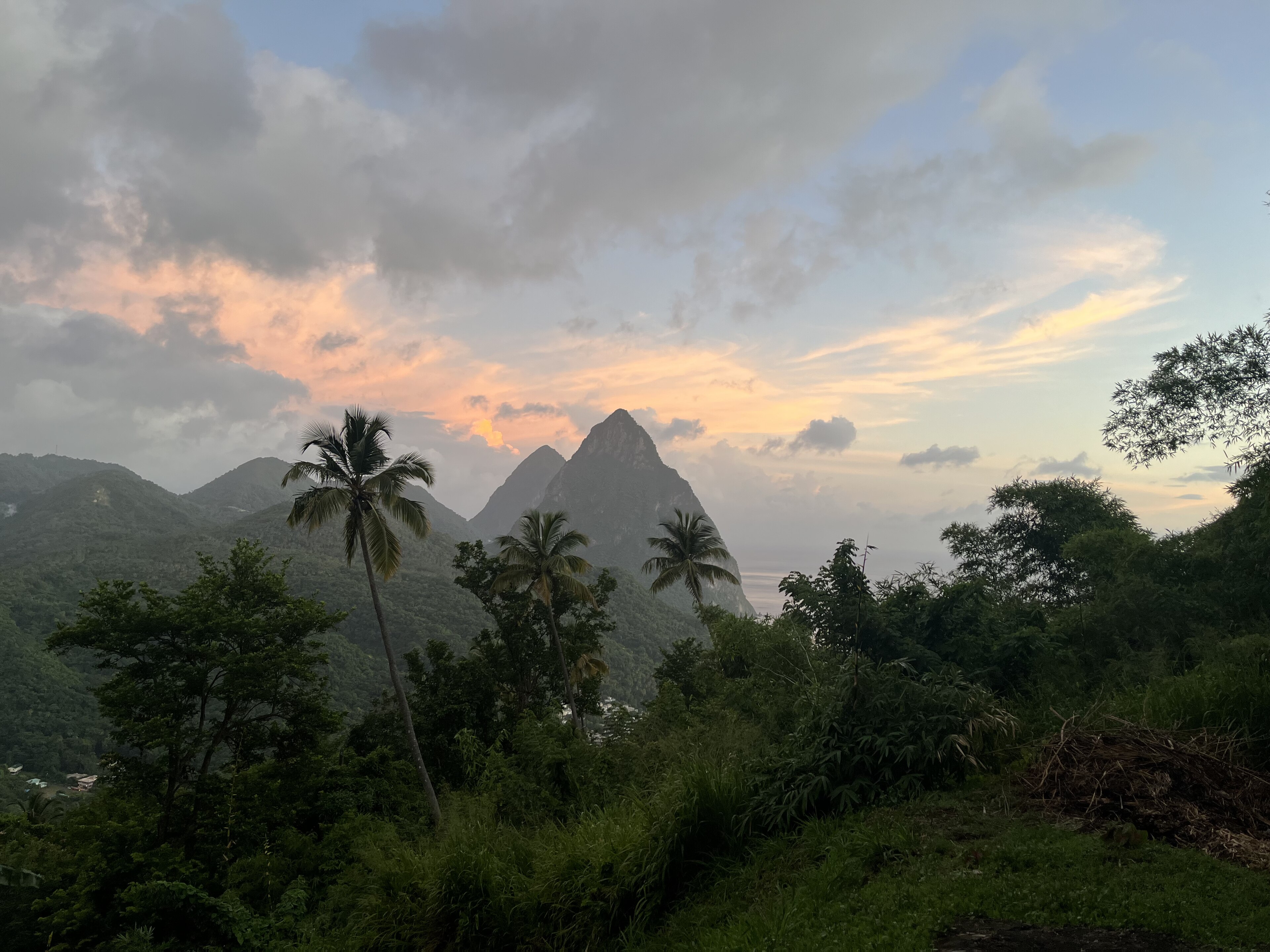
The Pitons Management Area covers about 2,909 hectares around the twin volcanic peaks of Gros Piton and Petit Piton near Soufrière. It was inscribed on the UNESCO World Heritage List in 2004 for its natural beauty and its volcanic and ecological value. It includes the two peaks, the ridge between them, forest, coral reef and sea, plus nearby geothermal features. Gros Piton is about 798 metres high and Petit Piton about 743 metres.
The area is managed under national planning law and through a partnership of agencies, landowners and communities. Within it, the Soufrière Marine Management Area protects the adjoining sea. The forest on the slopes shelters endemic birds and reptiles, and the reef below is among the most visited in the island.
For visitors, the Pitons are both a challenge and an icon. Climbing Gros Piton requires a licensed local guide and a good level of fitness, and you can read details in our Gros Piton hike guide and the Pitons guide. Fees paid for guides and entry support local communities and path maintenance.
Maria Islands Nature Reserve
Off the south coast near Vieux Fort lie two small islets, Maria Major and Maria Minor, declared a protected wildlife reserve in 1982. They have never been permanently settled and are managed by the Saint Lucia National Trust. The vegetation is dry coastal scrub, cactus and grass, quite unlike the lush rainforest of the interior.
This is the stronghold of two of the island's rarest reptiles, the Saint Lucia whiptail and the Saint Lucia racer, together with other lizards and nesting seabirds. Because the islets are free of mongooses and rats, they act as a refuge, and strict biosecurity keeps them that way. Visits are possible only by guided trip arranged through the Trust, and access can be limited in the nesting season. See our offshore islands guide and reptiles and mammals for more.
Pointe Sable and Frégate Island
Pointe Sable Environmental Protection Area lies at the southern tip of the island near Vieux Fort. It protects a stretch of coast including mangroves, lagoon, beach and offshore reef, a mix of habitats that supports shorebirds, fish and nesting turtles. The area sits near one of Saint Lucia's windiest beaches, which is also a base for watersports, so conservation and recreation have to be balanced carefully.
Frégate Island Nature Reserve, on the east coast near Praslin Bay, is a small rocky islet and a seabird nesting site. Frigatebirds, the great ocean gliders that give the place its name, breed in the area, and the islet is a significant spot for birdwatchers. It is managed by the Saint Lucia National Trust. Access is sensitive, so landings are controlled, and good views can be had from the shore or from a tour boat.
Both places show how protection can cover small, specific sites as well as large ones. Our guides to the Vieux Fort area and east coast describe how to visit the surrounding countryside.
Forest reserves and the Forestry Department
Much of the island's interior forest is formally protected as forest reserve under the care of the Forestry Department, part of the ministry responsible for agriculture. Rangers patrol, manage trails, run tree nurseries and enforce rules against hunting and illegal clearance. The reserves protect watersheds, which is vital because the island's drinking water comes from mountain streams.
The department also leads recovery work for the Saint Lucia parrot, alongside the Trust, and has managed the Millet Bird Sanctuary and other reserves. Several reserves include marked trails. Edmund Forest Reserve is the best known, and it requires access arrangements through the department, as noted in our rainforest and plant life guide.
Forest protection is not only about wildlife. Tree cover holds soil on steep slopes, reduces landslides and keeps rivers clean, and these services benefit farms, towns and the coral reefs downstream.
The Saint Lucia National Trust
The Saint Lucia National Trust is a non-profit body established by law in 1975 to conserve the island's natural and cultural heritage. It is run by a council that includes members elected by its membership. The Trust manages a number of sites, including the Pigeon Island National Landmark, the Maria Islands Nature Reserve, Frégate Island Nature Reserve and the Pointe Sable Environmental Protection Area, and it works on historic sites too.
Its work ranges from guiding and education to species recovery and biosecurity. It runs community programmes, supports young conservationists and works with international partners on projects such as the racer and whiptail. Entry fees, memberships and donations fund much of this. You can visit Pigeon Island and understand the Trust's heritage role through our Pigeon Island guide.
Marine protection and the Soufrière Marine Management Association
Marine protection began seriously in the 1990s with the Soufrière Marine Management Area, run by the Soufrière Marine Management Association, a non-profit body formed in 1994 and designated as a local fisheries management authority. It covers around 11 kilometres of coast and uses zones: marine reserves where fishing is banned, fishing priority areas for local fishers, and areas for yachts, divers and other users.
Other places have followed. Marine reserves and turtle protections are overseen by the Department of Fisheries, and community groups monitor turtle nesting. If you use the sea in these zones, expect to pay fees and follow rules. Our marine life and coral reefs page explains the species and threats, and the diving and snorkelling guide describes what to expect underwater.
Sustainable practice and what visitors can do
Visitors have real influence. Choose accommodation that conserves water and energy, reduces plastic and employs local people, and look at our sustainable stays guide for ideas. Book guides and tours through operators who work with the Trust and the Forestry Department, and pay the fees asked for entry to protected sites, since these fund the work.
On the ground, stay on paths, take your litter home, avoid souvenirs made from coral, shells or turtle shell, keep a respectful distance from wildlife and follow turtle and biosecurity rules. Support farmers and artisans through shopping local, and consider volunteering if you have time. For a broader view, see responsible travel and eco tips and local initiatives.
Questions travellers ask
What is the Pitons Management Area?
It is a protected zone of about 2,909 hectares around Gros Piton and Petit Piton, listed as a UNESCO World Heritage Site in 2004 for its natural beauty and volcanic and ecological importance.
Who protects wildlife in Saint Lucia?
The Forestry Department, the Department of Fisheries, the Saint Lucia National Trust and the Soufrière Marine Management Association all play roles, supported by communities and international conservation partners.
What is the Saint Lucia National Trust?
It is a non-profit body established by statute in 1975 to conserve natural and cultural heritage. It manages sites such as Pigeon Island and the Maria Islands Nature Reserve.
Can I visit the Maria Islands Nature Reserve?
Yes, on guided trips arranged through the Saint Lucia National Trust. Independent landings are not allowed, and access may be restricted at times of year when seabirds are nesting.
What is the Soufrière Marine Management Area?
It is a managed stretch of about 11 kilometres of coast with zones for marine reserves, fishing, yachts and diving, run by a non-profit association established in 1994.
Do I have to pay to visit protected areas?
Often yes. Entry, guide, mooring and permit fees fund trails, patrols and conservation work, so they are best seen as a contribution to the places you are enjoying.
Can I climb Gros Piton on my own?
No. A licensed local guide is required for the Gros Piton trail, which also provides local income and helps keep the route safe and well maintained.
How can I avoid harming turtles while on holiday?
Keep away from nesting turtles, avoid lights and driving on nesting beaches, never handle eggs or hatchlings, and join guided turtle watches where they are offered.
What is the simplest way for visitors to help conservation?
Pay the fees, use accredited guides, stay on paths, avoid plastic and wildlife souvenirs, and choose hotels and tours with credible environmental practices.
Mount Gimie on the map
Mount Gimie is at 13.8635 degrees north, 61.0111 degrees west. Map data from OpenStreetMap contributors.
Ask Lucy about Conservation and protected areas
Ask about places to stay, things to do, the weather or getting here.
Keep exploring Saint Lucia
Looking for the industry view? Visit St Lucia on VisitTravelGroup.com covers the destination for travellers and the tourism trade.
More from the Visit Travel Group network: VisitTravelGroup.com, Benidorm.co.uk, Anguilla.co.uk, TheRedSea.co.uk.