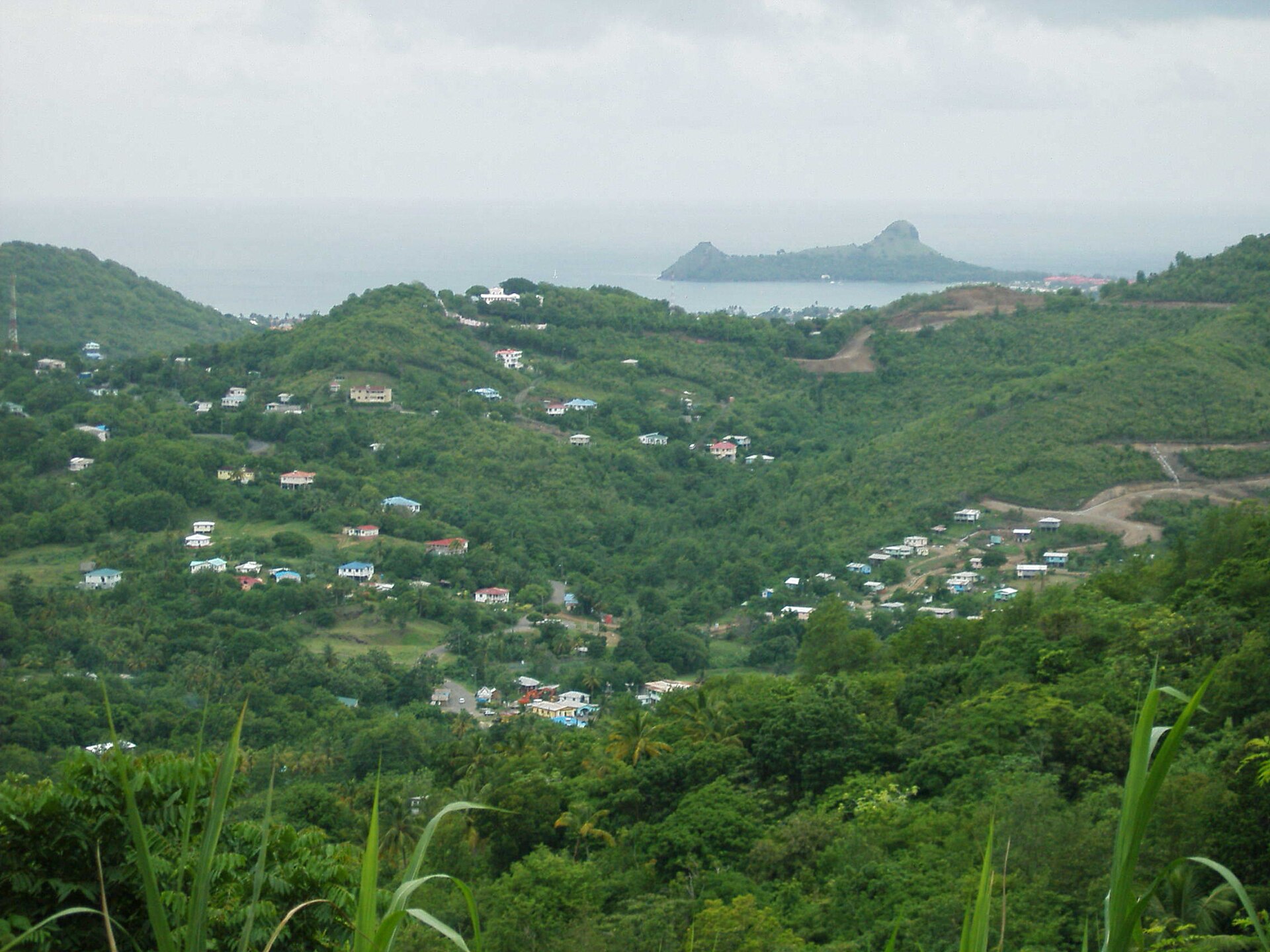
About Saint Lucia
Reptiles and Mammals of Saint Lucia: Racers, Whiptails, Bats and the Manicou
Saint Lucia has no big game, but its small reptiles and mammals tell a gripping story of island evolution, introduced predators and determined conservation.
An island of small animals
Saint Lucia has never been connected to a continent, so its land animals reached the island by flying, swimming or drifting on vegetation. That filters out nearly everything large. What remains is a group of lizards, snakes, frogs and bats, with a few mammals that arrived with people. Several reptiles are found nowhere else, which makes this one of the most rewarding islands in the Lesser Antilles for anyone who enjoys natural history.
The island's reptiles have suffered badly from introduced predators, especially the small Indian mongoose, which was released in the nineteenth century to control rats in sugar cane. Mongooses hunt by day and are very good at finding lizards and snakes. Several reptile species vanished from the main island and survive only on offshore islets that the mongoose never reached. Our overview of wildlife and ecology explains the wider context of native and introduced species.
As a visitor you will meet some of these animals simply by walking through a garden or along a forest path. Anoles bob on walls, tree frogs call at night, and bats swoop around hotel lights. The rarest species need patience, a guide and often special permission.
The Saint Lucia racer
The Saint Lucia racer, Erythrolamprus ornatus, is a slender, harmless snake that can grow to well over a metre long. It is brown or grey, sometimes with a darker stripe along the back, and it hunts lizards by day. It once lived across the island but was last recorded on the main island in the nineteenth century, and the species was declared extinct in 1936. In 1973 a single snake was found on Maria Major, a small islet off the south coast, and the species was rediscovered.
The racer is now considered one of the rarest snakes in the world. Only a very small population remains, confined to Maria Major, and counts have estimated perhaps a few dozen animals at most. The IUCN lists it as Critically Endangered. Mongooses and rats are the principal threat, so the Saint Lucia National Trust and the Forestry Department run strict biosecurity on the islet, with bait stations and regular surveys, and conservation partners including the Durrell Wildlife Conservation Trust and Fauna and Flora International have supported captive breeding work.
You are very unlikely to see a racer, but a guided visit to the Maria Islands Nature Reserve can show you the habitat and the other reptiles that share it. Our guide to the offshore islands describes how visits work.
The Saint Lucia whiptail and other lizards
The Saint Lucia whiptail, Cnemidophorus vanzoi, is a fast, sleek lizard with a bluish tail and pale stripes along the body. It was once widespread but now survives naturally only on Maria Major and Maria Minor, with a third population established by translocation on nearby Praslin Island. Fewer than a thousand animals are thought to exist, and the IUCN regards it as Endangered. It is easy to watch on guided visits to the reserve, where it scurries across the trail and basks on rocks.
Maria Major and Maria Minor are home to several other endemic reptiles, including the Saint Lucia pygmy gecko and the Saint Lucia anole. The anole is widespread on the main island too, and is the lizard you will most often spot on walls and trees. Its colour varies with its surroundings, from brown in dry places to bright green in wet forest. Anoles are harmless, and watching their throat fans and head bobs is a fine way to pass a morning on a hotel terrace.
The sea also holds reptiles, notably turtles. We deal with those in our guide to marine life and coral reefs.
- Saint Lucia whiptail: Maria Islands, plus Praslin by translocation; Endangered.
- Saint Lucia anole: widespread across the island.
- Saint Lucia pygmy gecko: tiny and secretive, found among leaf litter.
- Iguanas: seen in forest and near rivers, in small numbers.
Snakes: the fer-de-lance and the Saint Lucia boa
Saint Lucia has one venomous snake, the Saint Lucia lancehead, Bothrops caribbaeus, known throughout the Caribbean by the French name fer-de-lance. It is an endemic pit viper that can exceed a metre in length, grey to brown with irregular blotches, and it lives in a few areas of forest and farmland. The IUCN lists it as Endangered. Bites are uncommon and the snake is wary of people, but it deserves respect. Wear sturdy shoes, look where you place hands and feet in undergrowth, and stay on marked paths.
The island also has a non-venomous boa, a slow-moving constrictor that feeds on lizards, birds and small mammals. It is the largest snake on the island but is secretive and rarely seen. Both species are protected, and killing them is discouraged because they play a role in controlling rodents. Rats are an introduced pest and a problem for farmers.
Most visitors will never encounter a snake, and there is no need for alarm. The risk of a bite is lower than the risk of a sunburn, but anyone planning a long forest walk should read our advice in health, insurance and safety and ask guides about conditions.
Iguanas, frogs and other amphibians
Iguanas have deep roots in the island's story. Early accounts of the Arawak and Kalinago peoples record names for Saint Lucia that refer to iguanas, and the animals are still sometimes spotted in forest trees and beside rivers. They are large, mostly green lizards that eat leaves and fruit, and they climb well. You should never feed or chase one, and it is best to watch from a distance.
Frogs and toads are the island's only amphibians, and they are small. After rain, forest and garden fill with the whistling calls of tree frogs, which are loud for their size and are as much a part of a Saint Lucian evening as the distant bark of a dog. The giant cane toad, an introduced species, is common in lowland farmland and gardens, and has few native predators.
Amphibians are among the most sensitive animals to pollution, drought and disease, so their health is a quiet indicator of the state of the environment. You can learn more about forest conditions in our guide to rainforest and plant life.
Bats, the manicou, agoutis and other mammals
Bats are the island's native mammals, and several species are present. Fruit bats help disperse seeds, nectar-feeding bats pollinate some flowers, and insect-eating bats keep mosquito numbers down. Many roost in caves, hollow trees and the roofs of old buildings. Visitors may see them skimming over pools at dusk. Never handle a bat, and treat any animal that behaves strangely with caution.
The manicou is a small, grey, nocturnal marsupial that eats fruit, insects and small animals. It is related to opossums, is widespread in forest and farmland, and is sometimes hunted for food. The agouti is a long-legged, guinea-pig-like rodent with a taste for fallen fruit and nuts, and it was brought to the island by people. Small Indian mongooses, rats, mice and feral cats, dogs and pigs complete the list of land mammals. None of these introduced species is native, and several do harm to native wildlife.
At sea, dolphins and whales are the stars. Pods of spinner dolphins and pilot whales are frequently seen on the west coast, and sperm whales are seen on some trips. Our whale and dolphin watching guide explains how to join a responsible trip.
Conservation status at a glance
Status labels from the IUCN Red List change as surveys are repeated, so treat the table below as a snapshot and check the current listing before quoting it. Broadly, the pattern is clear: the island's endemic reptiles are among its most threatened animals, and the main drivers are introduced predators and loss of habitat. Offshore islets, free from mongooses, have been the lifeboats.
Conservation effort has focused on keeping predators off those islets, restoring habitat, running public education campaigns, and building captive populations as insurance. The work is led by the Saint Lucia National Trust and the Forestry Department with international partners, and tourism income plays a part. Read about the organisations and sites in conservation and protected areas.
- Saint Lucia racer: Critically Endangered, confined to Maria Major.
- Saint Lucia whiptail: Endangered, Maria Islands and Praslin.
- Saint Lucia lancehead (fer-de-lance): Endangered, limited range.
- Saint Lucia anole: widespread and not considered threatened.
- Bats, manicou and agouti: widespread, with varying local status.
How to see these animals and help them
The easiest wildlife encounters are free: anoles in your garden, bats at dusk, tree frogs after rain. For the rarer reptiles, the only realistic option is a guided trip to the Maria Islands Nature Reserve, which the Saint Lucia National Trust organises, and access can be restricted at sensitive times of year. Booking ahead is wise, since numbers are limited and weather can affect boat crossings.
To help, follow biosecurity advice, never carry plants, soil or animals between islands, keep pets under control, dispose of waste properly and report sick or injured wildlife to the Forestry Department. If you want to meet the animals and the people protecting them, our hiking and rainforest guide and the community tourism guide are good starting points.
Visitors who want to see the island's wildlife first hand can combine this guide with birdwatching, a rainforest hike or whale and dolphin watching, and choose from hotels in St Lucia close to the habitat they most want to explore. To see the island from the water, try the snorkelling beaches, and read about the geography of the island for the wider setting.
Questions travellers ask
Are there dangerous snakes in Saint Lucia?
There is one venomous snake, the fer-de-lance, found only in a few areas. Bites are rare, and wearing sturdy shoes and staying on paths keeps the risk very low.
What is the rarest snake in Saint Lucia?
The Saint Lucia racer, which survives only on the small Maria Major islet. It is harmless to people and is considered one of the rarest snakes in the world.
Can I see the Saint Lucia whiptail?
Yes, on a guided visit to the Maria Islands Nature Reserve arranged by the Saint Lucia National Trust. The lizards are easy to watch there because they are bold and abundant.
Are there iguanas in Saint Lucia?
Yes, in small numbers. Iguanas live in forest trees and near rivers, and early names for the island referred to them. They are protected, so do not feed or chase them.
Does Saint Lucia have monkeys?
No. There are no monkeys on the island. The main land mammals are bats, the manicou, introduced agoutis and mongooses, along with domestic animals that have gone feral.
What is a manicou?
A manicou is a small nocturnal marsupial similar to an opossum. It lives in forest and farmland across the island and is mostly seen at night around gardens and bins.
Why did the mongoose cause so much damage?
Mongooses were released to control rats but they hunt lizards, snakes, ground birds and eggs by day. Many native reptiles disappeared from the main island and now survive only on islets.
Are frogs common in Saint Lucia?
Yes. After rain you will hear whistling tree frogs in gardens and forest, and the introduced cane toad is common in lowland farmland. They are harmless to people.
Can I visit the Maria Islands independently?
No. Visits are by guided trip only, arranged through the Saint Lucia National Trust, so that rare reptiles and nesting seabirds are not disturbed by unplanned landings.
Maria Islands Nature Reserve on the map
Maria Islands Nature Reserve is at 13.7262 degrees north, 60.9312 degrees west. Map data from OpenStreetMap contributors.
Ask Lucy about Reptiles and mammals
Ask about places to stay, things to do, the weather or getting here.
Keep exploring Saint Lucia
Looking for the industry view? Visit St Lucia on VisitTravelGroup.com covers the destination for travellers and the tourism trade.
More from the Visit Travel Group network: VisitTravelGroup.com, Benidorm.co.uk, Anguilla.co.uk, TheRedSea.co.uk.