About Saint Lucia
Literature and Nobel Laureates of Saint Lucia
For an island of about 180,000 people, Saint Lucia has an astonishing literary and intellectual record, with two Nobel laureates born in Castries fifteen years apart and sharing a birthday.
Two laureates and a world record
Saint Lucia has produced two winners of the Nobel Prize: Derek Walcott, who won the Nobel Prize in Literature in 1992, and Sir Arthur Lewis, who won the Nobel Memorial Prize in Economic Sciences in 1979. Both were born in Castries, on the same date, 23 January, Lewis in 1915 and Walcott in 1930. That coincidence has become a point of local pride, and it is the reason January is the traditional month for celebrating the island's laureates.
Because the population is so small, the two prizes have an outsized effect on the statistics. Guinness World Records lists Saint Lucia as holding the record for the most Nobel laureates per capita, at a rate of 10.81 per million people, based on two laureates among those awarded between 1901 and 2015 and a population of roughly 185,000 in 2015. It is a record that depends on a small number divided by a small number, so treat it as a wonderful piece of island trivia rather than a league table, but it is a sincere source of pride and it is mentioned in conversation, in schools and on the tourist trail.
The achievements of the two men also tell a story about the island. Both came from modest backgrounds, both benefited from a determined mother or family and a good education, and both went on to shape thought far beyond the Caribbean. The education and health guide describes the school system that produced them, and the notable Saint Lucians page puts them alongside other famous islanders.
Derek Walcott, poet and playwright
Sir Derek Walcott was born in Castries on 23 January 1930 and died on 17 March 2017 in the Gros Islet area in the north of the island. He grew up in a Methodist family in a mainly Catholic society, the son of a civil servant who painted and a teacher who loved poetry. His father died when he and his twin brother Roderick were infants. He was educated at St Mary's College in Castries, trained as a painter under the mentor Harold Simmons, and published his first poems as a teenager, with his mother helping to pay for the printing.
His best-known work is Omeros, the long poem published in 1990 that reimagines Homer's epic in the Caribbean, with fishermen and villagers in place of Greek heroes. It is widely regarded as his greatest achievement. The Swedish Academy awarded him the Nobel Prize in Literature in 1992 for a poetic oeuvre of great luminosity, sustained by a historical vision, the outcome of a multicultural commitment. He was the first Caribbean writer to win the literature prize. His other honours include an Obie Award for the play Dream on Monkey Mountain, the T. S. Eliot Prize in 2010 for White Egrets and a MacArthur fellowship.
Walcott wrote about the sea, colonial history, mixed ancestry and the Caribbean landscape with extraordinary precision, and much of his imagery comes straight from Saint Lucia. If you read him before a trip, the beaches, fishing boats and hills of the west coast and the north of the island will look different. He also painted throughout his life, and his work in both art and verse reflects the island's light.
Sir Arthur Lewis, economist
Sir William Arthur Lewis was born in Castries on 23 January 1915, the fourth of five sons of parents who had come from Antigua. His father died when he was seven, and his mother raised the family. A brilliant student, he won a government scholarship to the London School of Economics at eighteen, and went on to teach at the London School of Economics and the University of Manchester, where he became a professor in 1948, and later at Princeton University, where he was James Madison Professor of Political Economy.
His most famous contribution is the dual-sector model set out in his 1954 paper Economic Development with Unlimited Supplies of Labour, which explained how surplus labour in traditional agriculture can fuel industrial growth in a developing economy. In 1979 he shared the Nobel Memorial Prize in Economic Sciences with Theodore Schultz for pioneering research into economic development with particular attention to the problems of developing countries. He was the first person of African descent to win a Nobel in a field other than peace. He also founded and led the Caribbean Development Bank, and died on 15 June 1991. He is buried in the grounds of the Sir Arthur Lewis Community College in Castries, named in his honour. For economic context, read our economy guide.
Other writers and playwrights
Walcott did not stand alone. His twin brother Roderick Walcott, who lived from 1930 to 2000, was a playwright, director, designer and cultural leader who helped build modern Caribbean theatre. Together with Derek and friends he founded the Saint Lucia Arts Guild in 1950, wrote plays such as The Harrowing of Benjy, which is among the most produced plays in the English-speaking Caribbean, and became the island's first Director of Culture. He is also remembered as a pioneer of Carnival.
Garth St Omer, who lived from 1931 to 2018, was a novelist who studied in Jamaica and at Princeton and later taught in California. His books, including Syrop, A Room on the Hill, Shades of Grey and Nor Any Country, are quiet, precise studies of island life and the pull of leaving, and they were reissued to new readers from 2012. He belonged to the same generation as Walcott and the painter Sir Dunstan St Omer, and the three are often discussed as part of a cultural flowering in the years before independence.
The Kwéyòl oral tradition of song and story, described in the culture and traditions guide, runs alongside the written word, and a younger generation of poets, playwrights and storytellers continues to publish and perform on the island and abroad. The Folk Research Centre and the Arts Guild remain good starting points for anyone who wants to find new voices.
Derek Walcott Square in Castries
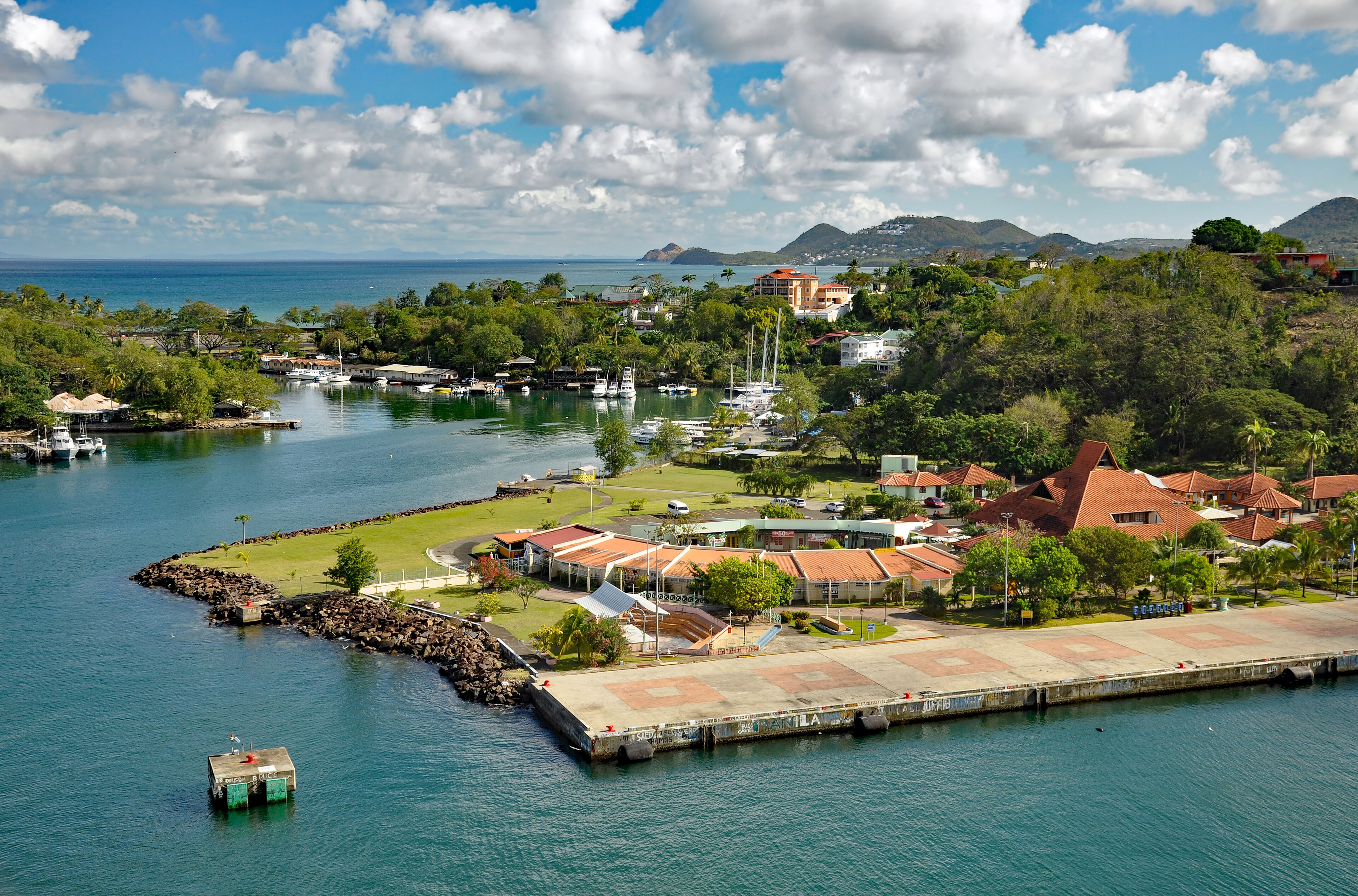
The heart of literary Castries is Derek Walcott Square, a green space in the centre of the capital. It was renamed in his honour on 23 January 1993, his birthday, following his Nobel Prize the previous year. A historical marker on Laborie Street, just north of Brazil Street, records the renaming. The square is a pleasant place to sit between sights, close to the cathedral.
A walk through the town is the simplest way to put the writers in context. Our Castries guide covers the market, the waterfront and the historic streets, and the art and heritage tours often start in the capital. Allow an hour in the square itself, and combine it with a visit to the market for fruit and spices.
Nobel Laureate Week
Because both laureates were born in January, the island has long marked the month with Nobel Laureate Week. The programme has varied over the years, but the 2000 edition shows the spirit of it: a week of arts awards, readings, exhibitions, a youth programme, a panel discussion in Vieux Fort, a wreath-laying at Sir Arthur Lewis's tomb and a memorial lecture, plus a day at Pigeon Island to celebrate Walcott's seventieth birthday. In Walcott Square there was an evening of recitations, music and tributes.
Dates and events change from year to year, so check with the Saint Lucia tourism authorities or your hotel before planning around them. If you are visiting in January, it is also dry season, which the best time to visit guide explains. You can find other seasonal happenings in the festivals and events guide.
Walcott places to visit
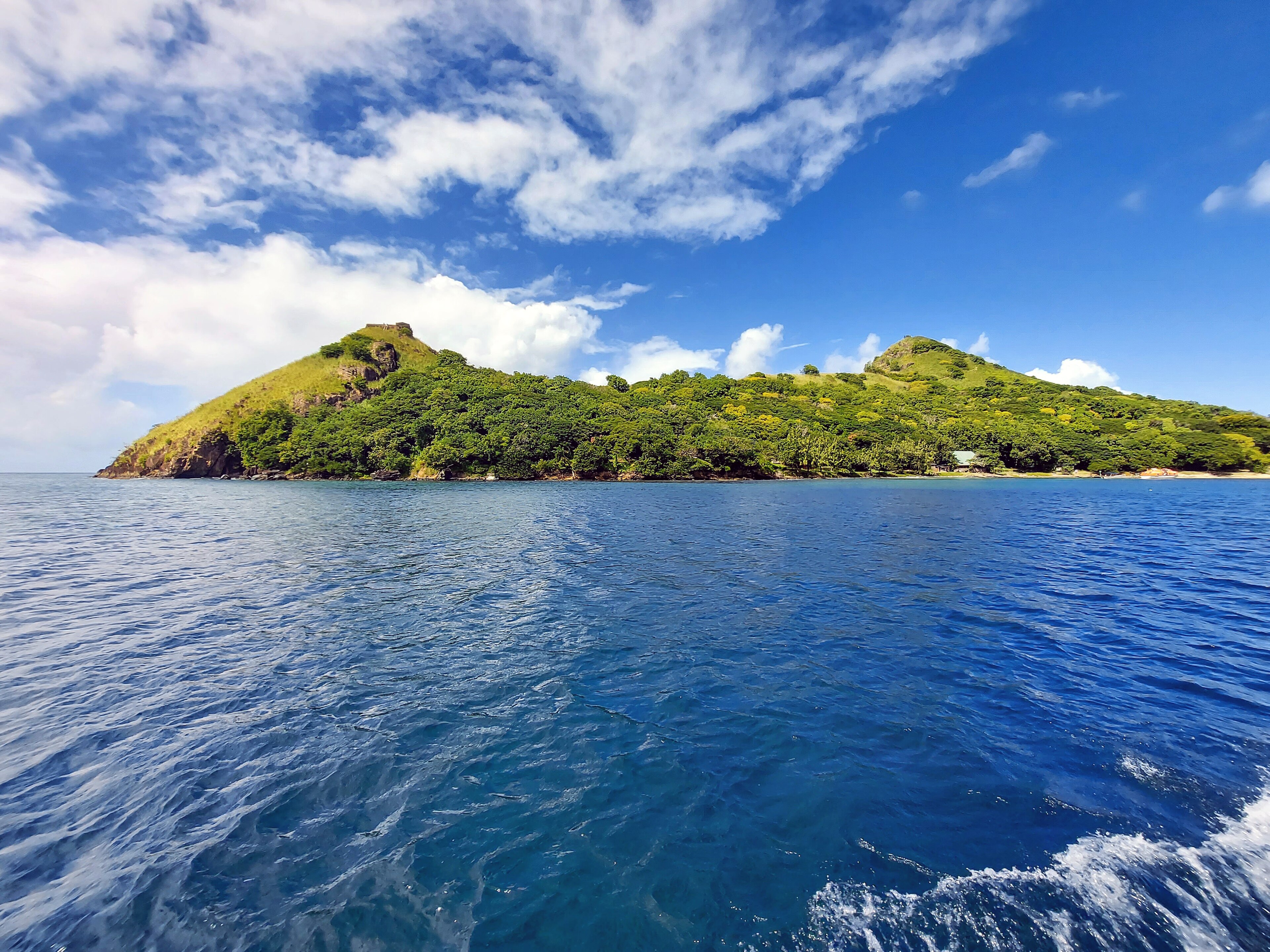
Pigeon Island, now a national landmark linked to the mainland by a causeway at the northern end of Rodney Bay, was the setting for a Walcott birthday celebration during Nobel Laureate Week in 2000. It has fortifications, trails, beaches and sweeping views, and you can read more about it in our Pigeon Island guide. The Rodney Bay area, in the Gros Islet district where Walcott died, is covered in the Rodney Bay guide, while the nearby Gros Islet gives a sense of the fishing community life that fills his poems.
Take a book with you: Omeros for the sea and the fishermen, In a Green Night for the early poems, and the plays Dream on Monkey Mountain and Ti-Jean and His Brothers for the theatre. For the other laureate, Sir Arthur Lewis Community College in Castries is the best place to pay respects. For a longer cultural plan, our culture and local experiences itinerary strings together heritage stops across the island.
Questions travellers ask
Who are the Nobel laureates from Saint Lucia?
They are Derek Walcott, who won the Nobel Prize in Literature in 1992, and Sir Arthur Lewis, who shared the Nobel Memorial Prize in Economic Sciences in 1979.
Does Saint Lucia really have the most Nobel laureates per head?
Guinness World Records lists it as the record holder at 10.81 per million people, using two laureates and a 2015 population of about 185,000.
What is Derek Walcott best known for?
He is best known for the epic poem Omeros, published in 1990, and for plays such as Dream on Monkey Mountain, and he won the Nobel Prize in Literature in 1992.
When was Derek Walcott born and when did he die?
He was born in Castries on 23 January 1930 and died on 17 March 2017 in the Gros Islet area of northern Saint Lucia, aged 87.
What did Sir Arthur Lewis win the Nobel Prize for?
He shared the 1979 economics prize with Theodore Schultz for pioneering research on economic development and the problems of developing countries, including his dual-sector model.
Where is Derek Walcott Square?
It is in the centre of Castries, with a marker on Laborie Street just north of Brazil Street. It was renamed for him on 23 January 1993.
Who was Roderick Walcott?
Roderick Walcott, Derek's twin brother, was a playwright and director who co-founded the Saint Lucia Arts Guild in 1950 and helped shape modern Caribbean theatre.
Who was Garth St Omer?
Garth St Omer was a Saint Lucian novelist, 1931 to 2018, whose books include Syrop, A Room on the Hill, Shades of Grey and Nor Any Country.
What is Nobel Laureate Week?
It is a celebration of the island's two laureates held around their January birthdays, with readings, lectures, exhibitions and tributes, though the programme changes each year.
Castries on the map
Castries is around 14.0096 degrees north, 60.9902 degrees west. Map data from OpenStreetMap contributors.
Ask Lucy about Literature and Nobel laureates
Ask about places to stay, things to do, the weather or getting here.
Keep exploring Saint Lucia
Looking for the industry view? Visit St Lucia on VisitTravelGroup.com covers the destination for travellers and the tourism trade.
More from the Visit Travel Group network: VisitTravelGroup.com, Benidorm.co.uk, Anguilla.co.uk, TheRedSea.co.uk.