About Saint Lucia
Culture and Traditions of Saint Lucia
Saint Lucia is a small island with a very big sense of itself, shaped by African, French and British threads that have been woven into something entirely its own.
A Creole island
The culture of Saint Lucia grows from three main sources: the African heritage of the people who were brought to the island and enslaved, the French influence of the early settlers and the long British administration that followed. The result is neither African, French nor British but unmistakably Creole, a word that on Saint Lucia describes a way of speaking, cooking, dressing, singing and telling stories. You will hear it in the lilt of everyday English, in the Kwéyòl that many people still use at home, and in the way a conversation at a bus stop can turn into a joke or a proverb within seconds.
To understand how that blend came about it helps to read the history of Saint Lucia and the story of slavery and emancipation. The island changed hands between France and Britain many times before the British finally held it in the early nineteenth century, and each side left its mark on the language, the churches, the place names and the festivals. Most people are Roman Catholic, though the religious climate is tolerant and the religion guide explains how other faiths sit alongside it.
Kwéyòl, the French-lexicon Creole of the island, was once discouraged in schools and public life. Since the 1970s it has been celebrated and promoted, and today it sits proudly beside English. Our guide to languages and Kwéyòl gives a few phrases worth learning before you arrive.
La Rose and La Marguerite
No custom says more about Saint Lucia than the friendly rivalry between two flower societies, La Rose and La Marguerite. Their names are the Rose and the Marguerite, and each society holds its great annual celebration on a fixed date: La Rose on 30 August and La Marguerite on 17 October. Between them the two societies draw in a large share of the population.
The societies grew out of nineteenth century village life and borrow the language of royalty, with a king, queen, prince, princess and a cast of lesser titles that can include a chief of police and a nurse. Tradition says that La Rose stands for the English side of the island's past and La Marguerite for the French side. In the telling, La Rose is noisy, rhythmic and exuberant, with tambourines, wooden trumpets, rattles and scrapers, while La Marguerite is melodic, disciplined and restrained, built around a seated chorus and a leading singer. Both groups meet weekly outside Lent, the Rose on Saturdays and the Marguerite on Sundays, to sing, dance and rehearse.
In September 1985 the two flowers won a national competition and became the national flowers of Saint Lucia, a fitting honour for a rivalry that is really a shared celebration. The festival days are good-natured occasions with processions, church services, singing and a great deal of food. If you are on the island at the right time, ask your hotel or a local guide about public events, and see our festivals and events guide for the wider calendar. The societies also feature in the music and dance guide.
Folklore and storytelling
Evenings on Saint Lucia have always been a time for stories, and the island shares a rich folklore with its Creole neighbours. Papa Bois, whose name means father of the forest, is the guardian of the woods and the animals who live in them, a figure known in Saint Lucia, Dominica, Grenada and Trinidad and Tobago. The soucouyant, a shape-shifting witch who sheds her skin at night, is a character in tales told across the Caribbean, including on Saint Lucia. The phantôme, a ghostly figure of the night, is another presence in the island's repertoire. Children grow up half frightened and half delighted by these characters, and they make excellent material for a guide to tell on a dusk walk.
Sea stories also hold a place, with tales of mermaids who lure fishermen into the deep, and of a girl who leaped from one of the Pitons to escape an unwanted marriage. You can see the mountains that inspired that story for yourself on a visit to the Pitons.
Storytelling is part of the folk song tradition too. Jwé is an informal Kwéyòl style performed at wakes, beach parties and full moon gatherings, in which singers show off verbal wit and make comic or political comment without giving offence. A well-known device is saying the opposite of what you mean, which the island calls lang dévivé. The Folk Research Centre, founded in 1973, has studied and promoted this heritage for decades. For a guided introduction, try one of the art and heritage tours or the wider history and culture experiences.
Madras and the wob dwiyet
The national dress of Saint Lucia is made from madras, the lightweight cotton fabric woven in a bold plaid. The classic women's outfit is the wob dwiyet, a long, full dress worn over layers of petticoats, usually with a head tie and a colourful scarf, and the layered skirt known as the jip. Men traditionally wear a madras jacket with a white shirt, black trousers and a red sash. The look is proudly Creole, and it appears at weddings, national events, school celebrations and above all on Creole Day.
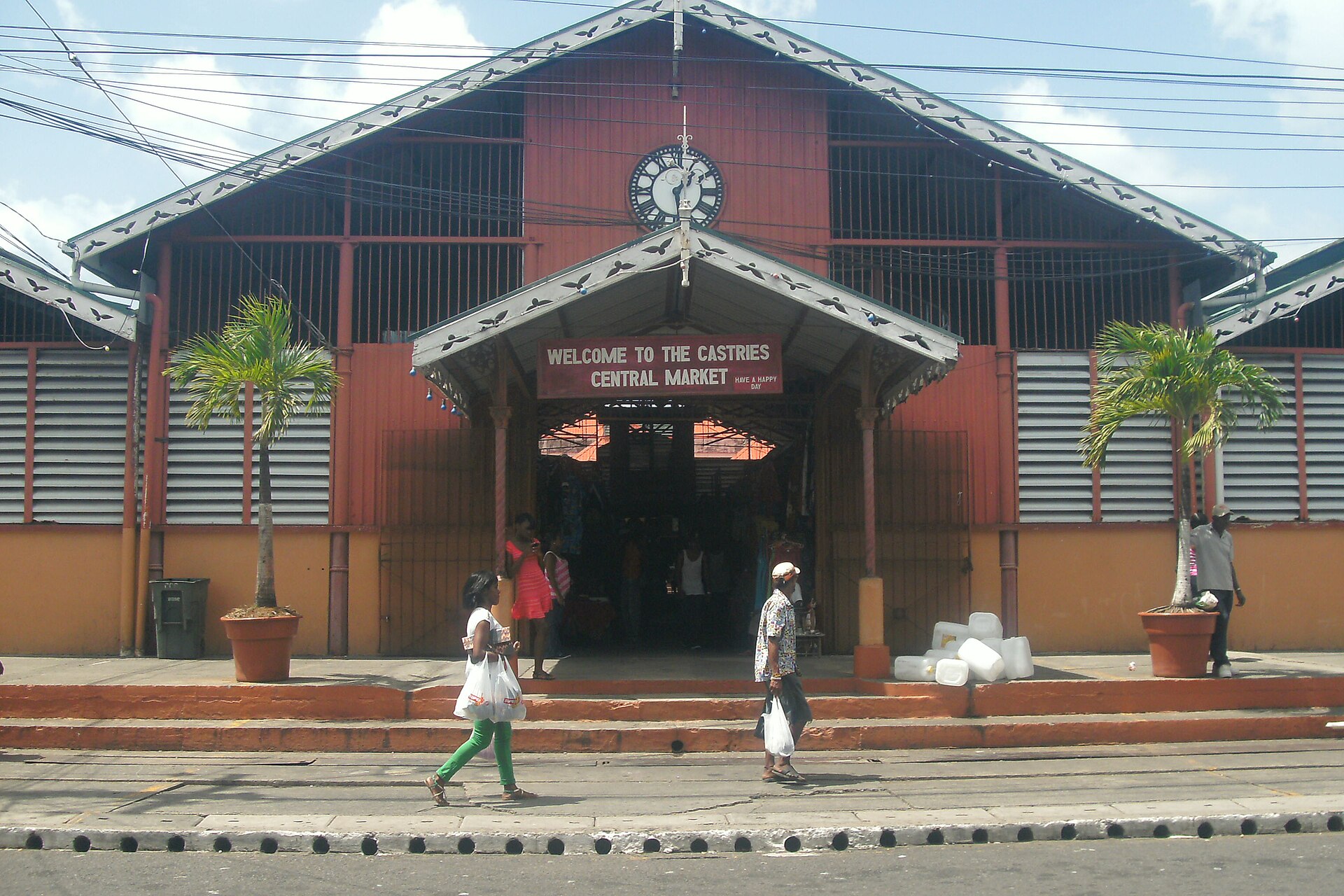
Not everyone wants the full layered ensemble, so you will also see madras used in simpler dresses, shirts, skirts, aprons and headwraps. Craftspeople sew it into table linen, bags and children's clothes, and it makes a thoughtful souvenir that supports local makers. Our artisan markets and crafts guide and the shop local guide show where to buy it, and Castries Market in Castries is a good place to see the cloth by the metre.
Food as culture
Saint Lucian cooking is where the island's heritage is easiest to taste. The national dish is saltfish with green fig, which is salted cod served with boiled green bananas, often finished with onions, peppers and seasoning. Around it sit stewed chicken, macaroni pie, rice and peas, hearty fish broths, callaloo soup and provisions such as yam, dasheen and plantain. Coconut milk, thyme, celery, onion and fiery Scotch bonnet peppers do much of the seasoning, and curry has a loyal following too, thanks to the island's Indo-Caribbean community. On Creole Day you may find bouillon, a thick soup of meat, provisions and dumplings, alongside roasted breadfruit and bakes.
Meals are social. Many communities gather weekly, such as the Friday fish fry at Anse La Raye and the Saturday seafood evening at Dennery, where the catch is grilled over coal pots. If you would like to learn the techniques yourself, a Creole cooking class is a hands-on way in. For quick bites and stalls see the street food guide, and for the bigger picture read about food and rum on the island. Cocoa tea, fruit punches and locally spiced rum all have a place at the table.
Jounen Kwéyòl and Creole Heritage Month
Jounen Kwéyòl, or Creole Day, is held on the last Sunday of October, and in 2026 that is 25 October. It has been celebrated every year since 1984, and October is now observed as Creole Heritage Month, with events, exhibitions and school activities building up to the big day. Towns and villages host cultural displays through the week, and on the Sunday communities lay out tables of local food, play traditional music and dress in madras. Folk instruments such as the shak-shak, tambourine and goatskin drum set the rhythm, and elders are encouraged to speak Kwéyòl and teach the young.
Creole Day is one of the best times to see the island at its most proud and relaxed. It is also quiet in tourist terms, so rooms are easy to find. For ideas on how to join in respectfully, look at the community tourism experiences and the guide to the best time to visit. Dress modestly, bring an appetite and be ready to be fed.
Carnival and the festival year
Saint Lucia once held its Carnival before Lent, as most Caribbean islands do. It is now held in July, partly to avoid clashing with the far bigger Carnival in Trinidad and Tobago and to bring more visitors. In 2026 the season ran from 1 to 22 July, with the Parade of the Bands in Castries on 20 and 21 July. The build-up includes calypso and soca competitions, steel pan Panorama, the Carnival Queen pageant, junior parades and J'Ouvert, the pre-dawn street party that opens Carnival Monday with paint, powder and mud. Playwright and director Roderick Walcott is remembered as a pioneer of Carnival on the island.
Other highlights include the Saint Lucia Jazz and Arts Festival in spring, the flower festivals in August and October, and Emancipation and Thanksgiving observances. The festivals and events guide and the national symbols and holidays page set out the calendar, and the music and dance guide explains the sounds you will hear on the road.
Etiquette for visitors
Saint Lucians are warm and hospitable, and a little courtesy goes a long way. Greet people when you enter a shop, bus, taxi or restaurant with a good morning or good afternoon before you ask for anything. Dress modestly away from the beach, so cover up in towns, churches and villages. Ask before photographing people, and be especially thoughtful at funerals, church services and in private homes. Keep swimwear for the beach and the pool.
Tip where service is not already included, as our money and tipping guide explains, and buy from local vendors and makers where you can. Take your litter with you, never remove coral or shells, and follow the advice in the responsible travel guide. Above all, show curiosity: people love being asked about their food, their music and their island.
Questions travellers ask
What is Creole culture in Saint Lucia?
It is the blend of African, French and British influences that shapes the island's language, food, music, dress, festivals and storytelling, expressed in Kwéyòl and English.
What are La Rose and La Marguerite?
They are two rival flower societies that celebrate on 30 August and 17 October, with kings, queens, songs and processions. Their flowers are the national flowers of Saint Lucia.
When is Creole Day in Saint Lucia?
Jounen Kwéyòl is held on the last Sunday of October, which is 25 October in 2026, and the whole of October is marked as Creole Heritage Month.
What is the national dress of Saint Lucia?
The national dress is made from madras plaid. Women wear the wob dwiyet and jip ensemble with a head tie, and men wear a madras jacket, white shirt, black trousers and red sash.
What is the national dish of Saint Lucia?
The national dish is saltfish and green fig, made with salted cod and boiled green bananas, usually served with onions, peppers and seasoning.
When is Saint Lucia Carnival held?
Carnival is held in July rather than before Lent. In 2026 the season ran from 1 to 22 July, with the Parade of the Bands on 20 and 21 July in Castries.
Who is Papa Bois?
Papa Bois is a folklore guardian of the forest and its animals, a character known on Saint Lucia and several neighbouring Creole islands and used in many children's stories.
Is Kwéyòl still spoken in Saint Lucia?
Yes. English is the language of government and schools, but Kwéyòl is widely spoken at home and in the countryside, and it is actively celebrated and taught.
How should I behave when visiting Saint Lucian villages?
Greet people, dress modestly away from the beach, ask before taking photographs, respect churches and funerals, and buy from local vendors whenever you can.
Saint Lucia on the map
Saint Lucia lies in the Windward Islands of the eastern Caribbean, around 13.8830 degrees north, 60.9670 degrees west. Map data from OpenStreetMap contributors.
Ask Lucy about Culture and traditions
Ask about places to stay, things to do, the weather or getting here.
Keep exploring Saint Lucia
Looking for the industry view? Visit St Lucia on VisitTravelGroup.com covers the destination for travellers and the tourism trade.
More from the Visit Travel Group network: VisitTravelGroup.com, Benidorm.co.uk, Anguilla.co.uk, TheRedSea.co.uk.