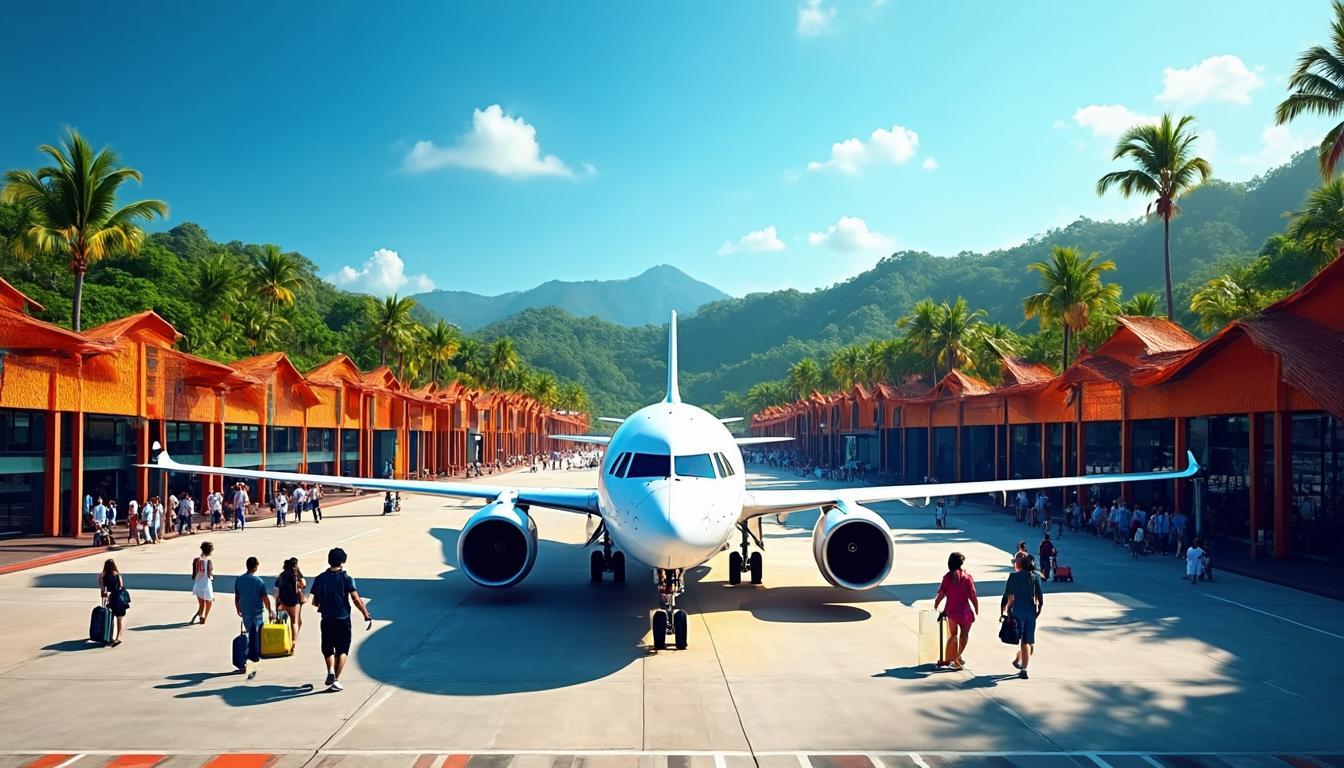
Saint Lucia is being urged to negotiate a US preclearance agreement that would let American visitors clear United States entry formalities on the island, in a pointed intervention on tourism policy by former prime minister and opposition figure Allen Chastanet. Writing in a two-part commentary on the island's foreign policy, reported by The Voice St. Lucia News, he argues the arrangement could transform air access and drive the economy of Saint Lucia far harder than marketing alone.
The case rests on arithmetic. Chastanet points out that Saint Lucia received 435,659 visitors in total in the most recent figure he cites, against roughly 34.2 million stay-over visitors across the Caribbean in 2024 and 33.7 million cruise visits region-wide. Aruba, he notes, welcomed about 1.42 million stay-over visitors, more than a million of them American, and already enjoys preclearance alongside the Bahamas and Bermuda.
Under preclearance, American travellers would complete US immigration and customs checks in Saint Lucia before flying home, arriving at domestic gates and connecting more easily to other US airports. Chastanet says this would cut airlines' operating costs and open more routes, but stresses that funding, staffing and facility arrangements would need to be negotiated. He argues stronger border security serves Washington while easier travel serves the island, and that credible border controls and a trustworthy citizenship programme are needed to protect Saint Lucia's negotiating position.
His broader argument is that tourism should work as a showroom for local production, the way France sells wine and Mexico sells tequila. Visitors who first taste Bounty rum or Saint Lucian chocolate on holiday, he reasons, become customers for life, provided there is quality, packaging, distribution and reordering behind the products. He wants local goods in the island's restaurants, airports and attractions, and contracts for farmers, fishers and manufacturers so more tourist spending stays in Saint Lucia.
The stakes are high, because tourism is the island's main source of jobs, income and foreign exchange. That was not always so: for much of the late twentieth century, bananas sent to Britain and Europe paid for roads and schools in village after village, until European trade preferences eroded and competition from Latin American plantations took hold. The shift to tourism happened over a generation, and today the sector accounts for the great majority of national output.
For travellers, the debate matters less as politics than as a forecast of what the island will offer. Anyone booking holidays to St Lucia this winter will find the established strengths unchanged: the Pitons on the Soufrière coast, rainforest trails, golden beaches and a heritage that runs through the island's own language, Kwéyòl. The question Chastanet raises is whether more of that visitor spending will flow back into local hands.
What visitors would notice most, if his argument is acted on, is Saint Lucian product in the places they eat, drink and sleep. The island's hotels in St Lucia already range from large northern beach resorts to small design-led properties on the quieter west coast, and pushing local rum, chocolate, coffee and craft into their shelves and menus would give guests a taste of the island they can take home. Producers in Soufrière and the cocoa belt would welcome the exposure; the economics, as Chastanet concedes, depend on contracts and distribution that do not yet exist.
Getting there is the other half of the case. Flights to St Lucia land at Hewanorra in the south, and a preclearance deal would mainly ease the journey home for American visitors, who made up more than half the Caribbean's stay-over market in 2024. British travellers would feel the benefit indirectly, through the wider route network and airline competition that Chastanet says such an agreement would encourage.
He also presses the case for what he calls village tourism, an infrastructure programme that would let Saint Lucians build businesses in their own communities and put arts and culture in front of visitors. The governing administration, he says, has renamed the idea community tourism without delivering the substance. Reliable utilities, good roads, efficient airports and public safety, he argues, cannot be replaced by marketing.
Whether any of this happens depends on negotiations that have not begun. Preclearance requires a strategic partnership with the United States, and Chastanet himself notes the funding and staffing questions remain open. For now, Saint Lucians and the travellers who love the island are left with an argument rather than a deal: a former prime minister's case that the country should compete with the Frances and Mexicos of this world, on its own terms, and that diplomacy should be judged by what it delivers at the departure gate.
Questions and answers
What is US preclearance and why does it matter for Saint Lucia?
It would let American travellers complete US immigration and customs formalities in Saint Lucia before flying home, as happens in Aruba, the Bahamas and Bermuda. Allen Chastanet argues this would cut airline costs and allow more routes to the island.
How many visitors does Saint Lucia receive compared with other Caribbean islands?
Saint Lucia received 435,659 visitors in the figure cited by Chastanet. The wider Caribbean recorded about 34.2 million stay-over visitors and 33.7 million cruise visits in 2024, and Aruba alone drew around 1.42 million stay-over visitors.
What does the preclearance proposal mean for British travellers to Saint Lucia?
British visitors clear no US formalities either way, so the direct effect is limited. Chastanet's argument is that cheaper US operations would let airlines add routes, which could widen choice and competition on the island's air links generally.
What is village or community tourism in Saint Lucia?
It is the idea of building infrastructure in villages so Saint Lucians can create their own tourism businesses and put local arts, food and culture in front of visitors. Chastanet says the current government renamed the policy community tourism without delivering it.
Plan your St Lucia holiday
- Hotels in St Lucia: resorts, villas and boutique stays compared.
- Things to do in St Lucia: from the Pitons to the sulphur springs.
- Best time to visit St Lucia: weather, seasons and prices by month.
- Flights to St Lucia: routes from the UK and what to expect.
- Plan your St Lucia holiday: ask us anything, or send an enquiry.