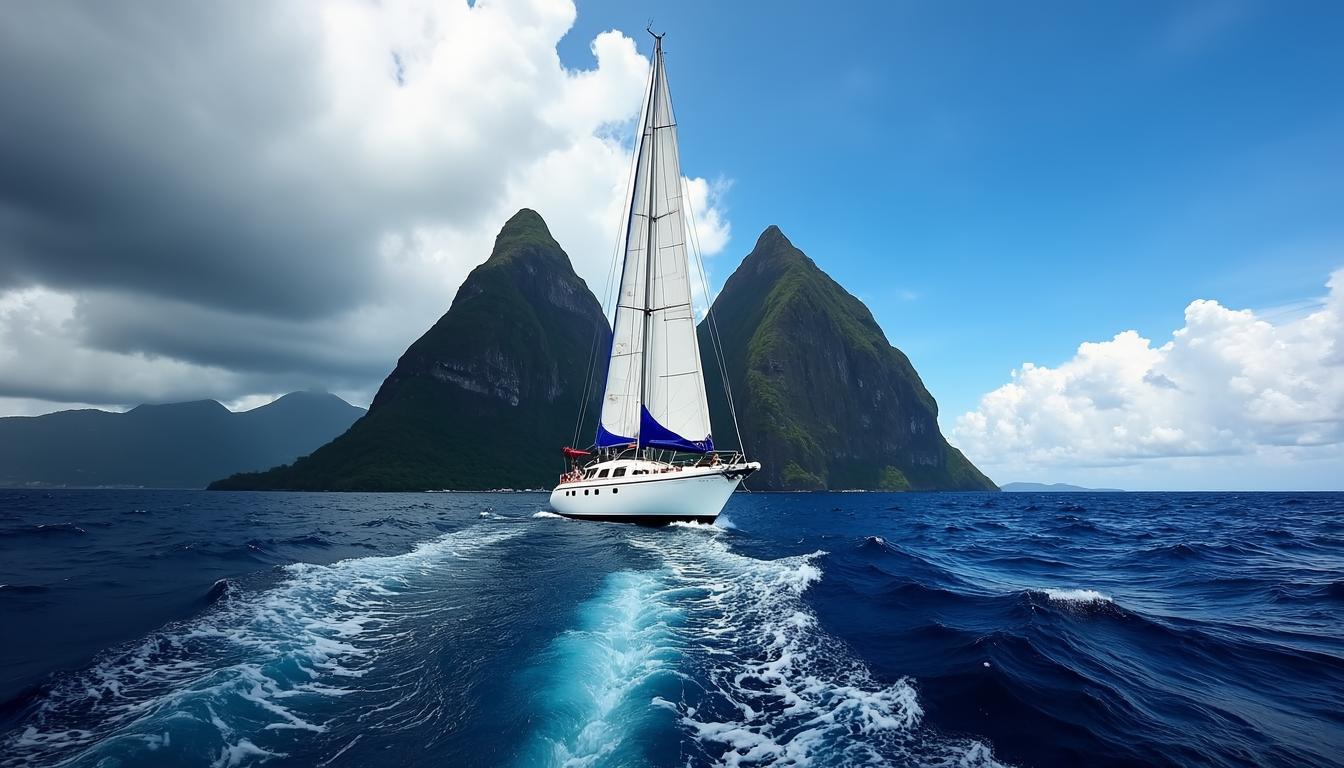
A photographer has given a rare account of chasing storm light on the water off Saint Lucia, describing how a small crew chartered a sailboat and pointed it straight at the southwest coast as heavy weather built over the Atlantic. The aim was to film the sheer volcanic face of Gros Piton framed against an incoming storm system, and the result, the photographer says, was some of the most dramatic imagery of the trip.
As reported by Yahoo Life Singapore, the shoot nearly fell apart before it began. The writer had planned every camera setting in advance, but those plans were abandoned almost as soon as the twin peaks appeared through the cloud bank while the boat was still well offshore. The conditions, the account makes clear, were nothing like the calm blue-water scenes most people associate with the Caribbean.
The boat rolled heavily in open chop as it approached the coast. The photographer described standing barefoot on the bow with anchor chains rattling and salt spray hitting the lens port, fighting to keep the frame level while a single slip could have sent thousands of pounds worth of glass to the seabed. Rain squalls were falling in the distance, backlighting the jagged ridge as shafts of light cut through the dark clouds.
Technically, the light was punishing. Exposing for the shadowed side of the volcanic rock blew out the sky entirely, while exposing for the clouds reduced the island to a flat black shape. The photographer locked the shutter to a high frame rate and pulled the exposure down two full stops to protect the cloud highlights, trusting the camera sensor's dynamic range to recover the dark foliage afterwards. The resulting contrast, the account says, was the kind of frame a travelling photographer might wait weeks to find.
The story is a useful reminder that Saint Lucia's most famous scenery does not always arrive under perfect skies. The Pitons, the twin volcanic spires of Gros Piton and Petit Piton, rise straight out of the sea near Soufrière on the island's southwest coast, and they are the single most photographed sight on the island. Anyone researching things to do in St Lucia will find the Soufrière coast appears again and again, whether from the water, from the viewpoints above it, or from the trails on the peaks themselves.
For visitors, the account also highlights a choice that shapes any boat trip on the island. Catamaran and sunset cruises run from both ends of the coast. Sailing from the north around Rodney Bay offers long beaches, headlands and wide open skies, and usually ends with the sun dropping into the sea, which suits people staying in the resort strip. Trips from the south set out near Soufrière and pass beneath the Pitons, a more dramatic and photogenic setting that many first-time visitors to Saint Lucia prefer. Anyone with the time could try one of each.
The west coast is sheltered from the Atlantic swell, so the sea is usually kind even when the weather further out is not, and the distances between anchorages are short. Catamarans sit flat and steady, with plenty of shaded deck, which is why they are a favourite for families, couples and groups. No sailing experience is needed, and most trips combine the sail with a swim or a snorkel, with many adding lunch and drinks. The coastline itself is the main attraction, with forested cliffs dropping to the water, small coves between headlands and fishing villages that cannot be reached by road.
The account also speaks to a wider point about timing. Anyone weighing up the best time to visit St Lucia should know that the island sits in the tropics, and that fast-moving rain squalls are part of life even in the sunnier months. The upside, as this shoot shows, is the light that comes with them. Rain rarely lasts long, and the wet afternoons are exactly why the hillsides are so green and the island's forest trails so rewarding for anyone keen on hiking in St Lucia.
For those planning their own trip, the practical picture is straightforward. The biggest decision for most holidays to St Lucia is the hotel, and the island offers everything from large beachfront properties to design-led small stays. Visitors can compare hotels in St Lucia by area and style, with well-known names including Jade Mountain, Sugar Beach, Anse Chastanet, Cap Maison and Sandals Grande. All-inclusive resorts in St Lucia sit alongside smaller properties, and couples will find the island a long-established choice for a honeymoon in St Lucia, as well as a popular setting for weddings in St Lucia.
Accommodation ranges just as widely. Alongside the larger properties there are villas in St Lucia with private pools and sea views, and a growing selection of boutique hotels in St Lucia for travellers who prefer something smaller and more personal. Getting there is simple enough, with direct flights to St Lucia from the UK during the main season landing at Hewanorra International Airport in the south, which puts the Soufrière coast within reasonable reach by road or by transfer boat.
The photographer's closing message was blunt: adventure imagery rarely comes from comfortable conditions. To capture pictures with real impact, the writer argued, you have to accept the chop, get soaked on the bow and sail towards the weather that everyone else is avoiding. On Saint Lucia's sheltered west coast, where the Pitons wait at the southern end, that calculation is easier to make than almost anywhere else in the Caribbean.
For now, the imagery from the shoot speaks for itself, and the account stands as a reminder that the island's most memorable views are not always the postcard ones. Travellers who want to see the Pitons from the water can book a south-coast sail out of Soufrière, keep an eye on the sky, and hope for a little of the same dramatic weather.
Nothing further has been announced about the project the footage is for, but the account suggests more storm-chasing work from the region may follow.
Questions and answers
Where are the Pitons in Saint Lucia?
The Pitons, Gros Piton and Petit Piton, rise from the sea near Soufrière on the southwest coast of Saint Lucia. They are the island's most recognisable sight and a highlight of south-coast boat trips.
Can visitors sail to the Pitons in Saint Lucia?
Yes. Catamaran and sailing trips set out near Soufrière and pass beneath the Pitons, which many first-time visitors find the most dramatic option. Trips from Rodney Bay in the north offer calmer scenery and sunset views.
Is the sea calm around Saint Lucia for boat trips?
The west coast is sheltered from the Atlantic swell, so the water is usually calm and the distances between anchorages are short. Catamarans sit flat and steady, and no sailing experience is needed.
What happens if it rains during a St Lucia boat trip?
Rain squalls in the tropics are often brief, and the rain is part of why the island's hillsides stay so green. Many trips combine sailing with a swim or snorkel, and wet weather alternatives on shore include chocolate making and craft workshops.
Plan your St Lucia holiday
- Hotels in St Lucia: resorts, villas and boutique stays compared.
- Things to do in St Lucia: from the Pitons to the sulphur springs.
- Best time to visit St Lucia: weather, seasons and prices by month.
- Flights to St Lucia: routes from the UK and what to expect.
- Plan your St Lucia holiday: ask us anything, or send an enquiry.