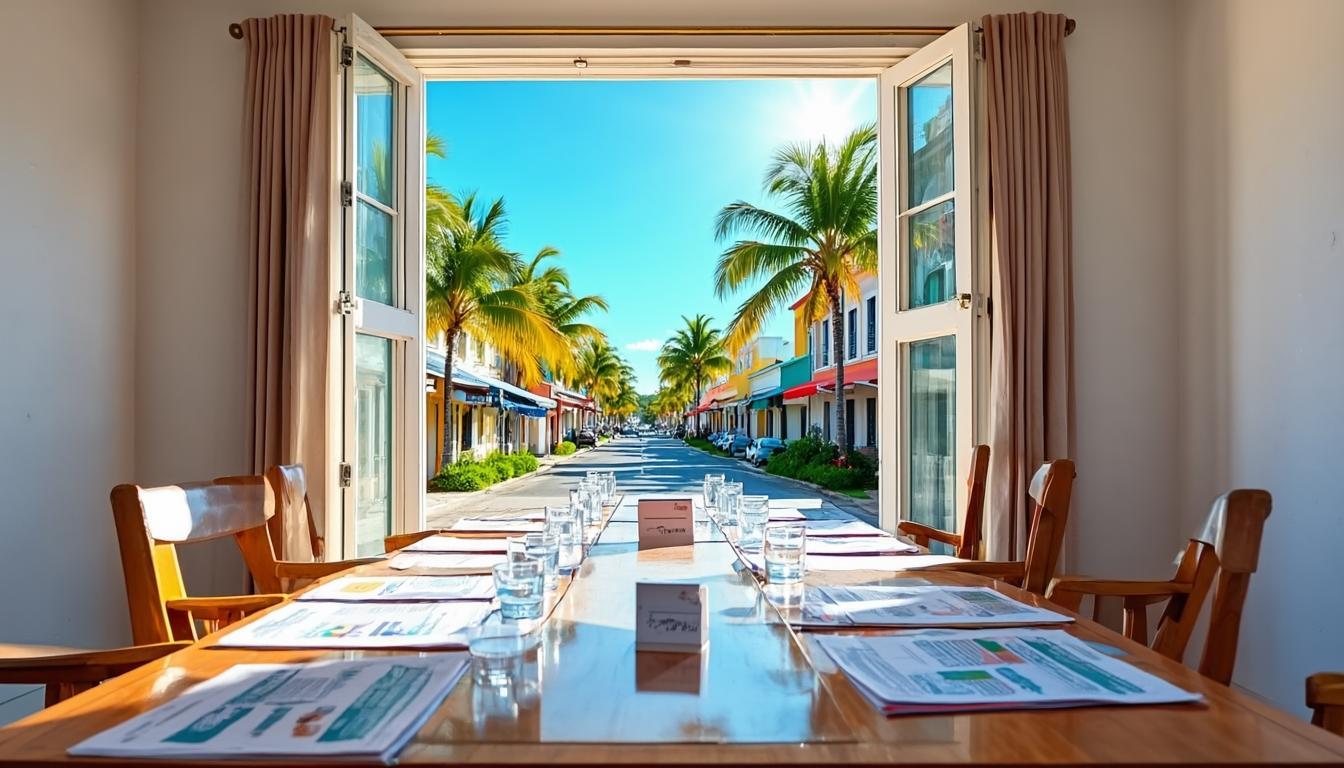
Saint Lucia has taken its first formal step towards a national jobs and labour standards programme, after a four-day workshop in Castries closed with a road map for the island's first Decent Work Country Programme. Suriname, invited by the International Labour Organization to share its experience, helped draw up the plan between 12 and 15 October 2026.
As reported by Suriname Herald, the session, titled 'Decent Work by Design: Developing, Owning and Monitoring a Decent Work Country Programme', formed part of the ILO's South-South cooperation. A delegation from Suriname's National Decent Work Commission, led by its chairman Glenn Piroe and trade union representative Claudette Etnel, worked alongside government, employer and union representatives from Saint Lucia. Other commission members joined some sessions remotely.
What the plan actually changes is employment policy. A Decent Work Country Programme sets out how agreements on wages, conditions and workers' rights are turned into legislation and practical measures. Saint Lucia is drafting its first; Suriname is on its third, covering 2023 to 2026, and was the first country in the Caribbean to sign a third-generation programme. It has since asked the ILO to extend the current one.
Suriname was chosen because of that track record and its tripartite system, in which government, employers and the trade union movement jointly shape labour policy. The delegation showed how the ministry of health, welfare and labour works with the Suriname Business Association and Ravaksur, and presented practical examples including strengthened agricultural cooperatives and a functioning parental leave fund.
For the island's wider economy, the significance is credibility. The programme is intended to strengthen the economy of Saint Lucia by formalising how jobs, wages and working conditions are negotiated, which matters to the hotels, services and agriculture that employ most islanders and to the investors the government hopes to attract.
Visitors notice labour conditions indirectly, in the service they receive. Staff retention and training at hotels in St Lucia, from the large beachfront properties in the north to the small resorts around Soufrière, depend on the kind of structured dialogue between employers and workers this programme is meant to build. Nothing in the workshop changes holiday plans this winter; it is about the foundations beneath them.
The road map leaves Saint Lucia free to develop and ultimately sign its first programme, though no signing date has been announced and the ILO's technical support for implementation has yet to be detailed. What is confirmed is that the framework was agreed in Castries this month with Surinamese and ILO input.
Suriname's contribution did not stop at Saint Lucia. The same delegation helped produce a separate plan to strengthen social dialogue in Haiti, laying the ground for structured talks between government, unions and business there as part of the country's reconstruction. The ILO will provide technical support for that plan's execution.
For the Caribbean region, the Castries workshop shows small states trading expertise directly rather than importing it. Suriname's National Decent Work Commission said the ILO invitation underlined the position it has built in regional labour policy, and that the contacts made will feed back into its own programme's delivery.
For anyone booking holidays to St Lucia, the story is background rather than breaking change, but a stable, well-regulated labour market is part of what keeps the island's tourism industry reliable year after year, from the drivers of the green-plated minibuses to the dive boats and resort kitchens.
Saint Lucia itself is unchanged by the workshop: the Pitons still rise over Soufrière, the rum and chocolate pairings still run at Sugar Beach on Tuesdays and Thursdays, and the best time to visit St Lucia remains the dry season from December to May. The labour programme is the sort of unglamorous work that keeps those pleasures dependable.
The next milestone is Saint Lucia's signature on its first Decent Work Country Programme, a step that will be watched closely by employers and unions across the region, and one that Suriname, having set the example, will follow with interest.
Questions and answers
What happened in Saint Lucia in October 2026?
An ILO workshop was held in Castries from 12 to 15 October 2026, where a Surinamese delegation helped Saint Lucia draw up a road map for its first Decent Work Country Programme on jobs and labour standards.
Why was Suriname invited to help Saint Lucia?
Suriname has run three successive Decent Work Country Programmes and was the first Caribbean country to sign a third-generation programme. Its government, employer and union bodies work jointly on labour policy, which the ILO held up as a regional model.
Does the decent work programme affect visits to Saint Lucia?
Not directly and not yet. It aims to turn agreements on wages and working conditions into legislation and practical measures, which supports the industries, including tourism, that employ most islanders. No signing date has been announced.
What is a Decent Work Country Programme?
It is a national framework agreed with the International Labour Organization setting out how a country will improve jobs, workers' rights and social dialogue. Saint Lucia's would be its first, developed and eventually signed following the Castries road map.
Plan your St Lucia holiday
- Hotels in St Lucia: resorts, villas and boutique stays compared.
- Things to do in St Lucia: from the Pitons to the sulphur springs.
- Best time to visit St Lucia: weather, seasons and prices by month.
- Flights to St Lucia: routes from the UK and what to expect.
- Plan your St Lucia holiday: ask us anything, or send an enquiry.