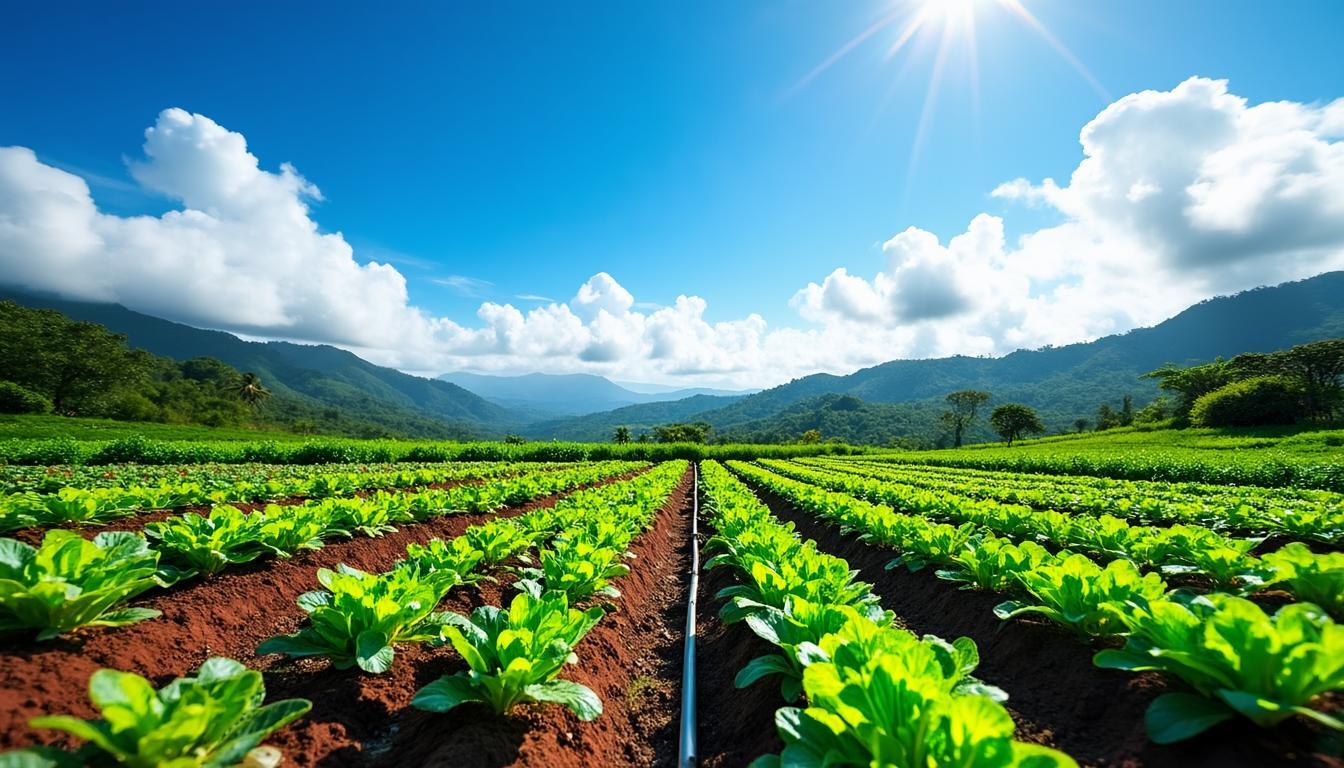
A delegation from Saint Lucia has travelled to Jamaica for the 20th Caribbean Week of Agriculture, a six-day regional gathering running from September 27 to October 2 in Trelawny. The island's officials from the Ministry of Agriculture, Fisheries, Food Security and Sustainable Development are taking part under the event's guiding themes of learning, innovating and preparing for the future, with food security and climate resilience high on the agenda.
As reported by The Voice St. Lucia News, the Saint Lucian delegation arrived early and used the days before the conference opened to visit an advanced hydroponics facility in Jamaica. The purpose of that visit was to study innovative farming technology and established best practice, gathering insights that officials believe can be adapted back home to encourage modern, climate-smart agriculture on the island.
The wider gathering has drawn more than 670 delegates from 34 countries. Its central theme, 'The New F.A.C.E. of Caribbean Food Systems', stands for Food Security, Agri-Business, Climate-Smart Technologies and Export Expansion. The programme includes more than 70 technical sessions, high-level ministerial meetings, exhibitions and field trips, all aimed at reducing the region's dependence on food imports and building resilience to climate shocks.
Jamaica's Prime Minister Andrew Holness welcomed the policymakers, farmers, fisher-folk, researchers, investors and development partners in attendance, saying the aim was to convert discussion into practical steps that strengthen agriculture across the region. He pointed to the recent damage caused by Hurricane Melissa, which hit farming communities hard, and stressed the need for greater resilience, better productivity, expanded investment and more opportunities for producers and young people.
Jamaica's Minister of Agriculture and Mining, Floyd Green, expressed pride that his country is hosting the event for the second time in its 20-year history. He noted that agriculture sits at the heart of Caribbean development at a time of rising input costs, global uncertainty and a changing climate, all of which underline why stronger and more resilient food systems matter for the region.
For Saint Lucia, the stakes are familiar. Agriculture remains an important pillar of the economy of Saint Lucia alongside tourism, and the island has long worked to strengthen its own production of bananas, cocoa, rum and fresh produce for hotels and homes. The conference's focus on agri-business and export expansion speaks directly to those ambitions, and the hydroponics visit suggests officials are looking at technology that could help growers produce more on limited land while using less water.
The event will also be used to measure regional progress against the '25 by 2025 plus 5' commitments, which set a target of cutting the region's food imports by a quarter while boosting local production. Minister Green described the theme as reflecting where Caribbean agriculture needs to go, building a sector that serves future generations and setting a stronger regional vision for growth towards 2030 and the fulfilment of global commitments.
The news has a domestic dimension for visitors too. Much of what delegates are discussing in Trelawny ends up on the plate in Saint Lucia, where the link between farm and table is a growing part of the visitor experience. Food and rum in St Lucia draws on the island's own producers, from fresh fish and ground provisions to chocolate made from island-grown cocoa, and hotels and restaurants increasingly source locally rather than relying on imported goods.
That farm-to-table story runs deep on the island. Cocoa and chocolate in St Lucia has become a genuine draw, with historic estates offering tours that take visitors from bean to bar, while rum distilleries in St Lucia continue a tradition of cane-based spirits that stretches back centuries. A stronger agricultural sector gives those experiences firmer foundations and keeps more of the value of tourism within local communities.
The island's landscape tells the same story of agriculture and nature intertwined. Hiking in St Lucia often follows old estate paths and plantation trails through rainforest on the slopes of the interior, and the volcanic soufrière landscape around the Pitons still supports small-scale farming alongside tourism. Delegates' interest in climate-smart techniques is, in part, about protecting exactly these working landscapes from hurricane damage and shifting weather patterns.
For travellers, none of this changes the basics of a trip. The best time to visit St Lucia remains the dry season from December to May, flights to St Lucia connect the island to the UK with a manageable journey, and the island's beaches in St Lucia range from calm northern bays to wilder southern stretches. What the conference may change, over time, is the quality and provenance of what is served in hotels and eaten at roadside BBQs, as more of it comes from Saint Lucian soil.
What happens next will be watched closely by the region's agriculture ministries. Saint Lucia's delegation will return with findings from the technical sessions and field trips, and the hydroponics research is expected to inform how the ministry approaches modern farming at home. Whether the '25 by 2025 plus 5' targets stay on course may depend, in part, on ideas carried back from Trelawny by delegations like this one.
Plan your St Lucia holiday
- Hotels in St Lucia: resorts, villas and boutique stays compared.
- Things to do in St Lucia: from the Pitons to the sulphur springs.
- Best time to visit St Lucia: weather, seasons and prices by month.
- Flights to St Lucia: routes from the UK and what to expect.
- Plan your St Lucia holiday: ask us anything, or send an enquiry.