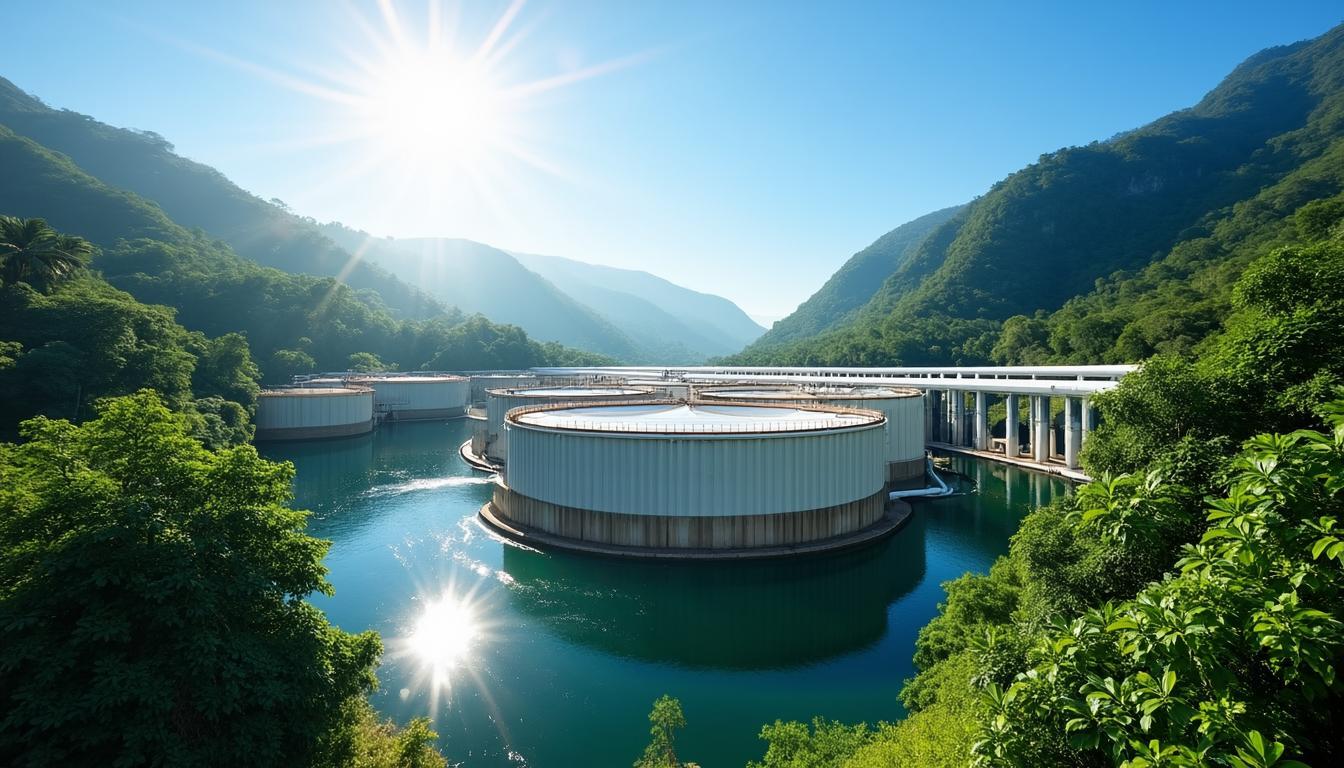
Saint Lucia's Water and Sewerage Company is pressing ahead with a major overhaul of the Theobalds Water Treatment Plant, the facility that supplies drinking water to more than 40,000 homes and businesses along a corridor running from Millet in the interior up to Cap Estate in the island's far north. The plant is currently running at roughly 40 per cent efficiency, and the company wants it back at full strength by the end of next year.
As reported by St. Lucia Times, the update came from Maurice Norville, head of WASCO's Project Management Unit, speaking at a press conference on Wednesday. He said six proposals had come in from firms across the region and that the company was now in the final stages of evaluating them. Once a contractor is chosen, work is due to begin in November, with completion targeted for December 2027.
The plant was built in 1993 and expanded in 2007, but corrosion of some of its components has dragged down its output in recent years. The rehabilitation is intended to return it to its original design capacity of 10.8 million gallons per day. Norville said that once the work is finished, WASCO expects to see production rise in line with whatever water is actually available, an important point as rainfall on the island continues to fluctuate from season to season.
The project is being funded by the CARICOM Development Fund at a cost of approximately EC$13.2 million. Alongside the mechanical repairs, the upgrade will include a solar photovoltaic system and more energy-efficient automated pumps, which the company says should cut the plant's carbon dioxide emissions as well as its running costs.
For the water supply that supports everything from kitchens to showers across the north of the island, the timing matters. The system serves the very stretch of coast where many visitors base themselves, from the villas in St Lucia that line the Cap Estate hillside to the busy hotel belt around Rodney Bay and Gros Islet. A treatment plant working closer to its design capacity should mean fewer supply interruptions and steadier pressure, including in the dry months when rationing has sometimes been necessary.
The area served by Theobalds is also where a large share of the island's visitor accommodation sits. Cap Estate itself is home to one of the luxury hotels in St Lucia best known to British guests, a design-led property with its own secluded beach and a strong following for weddings and private villa stays. Further south along the same supply line are many of the all-inclusive resorts in St Lucia that British tour operators sell, as well as the small independent hotels and guesthouses that fill the gap between them.
The works are a reminder of the infrastructure behind the scenes of a holiday. Travellers comparing hotels in St Lucia for next year, or timing their flights to St Lucia around the winter season, are unlikely to notice the plant at all unless something goes wrong, which is precisely the point of the exercise. WASCO's aim is that increased production during wet periods can be stored and drawn down when the rain slackens, smoothing out the seasonal swings that have affected customers in recent years.
There is a wider economic angle too. Water security underpins the economy of Saint Lucia well beyond tourism, touching agriculture in the Millet and Roseau valleys, the hotels and restaurants of the northwest coast, and the residential neighbourhoods in between. The CARICOM Development Fund's backing also signals regional confidence in the utility's management of the project, which has been laid out publicly through a procurement process Norville says is nearing its conclusion.
Norville pointed to the environmental side of the upgrade as a lasting benefit. Solar generation and automated, energy-efficient pumps should reduce the plant's carbon dioxide emissions, a shift that matters as the island's utilities look to trim their reliance on imported diesel for power. For a system handling more than ten million gallons a day at full tilt, even modest efficiency gains translate into meaningful savings.
What happens next is straightforward. WASCO expects to complete the contractor selection in the coming weeks, begin work on site in November and run the programme through to December 2027. Norville has committed to the timeline as it stands, and the company says the finished plant will make better use of the water it already has available.
In the meantime, customers from Millet to Cap Estate should expect the usual notices if the works cause temporary interruptions, with updates likely to travel quickly through the community channels Saint Lucians rely on, from WhatsApp groups to the island's online news sites. Visitors staying in the northwest over the next year may see occasional work activity, but the company's stated goal is a system that hums quietly in the background once the last pipe is connected.
For anyone wondering how the project fits into a wider trip, the practical advice is unchanged: the north of the island will keep welcoming guests as normal while the works proceed, and the improved water security should be one more quiet reason the island holds its place on the map by the time the upgrade is complete.
Plan your St Lucia holiday
- Hotels in St Lucia: resorts, villas and boutique stays compared.
- Things to do in St Lucia: from the Pitons to the sulphur springs.
- Best time to visit St Lucia: weather, seasons and prices by month.
- Flights to St Lucia: routes from the UK and what to expect.
- Plan your St Lucia holiday: ask us anything, or send an enquiry.