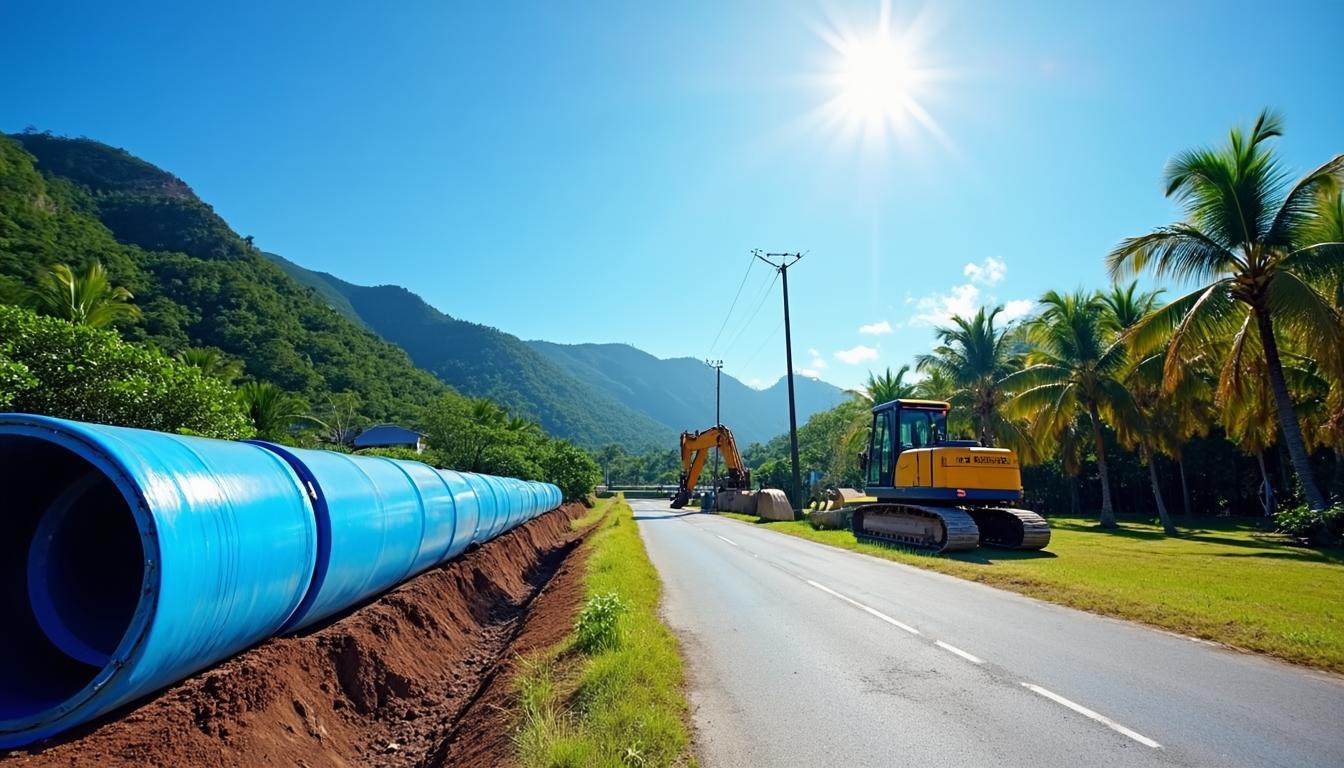
Work on a major water pipeline upgrade serving the north of Saint Lucia has been halted after contractors ran into unexpected problems underground, the island's Water and Sewerage Company has confirmed. The project, which is replacing an ageing cast-iron main with a larger modern pipe, began its final phase in August but has now been paused while engineers reassess the scheme.
As reported by St. Lucia Times, the Water and Sewerage Company Inc., known locally as WASCO, said the Northern Pipeline Upgrade Project stalled after what it described as infrastructural challenges emerged once excavation work was already under way. The company has not offered a revised completion date, saying only that the timeline has been revised and that efforts are being made to prevent further interruptions.
The work in question is the replacement of a 14-inch cast-iron pipeline with a 20-inch ductile-iron main along a section of road between the Bonne Terre and Gros Islet town gaps. Photographs published on 13 October showed large blue pipes stacked along the roadside at that stretch, a visible sign of a project that has been running in phases across the northern transmission network.
In a statement, WASCO said its team, together with the project's consultant and contractor, was working to resolve the issues that had been identified, to put measures in place against further disruption and to protect the integrity of the project as it moves forward. The company also sought to reassure the public that once work resumes, every effort would be made to keep delays and inconvenience to a minimum.
The purpose of the upgrade is to make the northern transmission main more reliable and, in the end, to deliver a steadier water supply to households and businesses across the north of the island. That matters well beyond the immediate neighbourhood of the works, because the north is where the island's visitor economy is most concentrated. Anyone who has looked into holidays to St Lucia will know that the main resort area sits on this same stretch of coast, around Rodney Bay and the long sweep of Reduit Beach.
The district of Gros Islet, once a quiet fishing village and still recognisable as one around its main square, has grown into the island's busiest tourism hub. It is home to a large share of the hotels in St Lucia, from the marina and restaurants of Rodney Bay to the golf courses of Cap Estate and the landmark of Pigeon Island at the northern headland. Water demand in the area rises sharply with visitor numbers, which is precisely why the reliability of the northern transmission main is treated as important infrastructure.
A dependable supply underpins everything from the kitchens of the all-inclusive resorts in St Lucia's northern belt to the smaller guesthouses and self-catering villas in St Lucia's quieter corners of Cap Estate and the surrounding hills. Interruptions to supply, which the old cast-iron main has been prone to, are felt first by residents but quickly reach the accommodation sector, where consistency is part of what guests pay for. The upgraded 20-inch main is intended to reduce that vulnerability.
The delay also has a broader reading for the economy of Saint Lucia, which leans heavily on tourism alongside agriculture and services. Infrastructure projects of this kind are closely watched by the private sector, since water reliability affects not just hotels and restaurants but residential construction and the wider property in St Lucia that investors continue to develop in the north. A stalled timeline, even temporarily, is the kind of detail businesses in Gros Islet and Rodney Bay will follow.
For visitors, the immediate effect is modest but worth noting. The works sit on a road corridor used by anyone travelling between the capital, Castries, and the northern resort areas, and the pipes lined along the roadside are a reminder that traffic arrangements may shift as the project moves through its final section. Tour operators generally build such contingencies into transfers from the airports, and the island's tourism authority maintains an office in Gros Islet should travellers need assistance during their stay.
It is also worth keeping the timing in perspective. The high season, which roughly runs from December through April and coincides with what many consider the best time to visit St Lucia, is when water demand in the north peaks and when the pressure on the network is greatest. WASCO has not said whether it aims to complete the remaining section before that period, but the company's language about resuming quickly and minimising inconvenience suggests an awareness of the stakes.
Residents in the affected area have already voiced frustration about how the works began. Comments on the original report described the entrance at Bonne Terre being blocked without advance notice to commuters when crews started on a Sunday, and questioned whether sufficient site investigation was done before excavation. WASCO has not responded publicly to those specific criticisms, though its statement about safeguarding the project's integrity hints at the same underlying concern.
For now, the pipes remain stacked between the Bonne Terre and Gros Islet town gaps while the company, its consultant and its contractor work through the problems that surfaced underground. What happens next depends on how quickly those issues are resolved; WASCO has promised updates as the project advances, and a revised completion date will be the figure that residents and the north's tourism businesses will be waiting to hear.
Plan your St Lucia holiday
- Hotels in St Lucia: resorts, villas and boutique stays compared.
- Things to do in St Lucia: from the Pitons to the sulphur springs.
- Best time to visit St Lucia: weather, seasons and prices by month.
- Flights to St Lucia: routes from the UK and what to expect.
- Plan your St Lucia holiday: ask us anything, or send an enquiry.