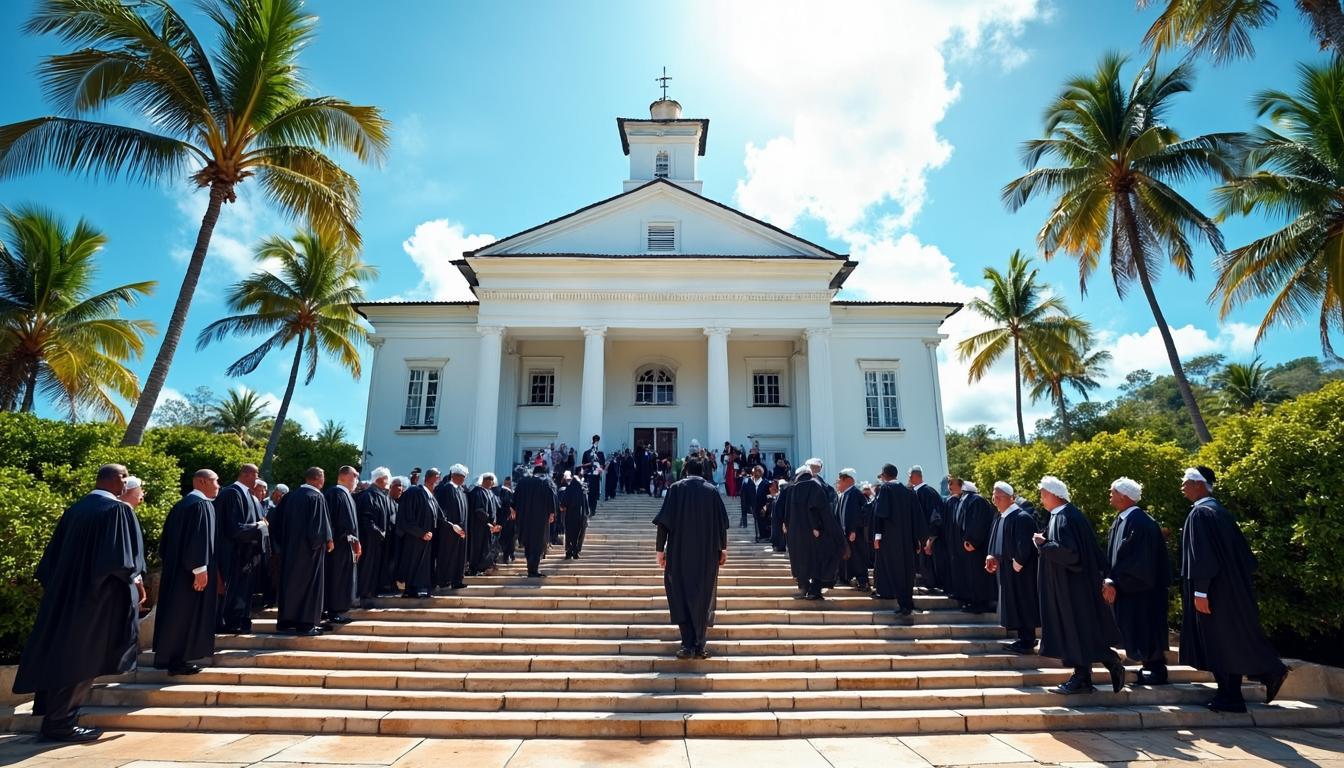
The Caribbean Court of Justice has sat in Saint Lucia for the first time, with the island joining the small group of countries that have played host to the regional court's itinerant hearings. The occasion was combined with the ceremonial opening of the new judicial year, giving lawyers, judges and government figures from across the Caribbean a reason to gather in Castries on Wednesday.
As reported by St. Lucia Times, the day began with a formal procession to the Eastern Caribbean Supreme Court building, where members of the local legal profession, government officials, CCJ justices and heads of the regional judiciary came together for the sitting. Beyond the pageantry, though, the speeches carried a serious point about how justice is delivered in the region.
Justice Price Findlay, Chief Justice of the Eastern Caribbean Supreme Court, told those gathered that the start of a judicial year should be a moment for courts to take stock. She urged them to consider what is serving the public well, what is falling short, and how the system can improve, drawing on the difficulties and the achievements of recent years as the court builds on its regional record.
The Caribbean, she noted, is changing quickly. Technology, shifts in the economy and changing social needs are all altering the setting in which the region's courts do their work. Citizens, she said, increasingly expect a justice system that is prompt, open about its workings and quick to respond to the people who rely on it.
Wednesday's sitting carried particular weight for Saint Lucia because of what it represented. Parliament moved in February 2023 to make the CCJ the island's final court of appeal, ending a long tradition in which that role was filled by the Judicial Committee of the Privy Council in London. The visit marks a milestone in the three years since that change, and places the island alongside Barbados, Belize, Guyana and Jamaica as destinations for the court's travelling sittings.
For readers unfamiliar with the island's legal set-up, most cases begin in the magistrates' courts, which handle minor criminal and civil matters. More serious work goes to the High Court in Castries, part of the Eastern Caribbean Supreme Court. That regional court was created in 1967 and serves six independent states plus three British Overseas Territories, with a Court of Appeal that moves from island to island to hear cases rather than sitting in one fixed place.
The news matters beyond the courtroom. A functioning, modern justice system underpins confidence in contracts, property and investment, and so supports the economy of Saint Lucia, where tourism is the leading earner. It is also part of the broader story of a young nation, fifty years independent, shaping its own institutions while holding on to the culture and traditions of Saint Lucia that give the island its distinctive character.
Visitors will notice the thread of English legal heritage woven through daily life. The island runs on the Westminster model inherited from Britain, so government will feel familiar to a British reader, and the courts follow a similar structure. That shared history is one reason holidays to St Lucia appeal so strongly to a UK audience, alongside the direct flights to St Lucia that run from London during the winter season.
The timing of the sitting also says something about the island as a venue. Castries, the capital, is used to hosting regional gatherings, and the dry months between December and April are the best time to visit St Lucia for anyone wanting to combine an event with warm, settled weather. Many of those same months are when the island welcomes the largest numbers of arrivals from Europe and North America.
Whatever brings people to the island, the setting does the rest of the work. The Pitons rise sheer from the sea on the west coast, the beaches in St Lucia range from busy golden stretches near Rodney Bay to quiet black-sand coves in the south, and the rainforest interior offers waterfalls, trails and birdlife. It is a compact island, so visitors can see a great deal without long drives.
The CCJ itself, headquartered in Trinidad and Tobago, has in recent years expanded the practice of holding sittings in member states rather than requiring every case to travel to Port of Spain. Bringing hearings closer to the communities they affect is part of the same push for accessible justice that the Chief Justice described, and Saint Lucia's inclusion in that list of host nations is a sign of how the island is settling into full membership of the court.
The sitting in Castries is expected to stand as a one-off ceremonial occasion for now, with future itinerant hearings to be confirmed by the court in due course. For Saint Lucia, the message from the legal year's opening was clear: the regional court is now part of the island's justice system, and the expectation is that it will deliver for the people who use it.
Plan your St Lucia holiday
- Hotels in St Lucia: resorts, villas and boutique stays compared.
- Things to do in St Lucia: from the Pitons to the sulphur springs.
- Best time to visit St Lucia: weather, seasons and prices by month.
- Flights to St Lucia: routes from the UK and what to expect.
- Plan your St Lucia holiday: ask us anything, or send an enquiry.