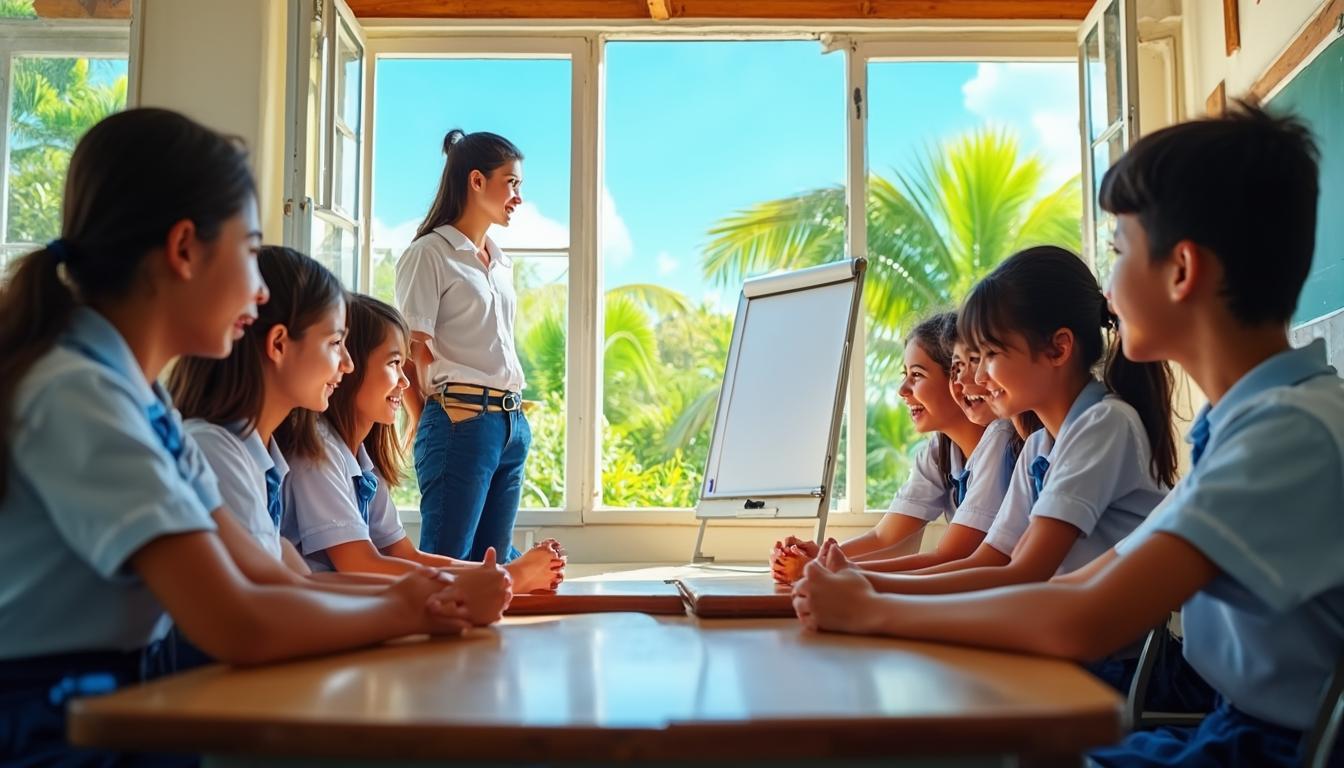
A training programme that puts teenagers in front of their own classmates to deliver anti-drug messages is expanding across Saint Lucia. Peer Vybz, run by the Ministry of Health, Wellness and Nutrition through its Substance Abuse Advisory Council Secretariat, works with young people aged 13 to 15 and teaches them how to make informed decisions, resist peer pressure and encourage others to stay away from alcohol and drugs.
As reported by St. Lucia Times, the scheme was developed after secondary school students repeatedly told officials that they wanted to be the ones delivering prevention messages to people their own age. Barry Modeste, programme assistant at the secretariat, said the young people themselves shaped the concept. He explained that teenagers occupy social spaces, formal and informal, that adults rarely reach, which gives them a chance to influence choices in a way outside campaigns cannot.
The most recent sessions combined interactive workshops, activities and skills-building exercises with well-known local personalities, including Kiedel Sonny and Kendall Eugene, the entertainer better known as Scady Dot P. Modeste set out three strands to the training. The first works on critical thinking and problem solving under pressure, aimed at the moment when a young person is being pushed by others to drink or take drugs.
The second strand is educational, and includes how the tobacco industry uses deceptive tactics to draw in young customers. The third, called empower, is designed to build the confidence participants need to be a positive influence among their friends. Modeste argued the benefits reach beyond the individual teenagers, pointing to fewer non-communicable diseases, less wasted talent and, in his words, a better Saint Lucia and better communities as the participants grow up.
One of those taking part, Miandi Bailey, said the training had already changed how she sees her own role. She described enjoying the sessions and learning a great deal, and said the programme would help her encourage her peers to be better people and leaders. She added that when bad influences come her way in future, she now knows how to brush past them and do better.
Sessions have already been held in several communities, including Vieux-Fort, Dennery and Babonneau, and the ministry is expected to continue taking the programme to more parts of the island. The approach reflects a wider shift in how young Saint Lucians communicate and organise. Online platforms are now the first stop for news and information for many teenagers, with Facebook and WhatsApp carrying much of the community conversation and younger people favouring Instagram, TikTok and YouTube, where local creators build audiences around comedy, cooking, music and travel content.
For visitors, initiatives like this are part of the quieter story behind the island they see on holiday. The families who choose family holidays in St Lucia tend to meet the friendly, community-minded side of the island first, in schools, church groups and youth clubs as much as in the hotels. Community programmes such as Peer Vybz are aimed at keeping it that way, giving the next generation the tools to look after themselves and each other.
That matters in a destination that hosts visitors from the cruise calls in Castries to the luxury hotels in St Lucia's north, and where the safety and wellbeing of communities is as much a part of the visitor experience as the sand and the sea. Young people who grow up confident enough to say no to pressure, and to speak up among their peers, are the same people who will one day be driving the taxis, guiding the tours and running the businesses that make up the economy of Saint Lucia.
The island's youth are also the custodians of what draws so many people here in the first place. The culture and traditions of Saint Lucia, from the Kwéyòl language to the music, food and festivals that fill the calendar, depend on each generation choosing to carry them forward. A programme that builds leadership and confidence in thirteen to fifteen year olds is, in a small way, an investment in all of that.
Modeste's message was that the teenagers trained under Peer Vybz will be the voice in rooms adults cannot enter, encouraging others not to engage with alcohol and drugs. If it works as intended, the effects will show up slowly, in healthier young adults, stronger school communities and fewer families dealing with the fallout of substance misuse. For now, the ministry's focus is on extending the training to more communities, with Vieux-Fort, Dennery and Babonneau already covered and more sessions expected as the programme develops.
For travellers following news from the island, this is a reminder that Saint Lucia's story is being written by its young people as much as by its tourism industry. It is their island, and programmes like Peer Vybz are designed to help them make choices that keep it a good one to grow up in, and to visit.
Questions and answers
What is the Peer Vybz programme in Saint Lucia?
It is a training programme run by Saint Lucia's Ministry of Health, Wellness and Nutrition through the Substance Abuse Advisory Council Secretariat. It prepares young people aged 13 to 15 to make responsible choices, resist peer pressure and encourage their peers to avoid alcohol and drugs.
Where in Saint Lucia has Peer Vybz training been held?
Sessions have been held in several communities, including Vieux-Fort, Dennery and Babonneau. The ministry has said it intends to continue taking the training to more communities.
Why did Saint Lucia create the Peer Vybz programme?
It was created after young people in secondary schools said they wanted to deliver substance-use prevention messages to their peers themselves. Officials noted teenagers are present in social spaces adults cannot reach, so they can influence their friends' decisions directly.
What does Peer Vybz teach the teenagers who take part?
The training has three components: critical thinking and problem solving under pressure, education including how the tobacco industry targets young people, and an empowerment strand that builds confidence to be a positive influence on peers.
Plan your St Lucia holiday
- Hotels in St Lucia: resorts, villas and boutique stays compared.
- Things to do in St Lucia: from the Pitons to the sulphur springs.
- Best time to visit St Lucia: weather, seasons and prices by month.
- Flights to St Lucia: routes from the UK and what to expect.
- Plan your St Lucia holiday: ask us anything, or send an enquiry.