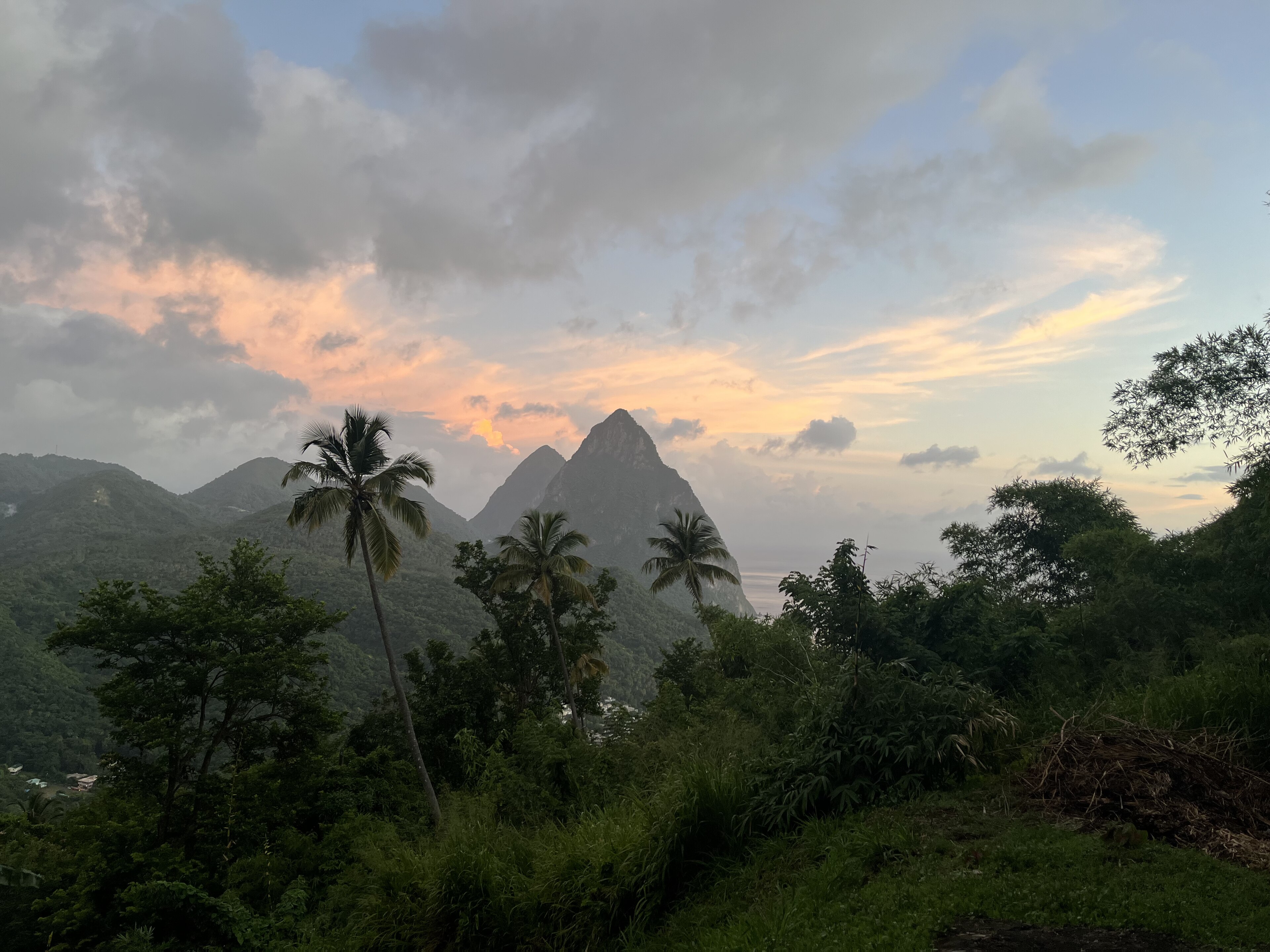
Things to do
The Saint Lucia Three Peaks Challenge
Three summits, three kinds of terrain and one ambitious plan: climb the island's most famous mountains with local guides.
What the challenge is
The Three Peaks Challenge brings together the island's three signature climbs: Gros Piton, Petit Piton and Mount Gimie. It is a fairly new addition to Saint Lucia's adventure offering, guided by local experts from a team called The 758 Adventurers and based in the Soufrière region, with access organised across all three peaks.
Each mountain has its own character. Gros Piton is the familiar trail, Petit Piton demands ropes and a head for heights, and Mount Gimie is a long wet slog through rainforest. Doing them together gives you the island from three different angles. Our guides to the Pitons and hiking and rainforest set the scene.
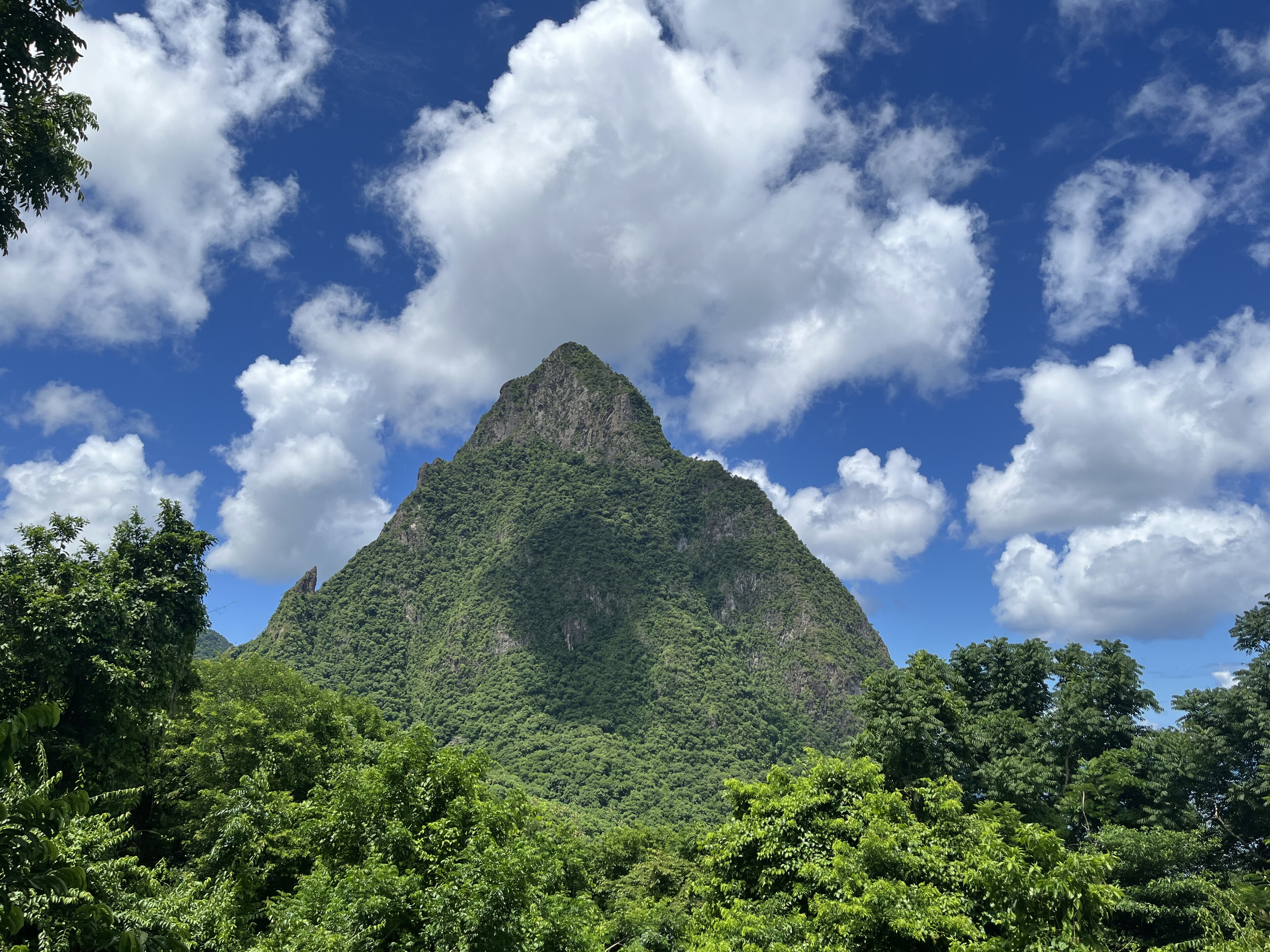
The three peaks compared
Gros Piton rises 798 metres, or 2,618 feet, and is rated moderate to challenging, with a round trip of around three to four hours in the challenge format. Petit Piton reaches 743 metres, or 2,438 feet, and is rated challenging to technical, also around three to four hours. Mount Gimie, at 950 metres or 3,117 feet, is challenging and takes around four to six hours depending on conditions.
Petit Piton is the most technical because certain sections need ropes, and it is often recommended as the first ascent while legs and nerves are fresh. You can read separately about Gros Piton and Mount Gimie.
All three in one day
The all-in-one version packs the three summits into a single guided outing, with transfers, meals and hydration included. It is demanding and suited to people with strong endurance and previous hiking experience. Expect a total of around seven to ten hours, groups of two to ten people, and a start between 07:00 and 08:00. The fitness level required is excellent.
Weather may affect the schedule, a waiver is required, and guides are trained in first aid. Be honest with yourself about your fitness; a steady hiker who normally does long days in the hills will cope, whereas someone who only walks on holiday should choose the slower option.
One peak at a time
The flexible alternative spreads the climbs over separate days, each with a guide. It allows more time to experience every route and recover in between, and suits people who would rather enjoy the views than race the clock. Each climb typically runs three to four hours, starting between 07:00 and 08:00, and needs a good level of fitness rather than an excellent one.
Access is arranged by the guide team, while transport and refreshments are organised separately, so confirm exactly what is included. Weather may require rescheduling, so leave a spare day if your trip is short.
What to bring
This is a physically demanding experience across varied terrain, so proper preparation makes a difference. Early starts give cooler conditions and better visibility.
- Hiking boots with strong grip and lightweight, breathable clothing.
- A rain jacket, a small rucksack and a walking stick for muddy sections.
- At least two litres of water per person and energy snacks.
- Insect repellent and sun cream.
Planning your stay around it
Base yourself near the mountains. Ladera and Sugar Beach both sit within sight of the peaks, and the Soufrière area has plenty to fill rest days. After the climbs, a cruise past the Pitons from the sea, described in our catamaran and sunset cruises guide, is a lovely way to see what you have achieved. Check the best time to visit guide for drier months.
Is the Three Peaks Challenge in Saint Lucia suitable for me?
The Three Peaks Challenge in Saint Lucia suits fit, experienced hikers who can manage Gros Piton, the rope sections of Petit Piton and the long muddy climb of Mount Gimie, either in one demanding day or spread across several. It is not a beginner's outing, and the people who enjoy it most are those who already walk long days in hills and are comfortable with heat, humidity and mud. If your usual holiday walking is a stroll to the beach, the three-peak format is likely to be miserable, and the one-peak-at-a-time version is a far better fit.
The challenge is as much mental as physical. Each mountain has a different character, and the trick is to keep your rhythm when your legs are tired and the weather turns. Petit Piton asks for nerve and care on its exposed, rope-assisted sections, Gros Piton asks for steady effort on a long, steep trail, and Mount Gimie asks for patience in mud and mist. Guides who lead these routes know the terrain and read the weather and the group, adjusting the pace so that people finish safely rather than heroically.
Be honest when you book. Tell the guides about your fitness, your experience and any medical conditions, and listen to their advice about whether to choose the single-day or the multi-day option. A waiver is normally required, and the guides are trained in first aid, but the best safety measure is your own judgement. Our detailed guides to the Pitons and Mount Gimie describe the individual climbs, and reading them first will show whether the combined challenge is realistic for you.
How should I train for the Three Peaks Challenge in Saint Lucia?
Train for the Three Peaks Challenge with several weeks of long hill walks carrying a loaded pack, stair or incline work to strengthen your legs for descents, and at least one day of back-to-back walking, in the boots you will wear on the mountain. The descents are where legs tire and feet slip, so work on your knees and ankles as well as your lungs. If you live somewhere flat, use stairs, hill repeats on a treadmill and long walks with a rucksack. Train in the same socks and boots you plan to use, and break them in well before you fly.
Heat is the hidden challenge. Even fit walkers from cooler climates find the humidity draining, so arrive a few days early to acclimatise and drink steadily. Practise eating on the move, because you will need regular snacks to keep your energy up, and choose foods you know your stomach tolerates. On the mountain, carry at least two litres of water per person, a rain jacket, insect repellent and a walking stick if you use one, as the muddy sections make sticks genuinely useful.
Consider your wider health. If you have a heart, joint or breathing condition, speak to your doctor before you commit, and make sure your travel insurance covers hiking at altitude and on steep terrain, as our guide to health, insurance and safety discusses. Check the season too. The drier months make the going easier, and our best time to visit guide shows when they fall. Leave a spare day in your schedule, because weather may force a reschedule, and a calm mind is part of good preparation.
What should I do before and after the Three Peaks Challenge?
Stay close to the peaks the night before, eat well and sleep early, then plan a rest day afterwards with a soak at the Sulphur Springs, a swim and a boat trip to see the mountains from the sea. Early starts are normal on the climbs, so a base within easy reach of the trailheads saves time and energy. Resorts such as Ladera, with its view of both peaks, and others around Soufrière put you at the foot of the mountains, and many can arrange early breakfasts, packed lunches and guides.
The recovery matters as much as the climb. Your legs will ache, and a warm soak at the Sulphur Springs or in mineral water nearby is a traditional reward. Eat a proper meal, drink plenty and give yourself time to do very little. Walking down stairs may feel difficult the next day, so avoid planning a demanding activity straight away. A gentle swim, a massage or a lazy afternoon on a terrace is a better way to mark the achievement than rushing on to the next sight.
Many hikers like to see the mountains from a different angle once they have climbed them. A catamaran trip, described in our guide to catamaran and sunset cruises, shows the peaks rising from the sea and gives a satisfying sense of scale. Others spend the last days of their trip on the beach or exploring the quieter parts of the island, and our page on how many days you need helps you decide how to fit the challenge into a longer stay. However you finish, the memory of three summits in one trip is hard to match.
Background for a big day out
A demanding day on the peaks is more meaningful with context. The geology and volcanoes guide explains the mountains, and the climate page helps you choose a good season.
Along the way you will pass the forest in rainforest and plant life and nature described in wildlife and ecology. Conservation and protected areas explains the care these places need.
Where to stay and how to plan
Most visitors fit this into holidays to St Lucia, so choose your base first. Compare St Lucia hotels by area and style, and read our guides to luxury hotels in St Lucia and all inclusive resorts in St Lucia if you are choosing between a boutique stay and an all in package.
Then set your dates with the best time to visit St Lucia, book flights to St Lucia and pick days out from our St Lucia itineraries. Couples can also read about a honeymoon in St Lucia or weddings in St Lucia.
Questions travellers ask
What are the three peaks?
Gros Piton at 798 metres, Petit Piton at 743 metres and Mount Gimie at 950 metres, the highest point on the island.
Can I do all three in one day?
Yes, as a guided outing of roughly seven to ten hours, though it needs excellent fitness and previous hiking experience.
Can I spread the climbs out?
Yes. The flexible option takes one peak per day with a guide, giving more time to enjoy each route.
How big are the groups?
The one-day option takes groups of two to ten people. Check the details for other formats when booking.
Which peak is the hardest?
Petit Piton is the most technical, with rope sections, while Mount Gimie is the longest and muddiest.
What time do the climbs start?
Typically between 07:00 and 08:00, which gives cooler conditions and better visibility.
Is a waiver required?
Yes, a waiver is required, and guides are first-aid trained. Weather can lead to rescheduling.
What should I pack?
Boots with grip, a rain jacket, two litres of water per person, snacks, repellent, sun cream and a walking stick.
How fit do you need to be for the Three Peaks Challenge in Saint Lucia?
You need to be very fit to do all three in one day, with previous hiking experience, and good fitness for the one-at-a-time version. Be honest with the guides when you book.
Can you do the Three Peaks Challenge over several days in Saint Lucia?
Yes, the climbs can be spread across separate days, each with a guide, which allows recovery and more time to enjoy the views. Leave a spare day in case weather forces a reschedule.
Which peak should I climb first in the Three Peaks Challenge?
Petit Piton is often recommended first, while legs and nerves are fresh, because it is the most technical with rope sections. Your guides will advise on the order that suits the group and conditions.
The Pitons on the map
The Pitons is at 13.8220 degrees north, 61.0650 degrees west. Map data from OpenStreetMap contributors.
Ask Lucy about Three Peaks Challenge
Ask about places to stay, things to do, the weather or getting here.
Keep exploring Saint Lucia
Looking for the industry view? Visit St Lucia on VisitTravelGroup.com covers the destination for travellers and the tourism trade.
More from the Visit Travel Group network: VisitTravelGroup.com, Benidorm.co.uk, Anguilla.co.uk, TheRedSea.co.uk.